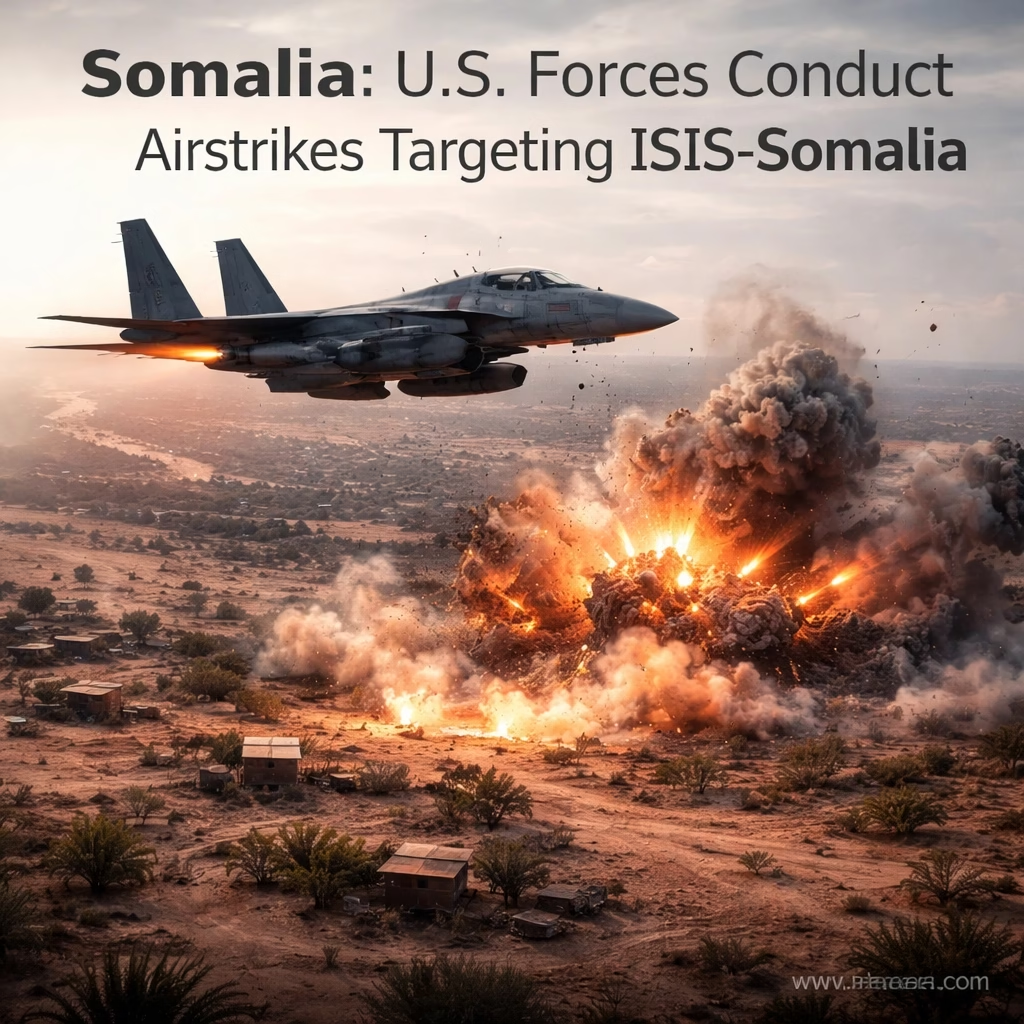
U.S. forces have conducted a series of targeted airstrikes against ISIS-Somalia elements in recent weeks, primarily focusing on the group's strongholds in the Puntland region of northeastern Somalia. These operations mark a renewed push to degrade the capabilities of a growing extremist threat in the volatile Horn of Africa. The strikes aim to disrupt leadership, destroy infrastructure, and limit the group's ability to plan and execute attacks within Somalia and potentially beyond.
Background: A Region Under Siege
Somalia has long grappled with instability, providing fertile ground for extremist ideologies to take root. For decades, the primary antagonist has been Al-Shabaab, an al-Qaeda affiliate controlling significant swathes of central and southern Somalia. However, in recent years, a distinct, albeit smaller, threat has emerged in the form of ISIS-Somalia.
Emergence of ISIS-Somalia
ISIS-Somalia, also known as Abnaa ul-Calipha, first gained prominence around 2015, largely composed of defectors from Al-Shabaab who pledged allegiance to the Islamic State's global caliphate. While numerically smaller than its rival, ISIS-Somalia has carved out a niche, particularly in Somalia's semi-autonomous Puntland state, leveraging local clan dynamics and establishing revenue streams through extortion, illegal taxation, and piracy. Their operations have focused on assassinations, small-scale attacks, and efforts to expand their territorial control, often clashing with Puntland security forces and even Al-Shabaab.
U.S. Counter-Terrorism Presence
The United States has maintained a counter-terrorism presence in Somalia for years, primarily through U.S. Africa Command (AFRICOM). This involvement has included advising and assisting Somali security forces, conducting intelligence, surveillance, and reconnaissance (ISR) missions, and launching precision airstrikes against both Al-Shabaab and ISIS-Somalia targets. U.S. policy towards Somalia has seen shifts, notably a temporary withdrawal of most U.S. troops under the Trump administration in late 2020, followed by President Biden's decision in May 2022 to re-establish a persistent U.S. military presence to counter the resurgent threat from extremist groups. This re-deployment emphasized the importance of maintaining pressure on these organizations to prevent them from destabilizing the region further.
Strategic Importance of Somalia
Somalia's strategic location along key shipping lanes and its proximity to the Arabian Peninsula make it a critical focal point for international security. A stable Somalia is essential for regional security, preventing the spread of extremism and fostering economic development. The weak central government in Mogadishu and the persistent clan divisions have historically hampered effective national security efforts, necessitating international support.

Key Developments: Recent Escalation
The recent spate of U.S. airstrikes against ISIS-Somalia signifies an intensified focus on this particular faction, distinct from ongoing operations against Al-Shabaab. These actions underscore intelligence assessments indicating a growing threat from ISIS-Somalia.
AFRICOM’s Stated Objectives
AFRICOM confirmed the strikes, stating their primary objectives were to disrupt ISIS-Somalia's operational capabilities, degrade its leadership and logistical networks, and protect U.S. and partner interests in the region. U.S. military officials emphasized that these were precision strikes, carefully planned to minimize civilian casualties, a consistent point of emphasis for U.S. operations in conflict zones. The targets included training camps, command and control nodes, and facilities used for financing and propaganda.
Focus on Puntland
The concentration of these recent strikes in Puntland's rugged terrain, particularly the Bari region, highlights the area as a critical operational base for ISIS-Somalia. The group has exploited the region's remoteness and limited government presence to establish sanctuaries, recruit fighters, and generate illicit revenue. Somali security forces, often stretched thin by the larger Al-Shabaab threat, have struggled to fully dislodge ISIS-Somalia from these strongholds. The U.S. support aims to bolster these local efforts.

Collaboration with Somali Forces
These airstrikes are part of a broader collaborative effort with the Federal Government of Somalia (FGS) and its security forces. While U.S. personnel primarily operate in an advisory and support capacity, the intelligence gathering and targeting processes involve close coordination with Somali partners. This partnership is crucial for identifying legitimate targets, understanding local dynamics, and ensuring that military actions align with Somalia's broader security objectives. The Somali government has publicly welcomed the U.S. support, viewing it as essential to their long-term goal of stabilizing the country and asserting state authority.
Impact: Ripple Effects Across the Region
The airstrikes carry significant implications for the various actors involved, from the targeted extremist group to the broader civilian population and regional stability.
Degradation of ISIS-Somalia Capabilities
The immediate impact on ISIS-Somalia is expected to be a disruption of its operational tempo, a reduction in its fighting force through casualties, and a potential hit to its financial and logistical networks. Loss of key leaders or experienced fighters can degrade the group's ability to plan complex attacks and maintain cohesion. However, extremist groups are often resilient, adapting tactics and leadership in response to military pressure.
Boost for Somali Security Forces
For the Somali Security Forces (SSF) and regional forces like those in Puntland, U.S. air support provides a critical advantage. It reduces the direct threat from ISIS-Somalia, allows SSF to conduct ground operations with less resistance, and can boost morale. It also demonstrates sustained international commitment to their fight against terrorism, which is vital for a country building its security architecture.
Civilian Concerns and Humanitarian Context
While U.S. forces prioritize precision, the risk of civilian casualties in any conflict zone remains a significant concern. Local populations in affected areas often face displacement, disruption of livelihoods, and heightened fear. Somalia is also battling a severe humanitarian crisis, including widespread drought and food insecurity. Continued conflict exacerbates these challenges, making humanitarian access difficult and diverting resources away from vital aid efforts. The long-term stability of these regions is paramount for recovery and development.
Regional Security Dynamics
The operations against ISIS-Somalia contribute to broader regional security. A weakened ISIS-Somalia is less likely to collaborate with other extremist groups or project its influence into neighboring countries like Kenya or Ethiopia. However, the complex interplay between Al-Shabaab and ISIS-Somalia, with occasional clashes but also potential for exploitation of each other's vulnerabilities, means the security landscape remains highly dynamic.
More Read

What Next: A Path Forward
The recent airstrikes are unlikely to be a singular event but rather part of an ongoing, multi-faceted strategy to counter extremism in Somalia. The path forward involves sustained military pressure, capacity building, and addressing the root causes of radicalization.
Continued U.S. Engagement
U.S. Africa Command is expected to continue its advisory role, intelligence support, and targeted airstrikes as needed, particularly against high-value targets. The re-establishment of a persistent U.S. military presence signals a long-term commitment, moving beyond "over-the-horizon" operations to more direct engagement and training with Somali partners. This consistent pressure is deemed essential to prevent extremist groups from regrouping and expanding.
Strengthening Somali Security Institutions
A critical component of the long-term strategy is strengthening the capacity of the Somali Security Forces to independently manage their nation's security. This includes training, equipping, and professionalizing the SSF, as well as fostering better coordination between federal and regional forces. The African Union Transition Mission in Somalia (ATMIS) is also gradually transferring security responsibilities to the SSF, making their readiness paramount.
Addressing Root Causes
Beyond military action, sustainable peace in Somalia requires addressing the underlying conditions that fuel extremism: poverty, lack of governance, corruption, and inter-clan disputes. International support for economic development, institution-building, and reconciliation efforts will be crucial. Investing in education, healthcare, and job creation can offer alternatives to young people who might otherwise be drawn into extremist groups.
Evolution of the Threat
Extremist groups like ISIS-Somalia are adaptive. They will likely respond to increased pressure by altering their tactics, seeking new revenue streams, or shifting their areas of operation. Constant vigilance, robust intelligence gathering, and flexible counter-terrorism strategies will be necessary to stay ahead of these evolving threats. The interplay between ISIS-Somalia and Al-Shabaab also remains a key factor, with potential for either heightened competition or opportunistic alliances.
The recent U.S. airstrikes underscore the persistent and evolving threat posed by ISIS-Somalia. While military action is a vital tool for immediate disruption, a comprehensive approach integrating security, governance, and development initiatives will be essential for Somalia to achieve lasting stability and peace.