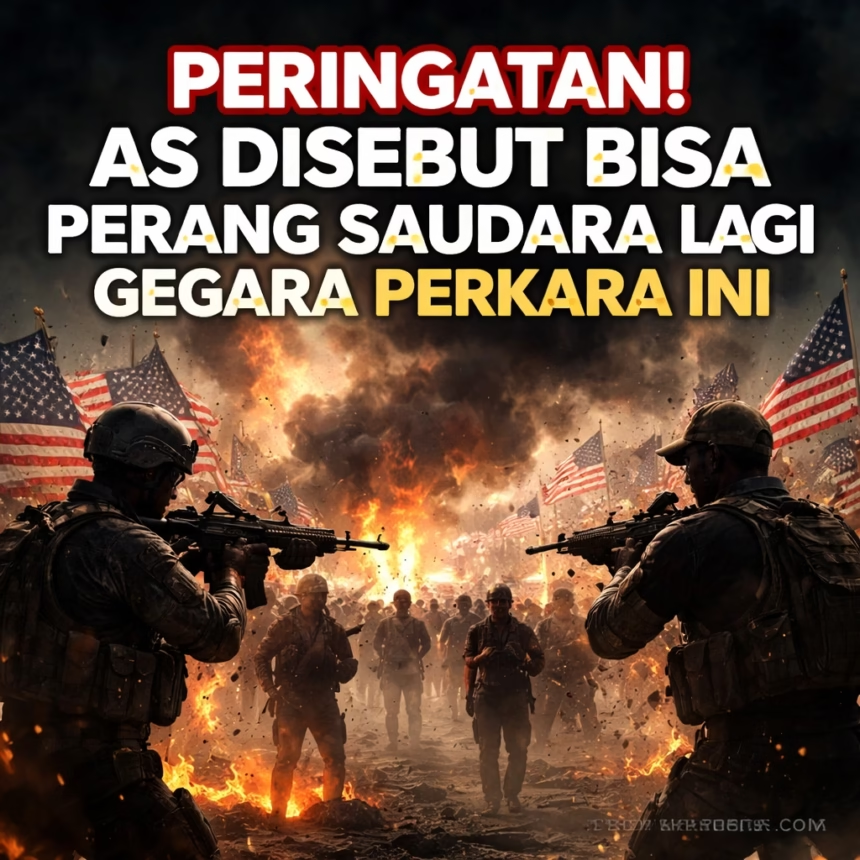
Deep Divisions: Is America Heading Towards Another Civil Conflict?
The United States is grappling with escalating political and social divisions, prompting concerns about a potential return to civil unrest. Recent events, particularly surrounding the 2024 presidential election and ongoing debates over democratic norms, have fueled anxieties both domestically and internationally. Experts are warning of a precarious situation with historical parallels.
Background: A History of Division
The United States has experienced periods of significant internal conflict throughout its history, most notably the Civil War (1861-1865) triggered by disagreements over slavery and states' rights. While the nation has largely healed and rebuilt since then, deep-seated ideological divides have persisted. The late 20th and early 21st centuries witnessed the rise of cultural wars, fueled by issues such as abortion, gun control, and immigration. These disagreements have often manifested in political polarization and increasing distrust of institutions.
The 2000 and 2016 presidential elections, both highly contested and divisive, served as stark reminders of these underlying tensions. The aftermath of the 2020 election, marked by widespread false claims of voter fraud and the January 6th Capitol attack in Washington, D.C., significantly exacerbated these divisions, leaving lasting scars on American society.
Key Developments: A Perfect Storm
Several key developments in recent months have contributed to the current climate of concern. The January 6th Committee hearings, which aired on television from June to November 2022, presented detailed evidence of the events leading up to the attack on the Capitol, further inflaming partisan passions. The ongoing investigation into former President Donald Trump's role in the events of January 6th continues to divide the country.

Furthermore, the increasing influence of extremist groups on both the far-right and far-left is a growing concern. These groups often promote violence and undermine democratic institutions. Public discourse has become increasingly toxic, with heightened levels of animosity and hostility towards opposing viewpoints. The spread of misinformation and disinformation, particularly through social media platforms, further contributes to the polarization of public opinion.
The upcoming 2024 presidential election is expected to be particularly contentious, with potential for significant social and political upheaval regardless of the outcome. Concerns about election integrity and the legitimacy of the results are likely to remain prominent themes.
Impact: A Nation Divided
The escalating tensions are having a profound impact on American society. Social cohesion is weakening, with increasing levels of distrust and animosity between different groups. Political gridlock in Congress has made it difficult to address pressing national issues. Economic instability is also a concern, as political uncertainty can deter investment and hinder economic growth.

Beyond the political sphere, the divisions are impacting everyday life. Family relationships are strained, and friendships are being tested. There is a growing sense of fear and insecurity among many Americans. The rise in political violence, including threats against elected officials and public figures, is a particularly worrying trend.
Increased Political Violence
There has been a noticeable rise in politically motivated violence in recent years. This includes acts of vandalism, harassment, and physical assaults. Law enforcement agencies across the country are struggling to address this growing threat.
Erosion of Trust in Institutions
Public trust in government, the media, and other institutions has declined significantly in recent years. This erosion of trust is making it more difficult to address national challenges and maintain social order.
What Next: A Path Forward?
The situation remains fluid, and the future is uncertain. However, several potential milestones could shape the coming months and years. The outcome of the 2024 presidential election will undoubtedly have a significant impact on the trajectory of the country. Legal challenges to election results are also a possibility.
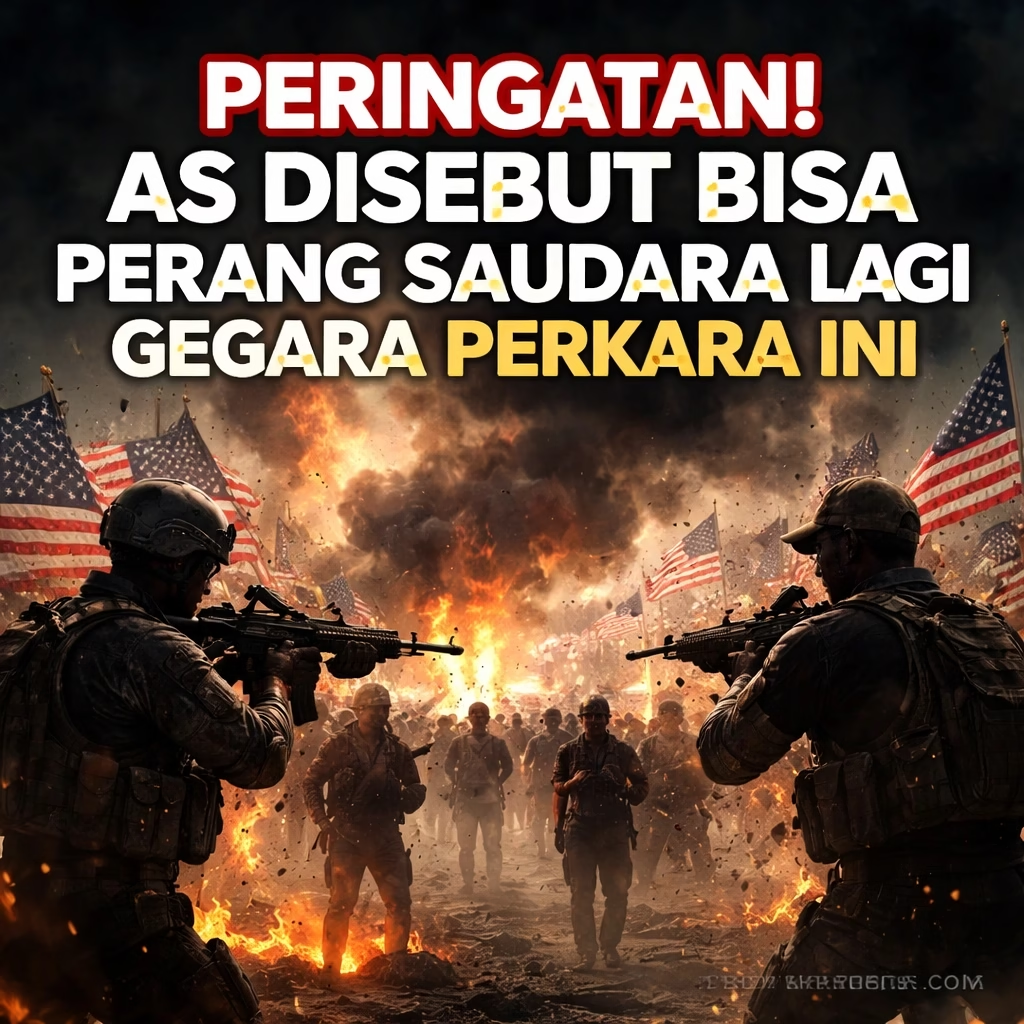
Efforts to promote dialogue and bridge divides are crucial. This includes encouraging civil discourse, combating misinformation, and fostering a sense of shared national identity. Strengthening democratic institutions and upholding the rule of law are also essential. Ultimately, addressing the deep-seated divisions requires a commitment from all Americans to work together for the common good.
More Read

Potential Scenarios
While the possibility of a full-scale civil war remains remote, various scenarios are possible. These range from continued political instability and social unrest to localized conflicts and increased political violence. The specific outcome will depend on a number of factors, including the results of the 2024 election, the actions of extremist groups, and the willingness of political leaders to de-escalate tensions.
The situation demands careful monitoring and proactive efforts to prevent further escalation. The future of the United States hinges on its ability to overcome its divisions and reaffirm its commitment to democratic principles.