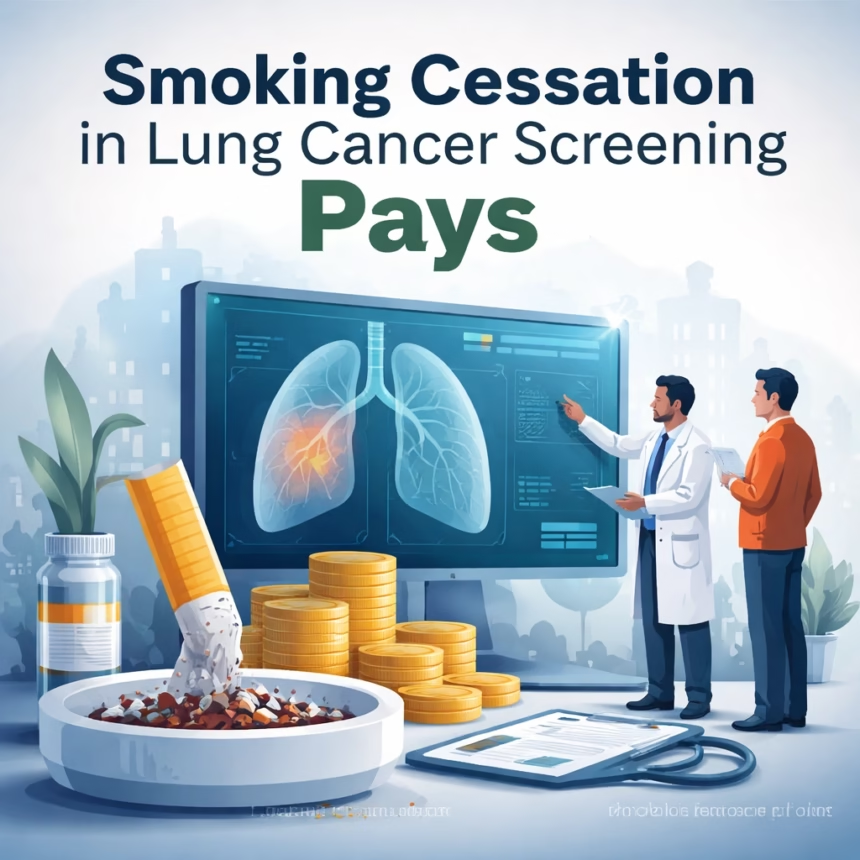
In a significant evolution of public health strategy, lung cancer screening programs are increasingly embedding robust smoking cessation services directly into their protocols. This strategic integration, gaining traction across major healthcare systems in the United States, the United Kingdom, and beyond, aims to transform screening from a diagnostic tool into a powerful intervention for active smokers. The initiative recognizes that identifying risk is only half the battle, with comprehensive support for quitting now a cornerstone of effective preventive care.
Background: The Screening Imperative and Its Paradox
Lung cancer remains the leading cause of cancer-related deaths globally, with smoking being its primary risk factor. For years, medical science sought effective early detection methods. The advent of low-dose computed tomography (LDCT) scanning revolutionized this pursuit. Landmark studies, particularly the National Lung Screening Trial (NLST) in the U.S., published in 2011, demonstrated that annual LDCT screening could reduce lung cancer mortality by 20% in high-risk individuals compared to chest X-ray.
Following these findings, national guidelines began to recommend regular LDCT screening. The U.S. Preventive Services Task Force (USPSTF) initially recommended screening for adults aged 55 to 80 with a 30 pack-year smoking history who currently smoke or have quit within the past 15 years. This was updated in 2021, lowering the age to 50 and the pack-year history to 20, significantly expanding eligibility. The UK's National Health Service (NHS) also launched targeted lung health checks, including LDCT screening, in various regions starting in 2018, with plans for a national program.
However, a critical paradox emerged: while screening effectively identified lung nodules and early-stage cancers, a substantial portion of those being screened were still active smokers. Screening offered a window into their risk but often lacked a direct, integrated mechanism to address the root cause of that risk—their smoking habit. Early attempts at cessation counseling within screening programs were often fragmented, relying on referrals that patients might not follow through on. The challenge became clear: how to leverage the screening encounter itself as a powerful motivator for quitting.
More Read

Key Developments: Integrating Cessation into Care Pathways
The past few years have witnessed a concerted push to embed smoking cessation directly into the lung cancer screening pathway. This shift is driven by a growing body of evidence and evolving policy.
Policy and Funding Shifts
In the United States, Medicare coverage for lung cancer screening, established in 2015, includes a requirement for shared decision-making with a physician, which often incorporates a discussion about smoking cessation. While not initially mandating direct cessation services, this set a precedent for a comprehensive approach. More recently, organizations like the American Thoracic Society (ATS) and the National Comprehensive Cancer Network (NCCN) have reinforced the importance of integrated cessation services, outlining best practices for implementation. The UK’s NHS Lung Health Checks actively integrate smoking cessation support from the initial consultation, recognizing it as a crucial component of the preventative strategy.
Innovative Intervention Models
Healthcare systems are now deploying a range of cessation interventions:
* Brief Advice and Referrals: At the point of screening, patients receive explicit, strong advice to quit, coupled with immediate referrals to dedicated cessation programs, helplines, or digital resources.
* On-site Counseling: Many screening centers now employ tobacco treatment specialists or trained navigators who can provide immediate, personalized counseling sessions, often leveraging the patient’s recent scan results as a ‘teachable moment.’
* Pharmacotherapy Integration: Prescriptions for nicotine replacement therapy (NRT) or medications like varenicline (Chantix) and bupropion are increasingly offered directly by the screening team or through seamless coordination with primary care.
* Telehealth and Digital Tools: The COVID-19 pandemic accelerated the adoption of virtual care. Telehealth consultations and specialized mobile apps now provide accessible, ongoing support for patients throughout their quitting journey, overcoming geographical barriers.

Research-Backed Effectiveness
Studies like the “STOP” trial (Smoking Treatment Optimization Program) and various implementation projects have demonstrated significantly higher quit rates when cessation support is integrated directly into the screening process. Patients who receive intensive, personalized counseling and pharmacotherapy within the context of their lung cancer screening are shown to be more likely to achieve sustained abstinence compared to those offered only brief advice or external referrals. These findings underscore the psychological impact of seeing one’s own lung images and the heightened motivation it can engender.
Impact: A Health Transformation for High-Risk Individuals
The integration of smoking cessation into lung cancer screening is having a profound impact on multiple levels.
Patient Empowerment and Health Gains
For patients, particularly the high-risk demographic targeted by screening, this integration offers a lifeline. It transforms a potentially anxiety-inducing diagnostic procedure into an opportunity for proactive health improvement. Patients report feeling more supported and empowered to tackle their addiction, often citing the clear visual evidence from their scan as a powerful motivator. Beyond reducing lung cancer risk, quitting smoking dramatically lowers the risk of cardiovascular disease, stroke, chronic obstructive pulmonary disease (COPD), and numerous other cancers, leading to a significant improvement in overall quality of life and life expectancy.
Enhanced Role for Healthcare Providers
Radiologists, pulmonologists, primary care physicians, and nurse navigators involved in lung cancer screening are expanding their roles. They are increasingly trained in brief cessation counseling techniques and equipped to facilitate referrals or even initiate pharmacotherapy. This integration fosters a more holistic approach to patient care, moving beyond disease detection to comprehensive risk reduction. It also strengthens the multidisciplinary team approach essential for effective screening programs.
Systemic Benefits and Cost Savings
For healthcare systems, this strategy promises long-term benefits. Higher quit rates among screened populations can lead to a reduced incidence of lung cancer and other smoking-related illnesses, potentially offsetting the costs of screening and treatment in the long run. By creating a more robust pathway to cessation, healthcare systems improve public health outcomes, reduce the burden on emergency services, and demonstrate a commitment to preventive care that extends beyond mere diagnosis.
What Next: Expanding Reach and Refining Strategies
The journey to fully integrate smoking cessation into lung cancer screening is ongoing, with several key milestones expected.

Broader Implementation and Standardization
The immediate future will see a wider adoption of integrated cessation models across more screening centers and healthcare networks. Efforts will focus on standardizing protocols, ensuring that every eligible patient undergoing LDCT screening receives consistent, high-quality cessation support, regardless of their location. This includes developing clear guidelines for screening navigators and clinical staff.
Personalized Cessation Approaches
As research progresses, there will be a greater emphasis on personalized cessation strategies. This involves tailoring interventions based on individual patient factors, including their level of nicotine dependence, psychosocial determinants, previous quit attempts, and even genetic predispositions. Digital tools and AI-driven platforms are likely to play an increasing role in delivering highly customized support.
Long-term Outcome Tracking and Research
Ongoing research will continue to track the long-term quit rates, sustained abstinence, and the ultimate impact on lung cancer incidence and mortality within screened populations. This data will be crucial for refining existing programs and advocating for continued funding and policy support. Studies will also explore the cost-effectiveness of various integrated models.
Integration with Broader Preventive Health
Looking ahead, lung cancer screening and its integrated cessation support may become a model for broader preventive health initiatives. There’s potential to link these programs with other chronic disease management efforts, leveraging the patient contact point for comprehensive lifestyle interventions, including diet, exercise, and mental health support. The goal is to maximize every patient interaction for holistic health improvement.
The strategic marriage of lung cancer screening and smoking cessation is not merely an add-on; it represents a fundamental shift in how healthcare tackles one of its most pervasive challenges. By transforming a diagnostic procedure into a powerful intervention, healthcare systems are not just finding cancer earlier, they are actively preventing it and countless other diseases, paving the way for healthier lives across communities.