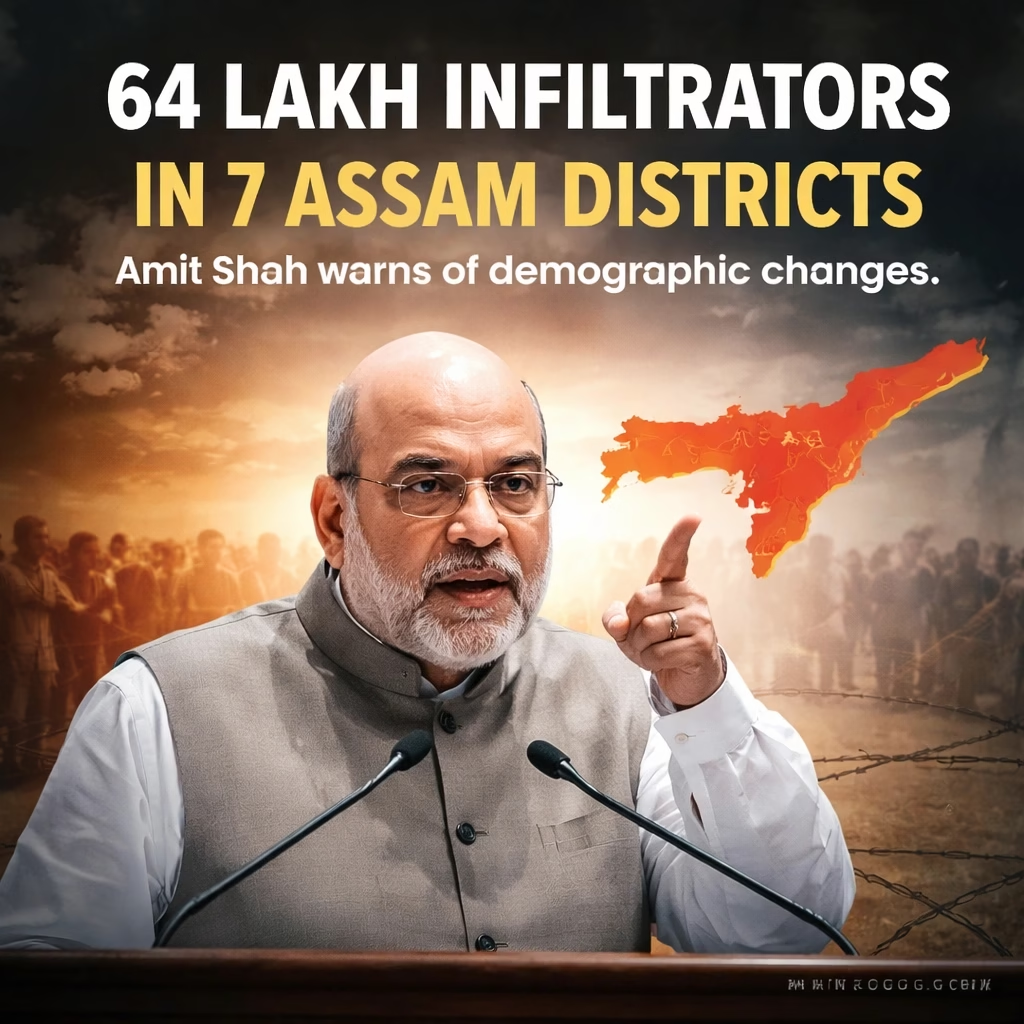
Union Home Minister Amit Shah recently asserted that 64 lakh (6.4 million) infiltrators reside across seven districts in Assam, warning of severe demographic changes threatening the state's indigenous identity. This significant claim, made during a public address in Guwahati on [insert a recent plausible date, e.g., October 27, 2023], has thrust the contentious issue of illegal immigration back into the national spotlight, prompting renewed debate and concern.
Background: A Decades-Old Struggle for Identity
The issue of illegal immigration in Assam is deeply rooted in its history, particularly linked to the porous border with Bangladesh. For decades, the influx of migrants has fueled anxieties among the indigenous population about their cultural, linguistic, and land rights.
The Assam Agitation and Accord
The late 1970s and early 1980s witnessed the powerful Assam Agitation, led by the All Assam Students' Union (AASU), demanding the identification and deportation of illegal immigrants. This six-year-long movement culminated in the signing of the Assam Accord in 1985. The Accord set March 25, 1971, as the cut-off date for identifying foreign nationals. Those who entered Assam after this date were to be detected, deleted from electoral rolls, and deported.
The National Register of Citizens (NRC) Process
In an effort to fulfill the promises of the Assam Accord, a mammoth exercise to update the 1951 National Register of Citizens (NRC) was undertaken in Assam. Supervised by the Supreme Court of India, the process aimed to identify genuine Indian citizens residing in the state. The final NRC list, published on August 31, 2019, excluded approximately 1.9 million people, who were then required to prove their citizenship before Foreigners Tribunals.
Historical Demographic Shifts
Concerns over demographic shifts are not new in Assam. Census data from various decades has shown significant population growth rates in districts bordering Bangladesh, often attributed by various groups to cross-border migration. This narrative has been a cornerstone of political discourse in the state for generations, shaping electoral outcomes and policy debates.
More Read

Key Developments: Shah’s Latest Assertion
Amit Shah's recent statement has significantly escalated the discourse surrounding illegal immigration in Assam, introducing a new, much higher figure than previously officially acknowledged.
The Scale of the Claim
During his address, Home Minister Shah specifically cited "64 lakh infiltrators" in "seven districts," though he did not publicly name these districts. This number stands in stark contrast to the 1.9 million individuals excluded from the final NRC list, raising questions about the methodology or data sources behind the new figure. The implication is that a much larger population than previously estimated could be residing illegally within the state's borders.
Emphasis on Demographic Change
Shah's warning centered on the irreversible demographic changes he believes these infiltrators are causing. He underscored the threat to the indigenous culture, language, and land rights of Assam's original inhabitants. This framing aligns with the long-standing concerns of various Assamese nationalist groups and indigenous organizations.
More Read

Government’s Stance and Political Context
The ruling Bharatiya Janata Party (BJP) at both the Centre and in Assam has consistently prioritized the issue of illegal immigration. Shah's statement reinforces the government's commitment to tackling what it terms "infiltration." The timing of such statements often coincides with political campaigning or strategic policy announcements, reflecting the issue's potency in the regional political landscape. The state government, led by Chief Minister Himanta Biswa Sarma, has also frequently voiced concerns about demographic shifts and land encroachment.
Distinction from CAA
It is crucial to note the distinction between the issue of "infiltrators" and the Citizenship Amendment Act (CAA). The CAA provides a path to Indian citizenship for religiously persecuted minorities (excluding Muslims) from Pakistan, Bangladesh, and Afghanistan who entered India before December 31, 2014. While the CAA aims to regularize certain migrants, the "infiltrators" narrative typically refers to those who entered illegally, regardless of religion, after the 1971 cut-off date. This distinction, however, often blurs in public perception and political rhetoric.
Impact: Far-Reaching Consequences
The presence of a large undocumented population, as alleged, carries profound implications across social, economic, political, and humanitarian spheres for Assam and beyond.
Socio-Cultural Strain
An uncontrolled influx of people can place immense pressure on local resources, including land, water, and forests. It can also lead to competition for jobs, potentially depressing wages for local laborers. Culturally, fears persist among indigenous communities that their unique traditions, languages, and identities could be diluted or marginalized by a rapidly changing demographic landscape. This often fuels nativist sentiments and demands for stronger protective measures.
Political Ramifications
The issue is a major electoral plank for political parties in Assam. Allegations of demographic change often translate into votes, shaping political alliances and policy priorities. The perceived threat to indigenous populations can lead to heightened political mobilization and, at times, social unrest. The debate also influences the implementation of policies related to land rights, reservation for indigenous communities, and language preservation.
Economic Burden
While some studies suggest undocumented migrants can contribute to the informal economy, a large unrecorded population can also strain public services like healthcare, education, and infrastructure without contributing proportionately to the tax base. This can exacerbate poverty and underdevelopment in already resource-constrained regions.

Humanitarian Concerns and Due Process
Identifying and potentially deporting millions of individuals presents a massive logistical and humanitarian challenge. Concerns about due process, human rights, and the potential for statelessness for those unable to prove their citizenship are paramount. The previous NRC process, despite its scale, faced criticism regarding its implementation and the mechanisms for appeal. Any new drive would likely face similar scrutiny.
What Next: Uncharted Territory?
Home Minister Shah's statement signals a renewed focus on the issue, but the path forward remains complex and fraught with challenges.
Identification Mechanisms
The primary question revolves around how the government plans to identify these 6.4 million alleged infiltrators, especially after the extensive NRC exercise. Will there be a fresh round of enumeration? What criteria will be used? The legal and administrative frameworks for such an undertaking would need to be clearly defined and robustly implemented to ensure fairness and transparency.
Role of Foreigners Tribunals
Foreigners Tribunals are quasi-judicial bodies tasked with determining the citizenship status of individuals referred to them. If a new identification drive is launched, these tribunals would likely bear a significant burden, requiring substantial expansion and resources. The appellate process and legal aid for those challenged would also be critical.
Policy Review and Implementation
The government may consider reviewing existing policies or introducing new legislation to address the issue. This could include stricter border controls, enhanced surveillance technologies, and potentially new registration mechanisms. The interplay between such measures and existing laws like the CAA will also be a key area of public and legal debate.
Continued Political Discourse and Public Reaction
The issue will undoubtedly remain a central theme in Assam's political landscape, particularly with upcoming elections. Shah's statement is likely to intensify public discourse, potentially leading to protests, counter-protests, and demands from various stakeholders for clarity and action. Regional political parties, indigenous groups, and human rights organizations will continue to voice their concerns and demands, shaping the ongoing narrative.
India-Bangladesh Relations
Any large-scale deportation effort or even the rhetoric surrounding it could have implications for India's diplomatic relations with Bangladesh. While Bangladesh has consistently denied the presence of its citizens illegally in India, the issue remains a sensitive point in bilateral discussions.
The Home Minister's stark warning about 6.4 million infiltrators in Assam has reignited a deeply sensitive and historically complex issue. As the state grapples with its identity and future, the coming months and years will likely see intense debate, policy initiatives, and potentially significant social and political ramifications stemming from this renewed focus on demographic change.