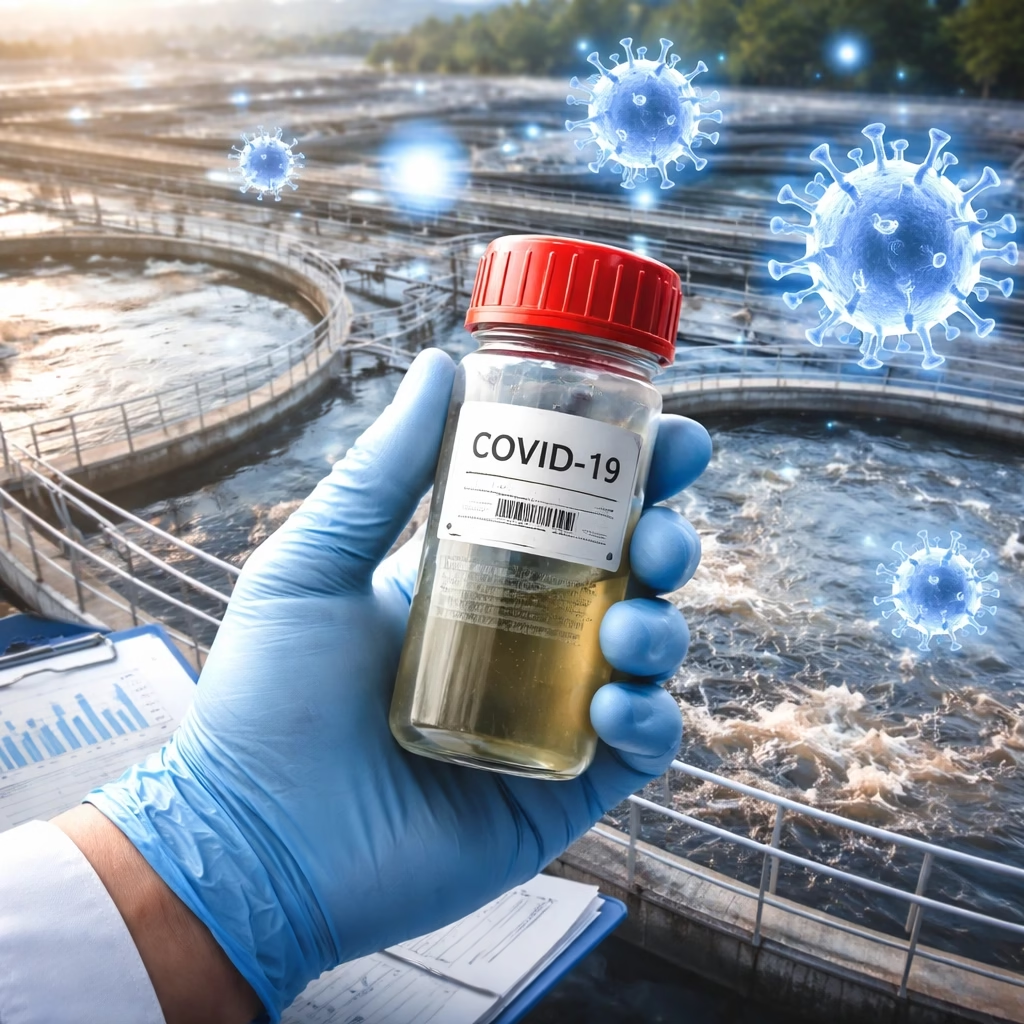
As official COVID-19 case counts dwindle and at-home testing becomes prevalent, a silent sentinel beneath our cities is painting a starkly different picture. Wastewater surveillance programs across the United States and other nations are consistently detecting viral loads indicating a significantly higher prevalence of SARS-CoV-2 than reported clinical data suggests. This crucial biological barometer offers an unfiltered, real-time glimpse into community-level infection dynamics, revealing hidden outbreaks and emergent variants weeks before they surface in traditional healthcare metrics.
Background: The Silent Watchers Emerge
The concept of monitoring sewage for public health insights is not new. For decades, scientists have used wastewater to track polio outbreaks, drug use patterns, and even antimicrobial resistance. However, the COVID-19 pandemic catalyzed its rapid expansion and adoption as a frontline tool for infectious disease surveillance.
Early Adopters and Scientific Foundations
In early 2020, as the novel coronavirus swept across the globe, researchers in the Netherlands, the United States, and other countries quickly identified SARS-CoV-2 RNA in municipal wastewater. This discovery confirmed that infected individuals, whether symptomatic or asymptomatic, shed viral particles in their feces. Importantly, this shedding can begin days before symptoms appear, making wastewater an early warning system. Initial pilot projects, often spearheaded by academic institutions like Stanford University and the Massachusetts Institute of Technology, alongside local health departments, demonstrated the feasibility and utility of this approach.
Scaling Up: From Local Labs to National Networks
Recognizing the potential, the U.S. Centers for Disease Control and Prevention (CDC) launched the National Wastewater Surveillance System (NWSS) in September 2020. This initiative aimed to standardize methods, aggregate data, and provide a national dashboard for public health action. By 2021, NWSS had expanded to include hundreds of sites, covering millions of Americans. Similarly, countries like Canada, Australia, and various European nations established their own national or regional wastewater monitoring networks, often integrating academic expertise with public health infrastructure. These networks became increasingly vital as clinical testing strategies shifted and reporting became less comprehensive.
Key Developments: Unmasking the Invisible Surge
The utility of wastewater surveillance has become particularly pronounced in the post-emergency phase of the pandemic, revealing a persistent and often underestimated level of viral activity.

The Discrepancy Revealed
In recent months, as the availability of rapid at-home tests increased and official reporting requirements relaxed, reported clinical cases of COVID-19 have plummeted across many regions. However, wastewater data has consistently told a different story. For instance, in several major U.S. metropolitan areas during late 2023 and early 2024, wastewater concentrations of SARS-CoV-2 RNA indicated infection rates five to ten times higher than official case counts. This stark discrepancy highlights a significant gap in our understanding of community transmission, with many infections going unreported.
Tracking Variants and Hotspots
Wastewater surveillance has also proven invaluable in detecting and tracking new variants of concern. Before the Omicron variant, XBB.1.5, or more recent sub-lineages became dominant in clinical samples, their genetic signatures were often identified in wastewater weeks in advance. This early detection capability allows public health officials to anticipate future surges, assess the transmissibility of new strains, and prepare healthcare systems. Furthermore, the granular nature of wastewater collection – often from specific neighborhoods or sewage treatment plants serving defined populations – enables the identification of localized hotspots, guiding targeted interventions.
Integration with Public Health Strategies
Beyond simply reporting viral levels, health agencies are increasingly integrating wastewater data into broader public health strategies. In cities like New York and Boston, officials use spikes in wastewater viral load to issue public health advisories, recommend increased masking, or prepare hospitals for potential upticks in admissions. This proactive approach, informed by a non-invasive and population-level data source, allows for more agile and evidence-based responses to evolving public health threats.

Impact: Informing Decisions, Protecting Communities
The insights gleaned from wastewater surveillance have far-reaching implications for public health, healthcare systems, and the general public.
Empowering Public Health Decision-Makers
For health departments, wastewater data provides an independent and unbiased metric of disease activity. It circumvents issues of testing access, willingness to test, and reporting fatigue. This allows officials to allocate resources more effectively, activate emergency response plans sooner, and communicate risk to the public with greater accuracy. Early warnings from wastewater can translate into timely distribution of vaccines, therapeutics, or personal protective equipment to vulnerable communities.
Guiding Healthcare Preparedness
Healthcare systems benefit immensely from the foresight offered by wastewater surveillance. Anticipating a surge in infections allows hospitals to adjust staffing levels, manage bed capacity, and ensure an adequate supply of medications and equipment. This proactive preparation can prevent healthcare systems from being overwhelmed, especially during concurrent outbreaks of other respiratory viruses like influenza and RSV.
Informing the Public and Vulnerable Populations
While official case counts may provide a false sense of security, wastewater data offers a more realistic assessment of community risk. This information empowers individuals to make informed decisions about personal protective measures, such as masking in crowded indoor settings or adjusting social plans, particularly for those who are immunocompromised or live with vulnerable family members. Moreover, by identifying localized surges, public health efforts can be precisely directed towards protecting high-risk neighborhoods or demographic groups.
What Next: The Future of Environmental Epidemiology
The success of wastewater surveillance during the COVID-19 pandemic has firmly established its role as an indispensable tool in the public health arsenal, with significant expansion and innovation expected in the coming years.
Expanding Networks and Pathogen Scope
The current focus on SARS-CoV-2 is just the beginning. Public health agencies and research institutions are actively working to expand wastewater surveillance networks to cover a larger percentage of the population and to monitor a broader spectrum of pathogens. This includes influenza, respiratory syncytial virus (RSV), norovirus, and even markers for antimicrobial resistance. Some programs are already successfully tracking multiple pathogens simultaneously, providing a comprehensive "health check" of a community.
More Read

Standardization and Predictive Analytics
As the field matures, there is a strong push for greater standardization of sampling, laboratory analysis, and data reporting methods across different jurisdictions. This will enhance data comparability and facilitate more robust national and international analyses. Furthermore, integrating wastewater data with advanced analytics, artificial intelligence, and machine learning models promises to improve predictive capabilities, allowing public health officials to forecast outbreaks with greater accuracy and lead time.
Policy and Funding Commitments
Sustained investment and policy support will be crucial for the long-term viability and growth of wastewater surveillance. Advocates are working to secure dedicated funding streams and integrate wastewater data more formally into national and local public health emergency response frameworks. The aim is to transition from a pandemic-driven reactive system to a permanent, proactive environmental epidemiology program capable of continuously monitoring community health beyond infectious diseases.
Wastewater surveillance has emerged from the shadows to become a beacon, illuminating the true landscape of infectious disease spread. By listening to the silent whispers from our drains, communities are gaining an unprecedented advantage in the ongoing fight against pathogens, preparing for future health challenges with foresight and precision.