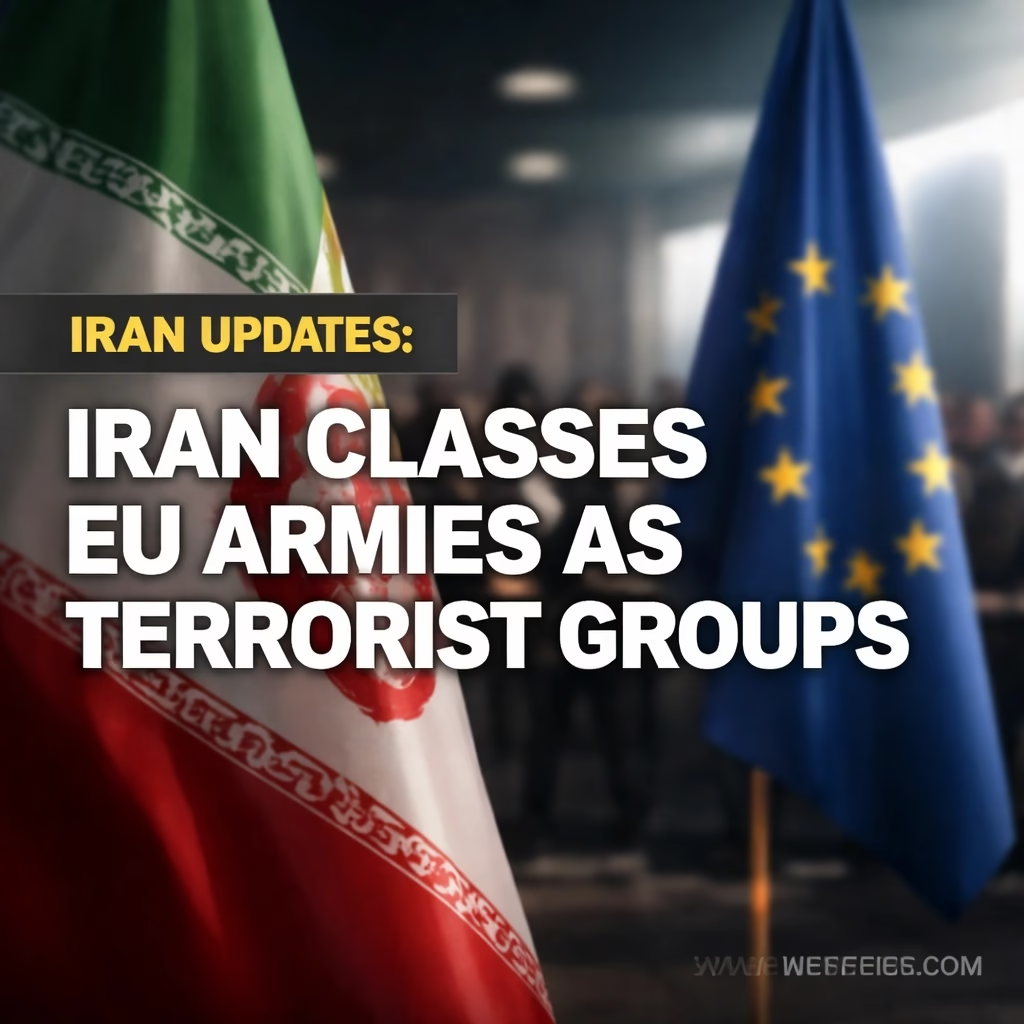
In a dramatic move poised to ignite a fresh diplomatic firestorm, Iran's parliament, the Majlis, has overwhelmingly passed legislation designating the military forces of European Union member states as "terrorist organizations." The unprecedented decision, enacted in Tehran in late May 2024, marks a significant escalation in the already strained relations between the Islamic Republic and the European bloc, setting the stage for potential retaliatory actions and deepening geopolitical divides.
Background: A Cycle of Retaliation and Sanctions
The recent Iranian parliamentary action is not an isolated event but rather the latest salvo in a protracted cycle of reciprocal designations and heightened tensions. For years, relations between Tehran and Brussels have been characterized by deep mistrust, largely stemming from Iran's nuclear program, its regional activities, and human rights concerns.
The IRGC Designation Debate
A pivotal moment preceding this Iranian move was the persistent pressure within the European Union to formally label Iran's Islamic Revolutionary Guard Corps (IRGC) as a terrorist entity. The IRGC, a powerful military and economic force within Iran, has faced numerous sanctions from the United States and other Western nations for its alleged involvement in destabilizing regional activities, support for proxy groups, and human rights abuses. In January 2023, the European Parliament passed a non-binding resolution calling on the EU to add the IRGC to its terror list, a move that Iran vehemently condemned as "a shot in the foot" for Europe.
Previous Tit-for-Tat Actions
Iran has a history of responding to perceived foreign provocations with similar legal and diplomatic countermeasures. Following the U.S. designation of the IRGC as a Foreign Terrorist Organization (FTO) in April 2019, Iran's Supreme National Security Council swiftly retaliated by declaring the U.S. Central Command (CENTCOM) and all its associated forces as terrorist groups. This established a precedent for Tehran's current response to the EU's deliberations regarding the IRGC. The current legislation, therefore, aligns with Iran's established pattern of "reciprocal action" in the face of what it considers hostile foreign policy.
JCPOA and Deteriorating Relations
The 2015 Joint Comprehensive Plan of Action (JCPOA), or Iran nuclear deal, once offered a pathway for improved relations. However, the U.S. withdrawal from the deal in 2018 and the subsequent re-imposition of sanctions severely damaged the agreement's viability. While European nations largely remained committed to the JCPOA, their inability to fully circumvent U.S. sanctions, coupled with their own human rights-related sanctions against Iran, has kept relations frosty. The recent parliamentary vote reflects a deep-seated frustration within Iran over perceived European complicity with U.S. pressure and what Tehran views as interference in its internal affairs.
More Read

Key Developments: Tehran’s Legislative Strike
The legislation, formally titled "A Motion on Countering the Terrorist Actions of European Union Member States," was introduced following weeks of intense debate within the Majlis. Its swift passage underscores a unified front among Iranian lawmakers in responding to European pressure.
Unanimous Approval
The bill garnered overwhelming support, passing with a significant majority of votes from the 290-member parliament. This broad consensus signals a strong political will in Tehran to confront what it perceives as aggressive European posturing. The legislative text explicitly targets "all military forces, institutions, and commanders" affiliated with EU member states, broadly applying the designation across the entire bloc. This comprehensive scope distinguishes it from previous, more targeted retaliations.
Official Justification
Iranian officials and parliamentary spokespersons justified the move by citing a range of grievances against European nations. These include accusations of supporting "terrorist groups" (referring to Iranian opposition groups based in Europe), interfering in Iran's internal affairs, imposing "illegal and unilateral" sanctions, and allegedly collaborating with "state terrorism" against the Islamic Republic. From Tehran's perspective, the designation is a necessary defensive measure against what it views as European aggression and hypocrisy in its foreign policy toward Iran.
More Read

Beyond Symbolic Retaliation
While some analysts might initially dismiss such a designation as purely symbolic, Iranian officials have indicated their intent for the legislation to have tangible consequences. The bill reportedly mandates Iranian intelligence and security agencies to monitor and document any activities by EU military personnel that could be construed as "terrorist acts" under Iranian law. This suggests a potential for future legal actions or operational responses, moving beyond mere diplomatic rhetoric. The broad wording leaves significant room for interpretation and application by Iranian authorities.
Impact: A Web of Diplomatic, Economic, and Security Repercussions
The implications of Iran's decision are far-reaching, threatening to further destabilize an already volatile region and fundamentally alter the dynamics of Iran-EU relations.
Diplomatic Fallout
The most immediate impact will be a severe deterioration of diplomatic ties. European capitals are expected to issue strong condemnations, potentially leading to the recall of ambassadors, downgrading of diplomatic missions, and a significant reduction in official contacts. This move effectively closes off avenues for dialogue and de-escalation at a time when regional tensions are already high, particularly concerning the ongoing conflict in Gaza and its wider implications for the Middle East.
Economic Strain
While direct trade between Iran and the EU is already heavily constrained by sanctions, this new designation could further complicate any remaining economic interactions. European companies or individuals engaging with Iranian entities might face increased scrutiny or legal risks, even if operating within the bounds of international sanctions regimes. Financial transactions could become even more challenging, further isolating Iran from the global economy and exacerbating its domestic economic woes. Any prospect of reviving the JCPOA or engaging in broader economic cooperation appears increasingly remote.
Security Implications and Regional Risks
The designation carries significant security implications, particularly for European military personnel operating in the Middle East. While Iran's direct capacity to act against European armies globally is limited, the move could empower Iran-aligned proxy groups to target European interests or personnel in regional conflict zones. This raises concerns about maritime security in critical waterways like the Strait of Hormuz, where European naval forces maintain a presence. Any European military personnel apprehended by Iranian forces could face legal proceedings under this new legislation, potentially leading to politically charged trials and further international crises.
Legal and Political Ramifications
Within Iran, the legislation provides a legal framework for authorities to treat European military personnel as "terrorists." This could entail asset freezes, travel bans, and even criminal prosecution for individuals identified under the law. Politically, the move reinforces hardline factions within Iran who advocate for a confrontational stance against Western powers, potentially sidelining more moderate voices who might seek de-escalation. It also complicates any future efforts by the EU to engage Iran on issues of mutual concern, such as regional stability or counter-terrorism efforts, given the fundamental disagreement on the nature of their respective military forces.
What Next: An Uncertain Path Forward
The path ahead for Iran-EU relations appears fraught with challenges, with little immediate prospect for de-escalation. Both sides are likely to dig in, potentially leading to a prolonged period of increased hostility.
Expected EU Response
The European Union is expected to respond decisively. While a direct reciprocal designation of Iranian military forces is already largely in place through the ongoing IRGC terror listing debate, the EU may explore other avenues. This could include expanding existing sanctions, issuing joint condemnations from member states, and further isolating Iran diplomatically. The EU's foreign policy chief will likely issue a strong statement, emphasizing the illegitimacy of Iran's action and reiterating the EU's commitment to its security interests and international law.
Implementation and Enforcement by Iran
The real test will be how Iran chooses to implement and enforce this new legislation. Will it remain largely a political statement, or will Iranian authorities take concrete steps, such as attempting to prosecute European citizens or military personnel, or seizing assets? The ambiguity allows Iran strategic flexibility, enabling it to escalate or de-escalate based on future developments. The specifics of how Iranian intelligence and judicial bodies interpret and apply the law will be closely watched.
Stalled Dialogue and Nuclear Deal Prospects
Any remaining hopes for a revival of the JCPOA or broader nuclear negotiations will likely be further diminished. The current climate of mutual distrust and official designations makes meaningful dialogue exceedingly difficult. Both sides would need to undertake significant de-escalatory steps to create an environment conducive to renewed negotiations, a prospect that seems distant given the current trajectory.
Regional Instability
The move adds another layer of complexity to the already volatile Middle East. European nations with military assets or interests in the region may need to re-evaluate their security protocols and engagement strategies. The designation could also be exploited by various regional actors, potentially fueling proxy conflicts or increasing risks for all foreign military presences in the Middle East. The long-term impact on regional stability remains a significant concern, with the potential for miscalculation and unintended consequences always present.