Recent breakthrough research has unveiled a complex, dual role for sulfate-reducing bacteria (SRB) in the widespread corrosion of critical infrastructure pipelines. This discovery, emerging from collaborative studies across North America and Europe, challenges long-held assumptions about these ubiquitous microbes and their impact on steel integrity, potentially reshaping strategies for pipeline maintenance and design globally.
Background: The Silent Threat of MIC
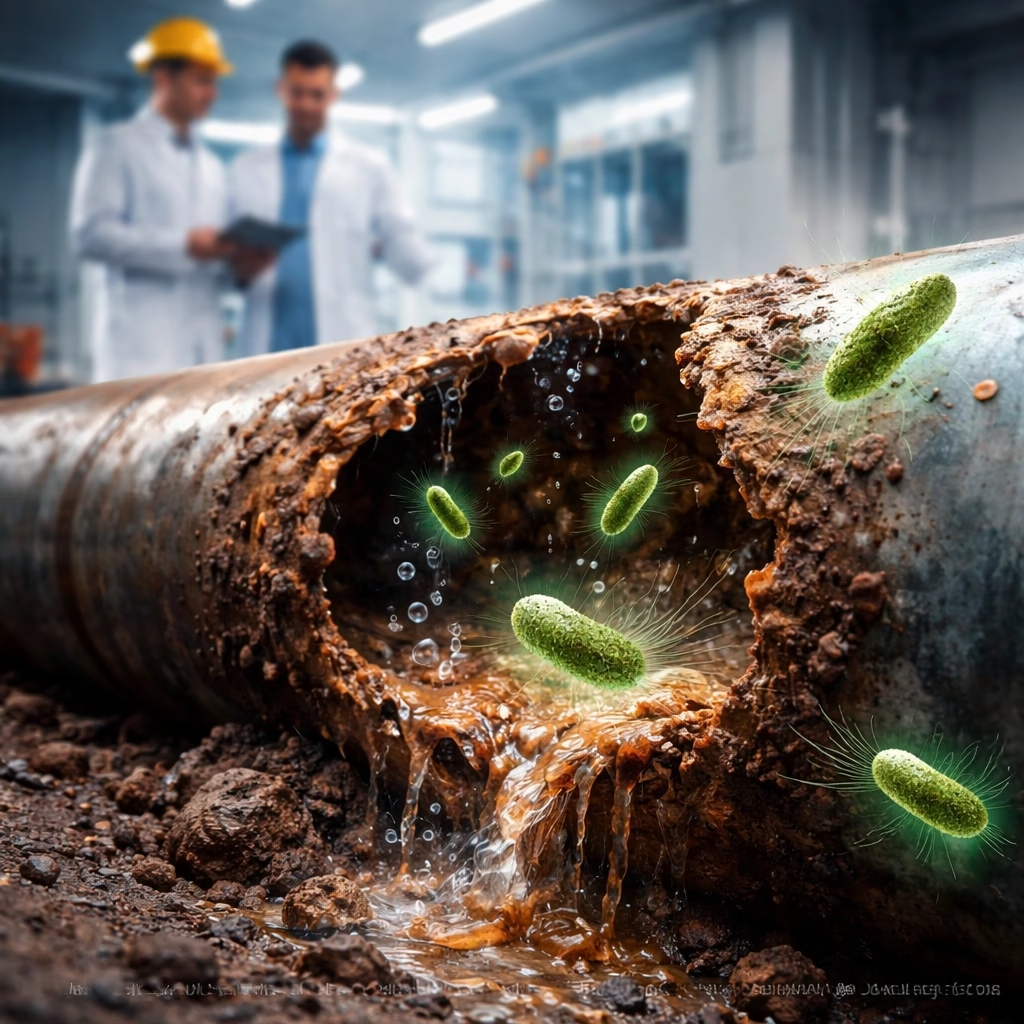
For decades, microbiologically influenced corrosion (MIC) has been recognized as a significant threat to industrial infrastructure, particularly pipelines transporting oil, gas, and water. SRB have long been implicated as primary culprits in MIC, thriving in anaerobic (oxygen-free) environments prevalent beneath protective coatings or in stagnant water. Their traditional modus operandi involves reducing sulfate to highly corrosive hydrogen sulfide, which reacts directly with steel, leading to rapid pitting and material degradation.
The economic toll of corrosion is staggering, with global estimates exceeding $2.5 trillion annually across all forms of corrosion, and MIC contributing a substantial portion. Pipeline operators, from the vast networks of North America to the intricate systems of the Middle East and Europe, grapple with constant monitoring, costly repairs, and the environmental risks associated with leaks and ruptures. Since the initial recognition of MIC in the mid-20th century, research has primarily focused on understanding SRB within strictly anaerobic contexts, shaping mitigation efforts around oxygen exclusion and broad-spectrum biocides.
Key Developments: The Aerobic Surprise and Biofilm Paradox
The paradigm shift centers on SRB’s unexpected activity in oxygenated or fluctuating oxygen environments. Previously thought to thrive exclusively in anaerobic conditions, new evidence from institutions like the Global Corrosion Research Institute (GCRI) in Houston, Texas, and the European Centre for Materials Science in Berlin, Germany, demonstrates SRB’s remarkable adaptability.
More Read

The Aerobic Adaptability
Dr. Lena Petrova, lead microbiologist at GCRI, explains, “We observed SRB forming robust biofilms on steel surfaces even when oxygen was present. This challenges the foundational understanding of their habitat.” The research, published in the *Journal of Applied Microbiology* in late 2023, details how specific gene expressions in SRB allow for this metabolic flexibility, adapting to varying oxygen levels and nutrient availability within the biofilm structure. This adaptability means SRB are not just waiting for anaerobic pockets but actively creating them.
Biofilm: From Shield to Sword
The dual role emerges as these biofilms mature. Initially, the extracellular polymeric substances (EPS) – a sticky matrix produced by bacteria – can form a transient protective layer, physically separating the steel surface from the bulk environment. “In some early stages, these biofilms might even appear to offer a slight, temporary barrier,” notes Dr. Petrova.
However, this transient protection quickly gives way to accelerated corrosion. Beneath the oxygen-excluding EPS matrix, anaerobic conditions rapidly establish. This localized microenvironment allows the SRB within the biofilm to revert to their classic sulfide-producing metabolism. This localized sulfide generation, combined with direct electron transfer mechanisms identified through advanced electrochemical impedance spectroscopy at the Berlin lab, accelerates pitting corrosion significantly. The biofilm, initially a potential shield, transforms into a concentrated corrosive factory.
More Read

Dr. Klaus Richter, a materials scientist at the European Centre, elaborated, "Our electrochemical studies show a distinct shift. What begins as a relatively benign microbial colonization quickly becomes a highly aggressive localized corrosion cell. The biofilm acts as a trap, concentrating corrosive byproducts and facilitating direct electron exchange with the steel, a process far more insidious than previously understood."
Impact: A Global Challenge Amplified
The implications for the energy and water sectors are profound. Millions of kilometers of oil, gas, and water pipelines worldwide, many operating under conditions with varying oxygen levels, are susceptible. This new understanding suggests that pipelines previously thought to be less vulnerable to SRB due to oxygen exposure may, in fact, be at significant risk.
Economic Burden
Pipeline operators face increased maintenance costs, reduced operational lifespan, and heightened risks of catastrophic failures. For instance, a major pipeline operator in the Permian Basin reported a 15% increase in corrosion-related repair costs over the past five years, a trend potentially exacerbated by these newly understood SRB behaviors. The need for more frequent inspections, targeted repairs, and premature replacements translates into billions of dollars in annual expenditures across the industry.
Environmental and Safety Risks
Beyond economics, the environmental impact of pipeline leaks – from oil spills to gas releases – can be devastating. Contamination of soil and water resources, along with greenhouse gas emissions, poses significant challenges. Furthermore, compromised pipeline integrity presents serious safety concerns for communities and personnel, underscoring the urgency of addressing this microbial threat. The dual role of SRB complicates risk assessment, as conditions once considered “safe” might now be re-evaluated.
What Next: Towards Smarter Mitigation Strategies
This new understanding opens avenues for more targeted and effective mitigation strategies, moving beyond conventional broad-spectrum approaches. Researchers and industry leaders are now focused on developing solutions that specifically address SRB’s adaptive nature and their biofilm formation capabilities.
Novel Mitigation Approaches
Instead of broad-spectrum biocides, which can harm beneficial microbes and lead to resistance, researchers are exploring “smart biocides” that disrupt specific SRB metabolic pathways or interfere with biofilm formation at critical stages. Dr. Jian Li, a materials scientist at the University of Calgary, suggests, “Future pipeline coatings could incorporate anti-biofilm agents or materials that inhibit SRB colonization under aerobic conditions, preventing the corrosive anaerobic pockets from ever forming.” These coatings could be engineered to release targeted compounds over time or to possess surfaces that resist microbial attachment.

Advanced Monitoring and Detection
Improved monitoring techniques are also under development. Advanced sensor technologies, including electrochemical probes and real-time DNA sequencing, are being designed to detect early-stage biofilm formation and localized corrosive activity before significant damage occurs. This proactive approach could allow operators to intervene precisely when and where it’s needed, optimizing maintenance schedules and reducing overall costs.
Future Research Directions
The next phase of research, projected for completion by mid-2025, will focus on validating these novel approaches in field trials across diverse operational environments, from the challenging conditions of the North Sea to arid desert pipelines in the Middle East. Further studies will delve into the specific genetic triggers for SRB’s aerobic adaptability and biofilm maturation, aiming to identify vulnerabilities that can be exploited for long-term control. Collaboration between academic institutions, industry, and regulatory bodies will be crucial in translating these scientific discoveries into practical, scalable solutions that safeguard critical infrastructure worldwide.