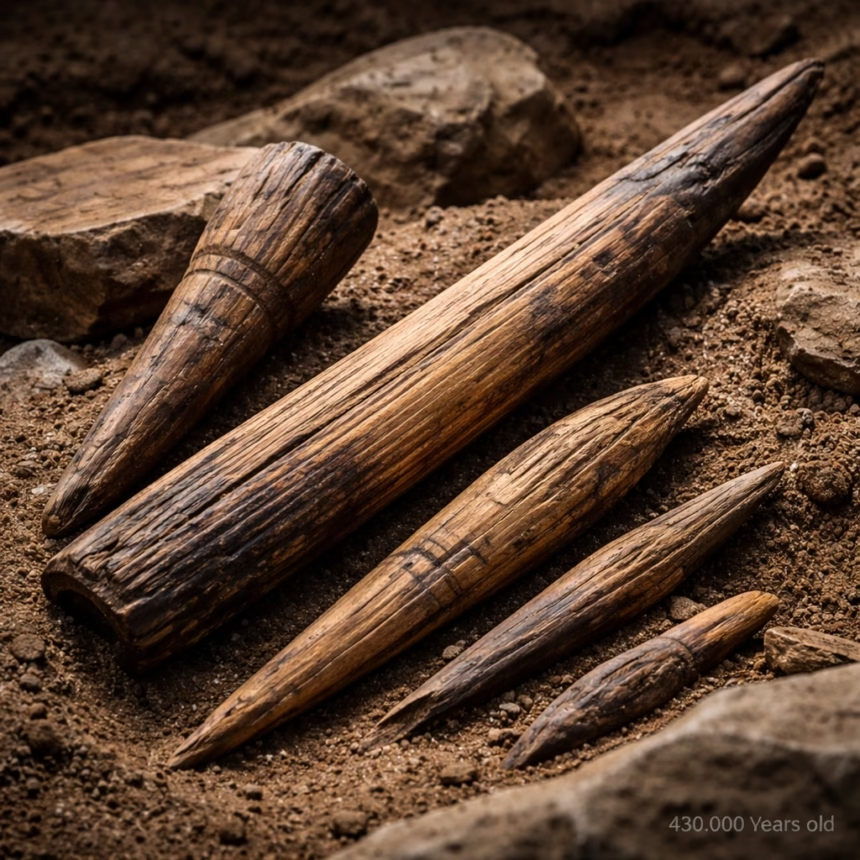
Archaeologists have unearthed an extraordinary collection of wooden tools in northern Greece, dating back approximately 430,000 years. This groundbreaking discovery, made at the prehistoric site of Marathousa, Kolindros, Pieria, marks the oldest evidence of wooden tool use ever found globally, offering unprecedented insights into early human ingenuity and technological capabilities. The artifacts push back the timeline for sophisticated woodworking by hundreds of thousands of years.
A Glimpse into Deep Time: The Context of Ancient Technologies
The discovery in Greece significantly alters our understanding of early human technology, which has predominantly focused on stone tools due to their superior preservation. For decades, the oldest confirmed wooden artifacts were the Schöningen Spears from Germany, dated to around 300,000 years ago. These spears provided compelling evidence of advanced hunting strategies and woodworking skills among Homo heidelbergensis or early Neanderthals. The Marathousa finds now predate Schöningen by a remarkable 130,000 years, extending the known history of such sophisticated craftsmanship.
The preservation of organic materials like wood from such ancient periods is exceptionally rare. Wood rapidly decomposes under most environmental conditions, making discoveries of this nature almost miraculous. The Marathousa site, situated in an ancient lakebed, provided an anoxic (oxygen-deprived) environment that perfectly encapsulated and protected these fragile tools from decay over millennia. This unique geological context is crucial to the preservation of these invaluable insights into the past.
The region of Pieria, at the foothills of Mount Olympus, has long been recognized for its rich archaeological potential, though finds of this specific antiquity and material are unprecedented. The site's stratigraphy, meticulously excavated by a collaborative team, indicates a long history of hominin presence, hinting at a stable environment conducive to settlement and resource exploitation by early human ancestors.
Unearthing the Past: Key Developments at Marathousa
The excavation at Marathousa has been a painstaking process, revealing not just the wooden tools but also a wealth of associated archaeological material. The primary tools discovered include pointed implements and what appear to be digging sticks, suggesting a range of activities from foraging for tubers and roots to potentially crafting other wooden objects or processing animal hides. The precise shaping and working of these wooden pieces indicate deliberate design and skilled execution, rather than simple opportunistic use of natural wood fragments.

Advanced Dating and Analysis
The dating of the wooden tools was achieved through optically stimulated luminescence (OSL) dating of the sediment layers encasing the artifacts. This technique measures the last time mineral grains were exposed to sunlight, providing a highly reliable chronological framework. The consistent dates across multiple samples firmly establish the 430,000-year age. Further analysis, including micro-wear studies, is underway to determine the exact function and usage patterns of each tool.
The tools were found alongside stone tools and fossilized animal remains, offering a comprehensive picture of the ancient ecosystem and hominin activities. The faunal assemblage includes evidence of large mammals, suggesting a diverse diet and interaction with the environment. The context of these finds paints a vivid picture of early hominins adapting to and exploiting their surroundings with a sophisticated toolkit that extended far beyond stone.
The research team, a collaboration between Aristotle University of Thessaloniki, the Ephorate of Palaeoanthropology and Speleology of the Greek Ministry of Culture, and international partners, employed state-of-the-art archaeological techniques to ensure the integrity of the excavation and the careful recovery of the extremely fragile wooden artifacts. The sheer scale of the find, with multiple distinct wooden implements, underscores its significance.

Reshaping Our Narrative: The Impact on Human History
This discovery fundamentally redefines our understanding of early human technological capabilities and cognitive development. It demonstrates that hominins living in Europe over 400,000 years ago possessed a much broader and more sophisticated toolkit than previously assumed. The emphasis on "Stone Age" cultures may need significant revision to incorporate the critical role of perishable materials.
The wooden tools provide direct evidence of advanced planning, problem-solving, and resourcefulness. Crafting such implements requires not only an understanding of wood properties but also the foresight to select appropriate materials and the skill to shape them effectively using other tools, likely stone flakes. This suggests a level of cognitive complexity and manual dexterity previously attributed to later hominin species.
Implications for Early Human Lifestyle
The types of tools found, particularly the pointed implements and digging sticks, offer clues about the daily lives and subsistence strategies of these ancient inhabitants. Digging sticks would have been invaluable for extracting underground plant foods, roots, and tubers, indicating a significant reliance on plant resources in their diet. Pointed tools could have served various purposes, from crafting other objects to processing animal carcasses or even as components of more complex hunting weapons.
The presence of well-preserved wooden tools also raises questions about the social organization and knowledge transmission within these early hominin groups. The skills required to consistently produce effective wooden implements would likely have been taught and learned across generations, suggesting a cultural transmission of technology that is far older than previously thought.
The Road Ahead: Future Milestones and Research
The Marathousa site promises to be a focal point for future archaeological research for years to come. The initial findings represent only a fraction of what might still be preserved within the ancient lakebed. Further excavation phases are planned to explore the full extent of the hominin occupation and to search for additional organic artifacts.
Conservation and Further Analysis
A major challenge for the research team is the long-term conservation of these delicate wooden tools. Once exposed to air, the ancient wood is highly susceptible to degradation. Specialized conservation techniques, often involving chemical treatments and controlled environments, are essential to stabilize the artifacts and ensure their preservation for future study and public display.
More Read

Beyond conservation, detailed scientific analysis will continue. Researchers aim to conduct microscopic analysis of the wood species used, identify any residues on the tools that could indicate what they were used for (e.g., plant fibers, animal fats), and explore potential hafting mechanisms if any composite tools are identified. Such studies will provide even finer details about the technology and lifestyle of these ancient Greeks.
The findings from Marathousa are expected to be published in leading scientific journals, making the detailed data and interpretations available to the global scientific community. There are also plans for public outreach, potentially including museum exhibitions, to share this extraordinary chapter of human history with a wider audience, bringing the lives of our 430,000-year-old ancestors into vivid focus.