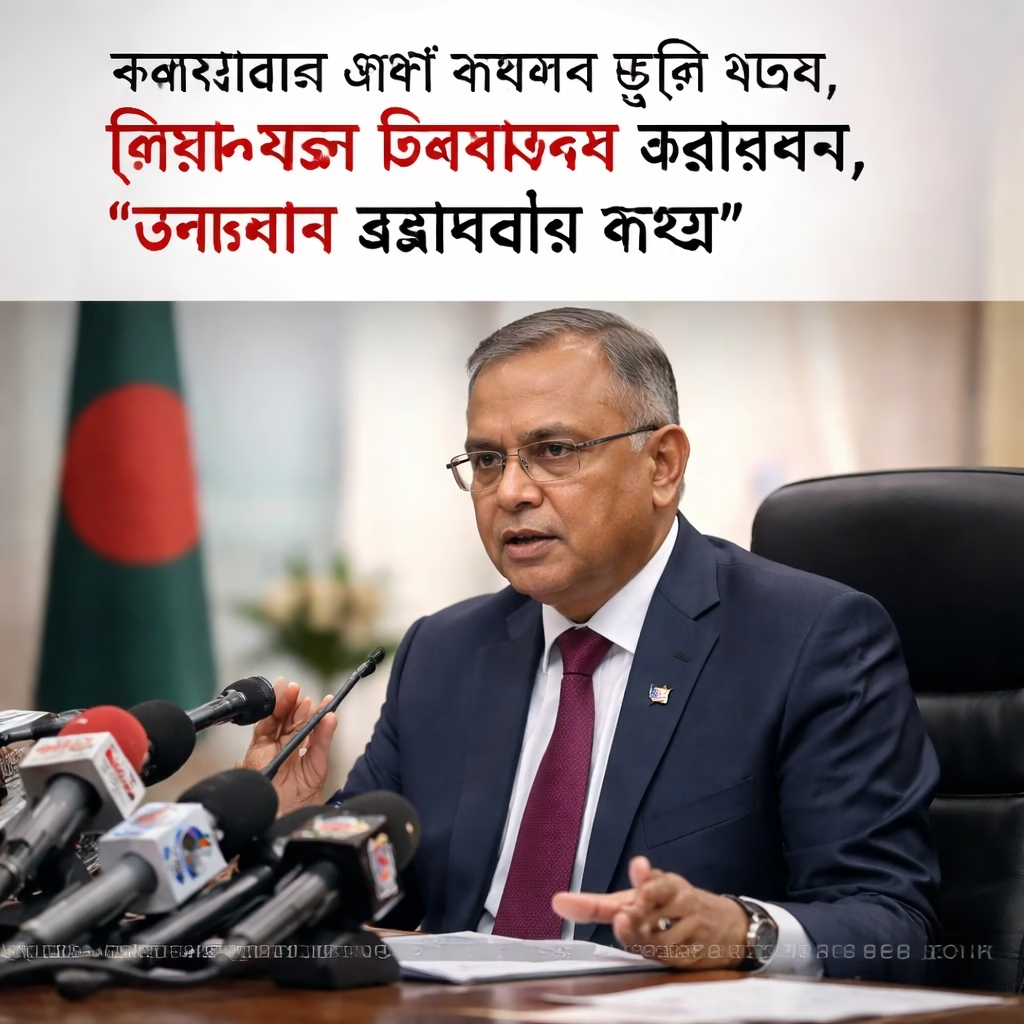
Last Minute Deals: Govt. Actions Spark Debate Ahead of Election
As the nation braces for upcoming elections, the government has finalized several agreements in its final days. These deals, spanning various sectors, have triggered discussions about their timing and potential implications. National Security Advisor, Naya Rahman, has defended the actions as a "normal part of ongoing processes."
Background
The current government, led by Prime Minister Anya Sharma of the National Unity Party (NUP), assumed office on January 15, 2023. Since then, the government has pursued a series of economic and strategic initiatives. Key policy focuses have included infrastructure development, attracting foreign investment, and strengthening regional partnerships. The upcoming general elections are scheduled for December 15, 2024, marking a crucial juncture in the country’s political landscape.
Historically, governments often accelerate finalization of agreements towards the end of their term. This can be driven by a desire to secure commitments, finalize projects, and leave behind tangible achievements. However, the timing can also raise questions about potential political motivations and the long-term benefits for the nation.
Key Developments
In the past two weeks, the government has announced several significant agreements. Notably, a deal with the European Union for increased investment in renewable energy projects in the coastal region of Sylhet was finalized on November 10th. This agreement is projected to bring in $2.5 billion in foreign direct investment over the next five years.
More Read

Furthermore, a defense cooperation agreement with the Kingdom of Solara was signed on November 15th. The agreement includes joint military exercises and technology transfer, aimed at bolstering regional security. Details of the technology being transferred remain confidential, but sources suggest it relates to maritime surveillance.
A less publicized, but equally significant, agreement involves a land swap deal with the neighboring country of Veridia, concerning a disputed border region near the city of Brahmaputra. The details of the swap, involving approximately 500 hectares of land on both sides, were announced on November 20th. This deal is expected to facilitate improved trade relations and reduce border tensions.
Impact
These agreements have a wide-ranging impact across various sectors. The renewable energy investment is expected to create thousands of jobs in Sylhet and contribute significantly to the country’s clean energy goals. The defense cooperation agreement with Solara is likely to enhance the nation’s military capabilities and strengthen its position in the region. The land swap deal with Veridia could pave the way for increased economic cooperation and improved diplomatic relations.
More Read

However, the agreements have also drawn criticism. Opposition parties, particularly the Progressive Alliance (PA) led by leader Rohan Das, have raised concerns about the transparency of the deals and the potential for corruption. “The timing of these agreements, so close to the election, is highly suspicious,” stated Das in a press conference on November 22nd. "We need full disclosure of all terms and conditions to ensure the interests of the nation are protected."
Civil society organizations are also scrutinizing the agreements, focusing on environmental and social impacts. Concerns have been raised regarding potential displacement of communities due to the land swap deal and the environmental consequences of the renewable energy projects.
What Next
The government has assured the public that all agreements will be fully transparent and subject to parliamentary scrutiny. Prime Minister Sharma has stated that the agreements are in the best interests of the country and will contribute to its long-term development.
The agreements will now proceed through the necessary legal and administrative processes. The renewable energy project is expected to begin construction within the next six months. The defense cooperation agreement will be implemented through a series of joint training exercises and technology transfer programs. The land swap deal requires ratification by both parliaments – the National Parliament of the country and the Veridian National Assembly – and is anticipated to be completed by the end of 2025.
Transparency Concerns
The government has pledged to publish the full text of all agreements on its website within the next two weeks. Parliamentary debates on the agreements are scheduled to begin in December. The Election Commission has also stated that it will monitor the situation closely to ensure that the agreements do not violate any electoral laws.
Opposition Response
The Progressive Alliance plans to table a motion of no confidence in the government during the upcoming parliamentary session, focusing on the lack of transparency surrounding the agreements. They are also calling for an independent investigation into allegations of financial irregularities.