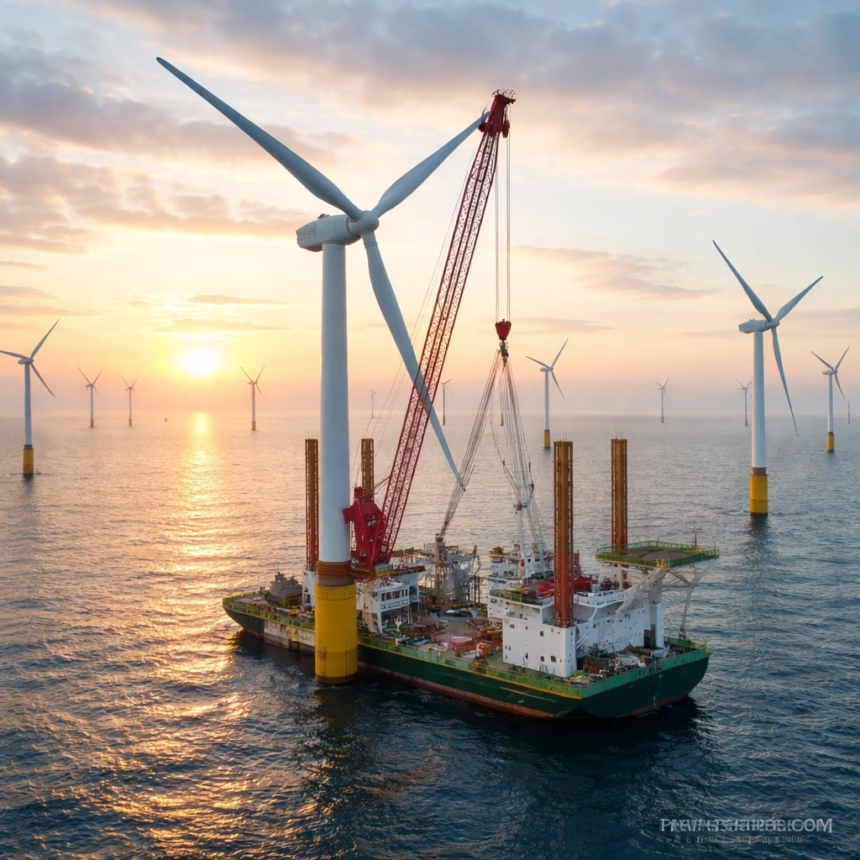
Wind Power Surge: Construction Back On Track for US Offshore Projects
A recent court decision has halted legal challenges to offshore wind development in the United States, paving the way for a significant acceleration of construction projects along the Atlantic coast. The ruling, issued on October 26, 2023, by the U.S. Court of Appeals for the D.C. Circuit, effectively reverses previous injunctions that had stalled or delayed numerous projects.

Background
The push for offshore wind energy in the U.S. gained momentum in the early 2020s, driven by ambitious climate goals and the potential for clean energy generation. The Biden administration set a goal to develop 30 gigawatts (GW) of offshore wind power by 2030 – enough to power approximately 23 million American homes. This goal has spurred significant investment and project development across the Atlantic, Pacific, and Gulf coasts.
Several projects, including Vineyard Wind in Massachusetts and Sunrise Wind in Rhode Island and Massachusetts, have faced legal challenges from groups concerned about environmental impacts, particularly on marine life and fishing industries. These challenges have often focused on the adequacy of environmental reviews conducted by the Bureau of Ocean Energy Management (BOEM).

Key Developments
The latest court ruling directly addresses these challenges. The court dismissed a lawsuit filed by the Vineyard Wind Association and other groups, which argued that BOEM had failed to adequately consider the potential impacts of the Vineyard Wind project on Atlantic right whales. The court found that BOEM had followed established procedures and that the agency's environmental review was sufficient.
This decision follows a series of legal battles impacting offshore wind development. In 2022, a federal judge blocked the BOEM’s lease sale for the South Atlantic Ocean, citing inadequate environmental reviews. However, the D.C. Circuit Court of Appeals overturned that ruling in early 2023. The October 26th decision marks a major turning point, removing a significant hurdle to the rapid deployment of offshore wind energy.
Impact
The court’s decision has broad implications for the offshore wind industry and related sectors. Developers of projects in the Mid-Atlantic states (Maryland, Virginia, Delaware, New Jersey, and New York) are expected to see renewed momentum. The resumption of construction will create thousands of jobs in manufacturing, construction, and operations.

The fishing industry, which has been a primary source of concern for opponents of offshore wind, will continue to be engaged in discussions with developers and government agencies. Mitigation measures, such as adjustments to turbine placement and operational protocols, are being explored to minimize potential disruptions to fishing grounds and marine ecosystems. The economic benefits for coastal communities, including increased tax revenue and new business opportunities, are also expected to be amplified.
What Next
Project Timelines
While the court ruling removes a major legal obstacle, the projects still face several steps before completion. Vineyard Wind, which began construction in 2023, is currently expected to begin generating electricity in late 2024. Sunrise Wind is aiming for a similar timeline, with anticipated power generation in 2025. Other projects are expected to follow, with construction timelines varying depending on project size and complexity.
Environmental Monitoring
Ongoing environmental monitoring will remain a critical component of offshore wind development. BOEM and project developers will continue to assess the impacts of these projects on marine life and habitats. This includes tracking whale populations, monitoring water quality, and evaluating the effectiveness of mitigation measures.
Future Lease Sales
The Biden administration is planning future lease sales for additional offshore wind projects in the Gulf of Maine and other areas. These lease sales will be crucial for achieving the 30 GW goal by 2030. The administration has emphasized its commitment to conducting thorough environmental reviews and engaging with stakeholders throughout the lease sale process.
The October 26th ruling represents a significant victory for the offshore wind industry and a major step toward achieving the U.S.’s clean energy goals. However, continued collaboration between developers, government agencies, scientists, and coastal communities will be essential to ensuring that these projects are developed in a sustainable and responsible manner.