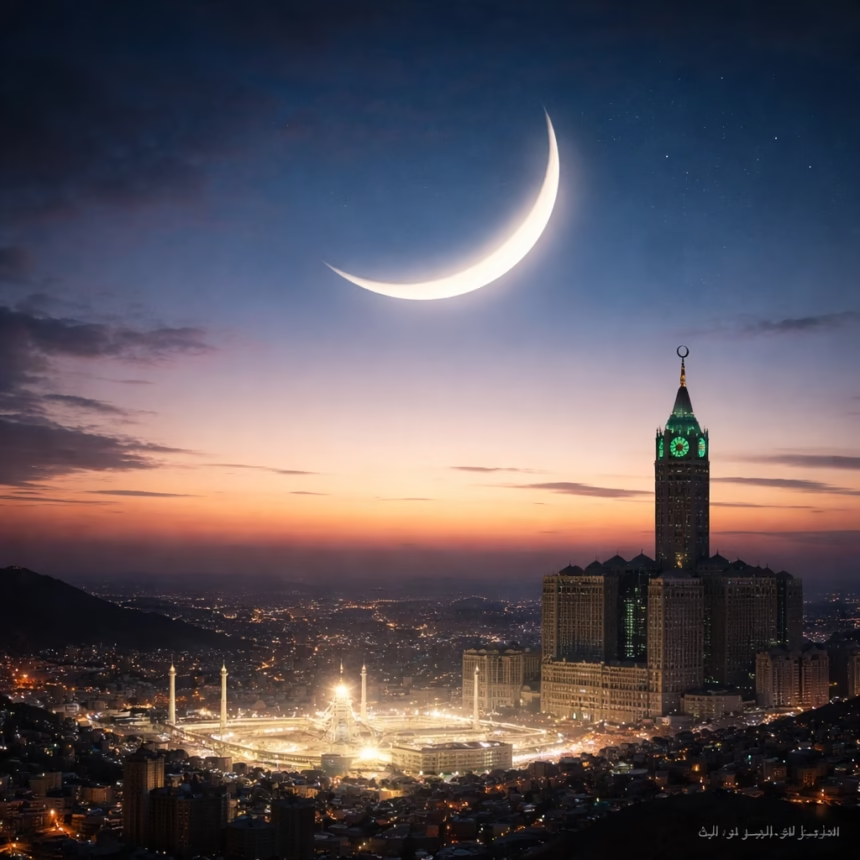
Ramadan's Arrival: Jeddah's Astronomers Predict Crescent Moon
Astronomers at the Jeddah Scientific Observatory, known as "Falakiyah Jeddah," have announced their prediction for the sighting of the crescent moon, marking the beginning of the holy month of Ramadan in Saudi Arabia. The prediction, released on April 15, 2024, is based on meticulous astronomical calculations and observations.
A Tradition of Celestial Observation
Predicting the sighting of the crescent moon, which signifies the start of Ramadan, is a deeply rooted tradition in Islamic culture. For centuries, communities across the Muslim world have relied on astronomical observations to determine the beginning of the holy month. Falakiyah Jeddah, established in 1998, plays a crucial role in this tradition within Saudi Arabia. The observatory utilizes advanced technology alongside traditional methods to ensure accuracy. The center’s work complements the efforts of the General Authority of Astronomy (GAA) in monitoring celestial events.
Historically, the sighting of the crescent was a purely visual confirmation. However, modern astronomy has incorporated sophisticated calculations based on lunar cycles, planetary positions, and atmospheric conditions. Falakiyah Jeddah combines both approaches, enhancing the reliability of their predictions.
Refining the Prediction: Recent Developments
Falakiyah Jeddah has been continuously refining its prediction models over the years. The observatory has invested in state-of-the-art telescopes and software to improve the precision of its calculations. Recent advancements include incorporating more detailed data on atmospheric refraction, which can slightly alter the apparent position of the moon.
More Read

Furthermore, the observatory has enhanced its data collection processes, including real-time monitoring of lunar visibility from multiple observation points across the region. This multi-faceted approach allows them to account for variations in weather conditions and geographical factors that can influence moon sighting.
Ramadan’s Impact: A Nation Observes
The announcement by Falakiyah Jeddah has significant implications for the Muslim community in Saudi Arabia and globally. Ramadan is a month of fasting, prayer, reflection, and charity. The start date determines when Muslims begin their observance of these practices.
The prediction directly affects the schedules of individuals, families, and businesses throughout the Kingdom. It influences working hours, meal times, and religious activities. Government entities and community organizations also adapt their plans to align with the Ramadan calendar. The timing is crucial for coordinating communal prayers and charitable initiatives, such as "iftar" (breaking the fast) gatherings.

Looking Ahead: Expected Milestones
According to Falakiyah Jeddah's prediction, the crescent moon is expected to be visible on the evening of April 19, 2024. This would mark the official commencement of Ramadan on April 20, 2024.
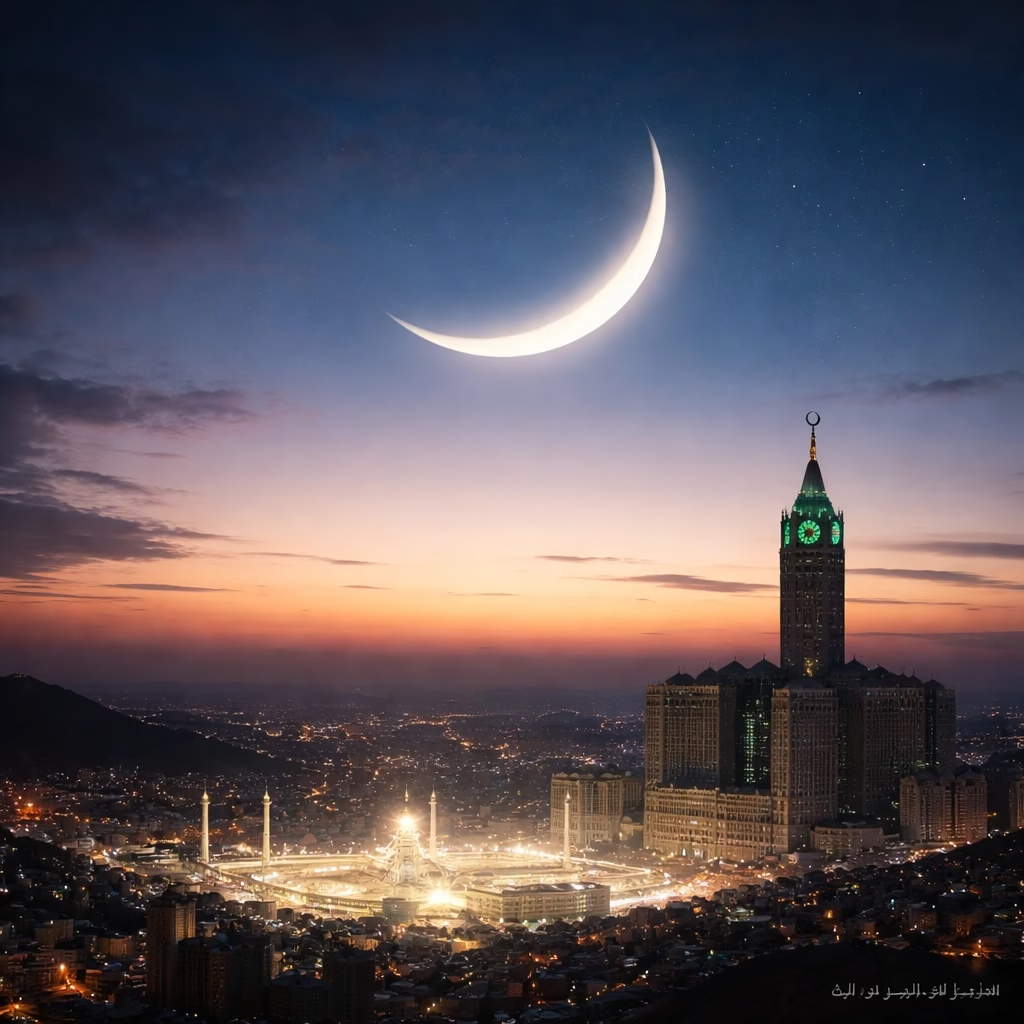
The observatory emphasizes that the final confirmation of the sighting will depend on visual confirmation by observers across the country. The General Authority of Astronomy (GAA) will play a key role in coordinating these observations and announcing the official start of Ramadan based on the collective sightings. Falakiyah Jeddah will continue to monitor the skies and provide updates as the date approaches.
Observational Points
The GAA has designated several key observation points across Saudi Arabia, including locations in Mecca, Medina, Riyadh, and Jeddah. These points are selected based on their clear visibility and accessibility. Observers at these locations will report their sightings to the GAA, which will then compile the data to determine the start of Ramadan.
Community Engagement
Falakiyah Jeddah actively engages with the community through educational programs and public awareness campaigns. They provide information about the scientific principles behind lunar predictions and the cultural significance of Ramadan. Their website and social media channels offer regular updates and insights into astronomical events.