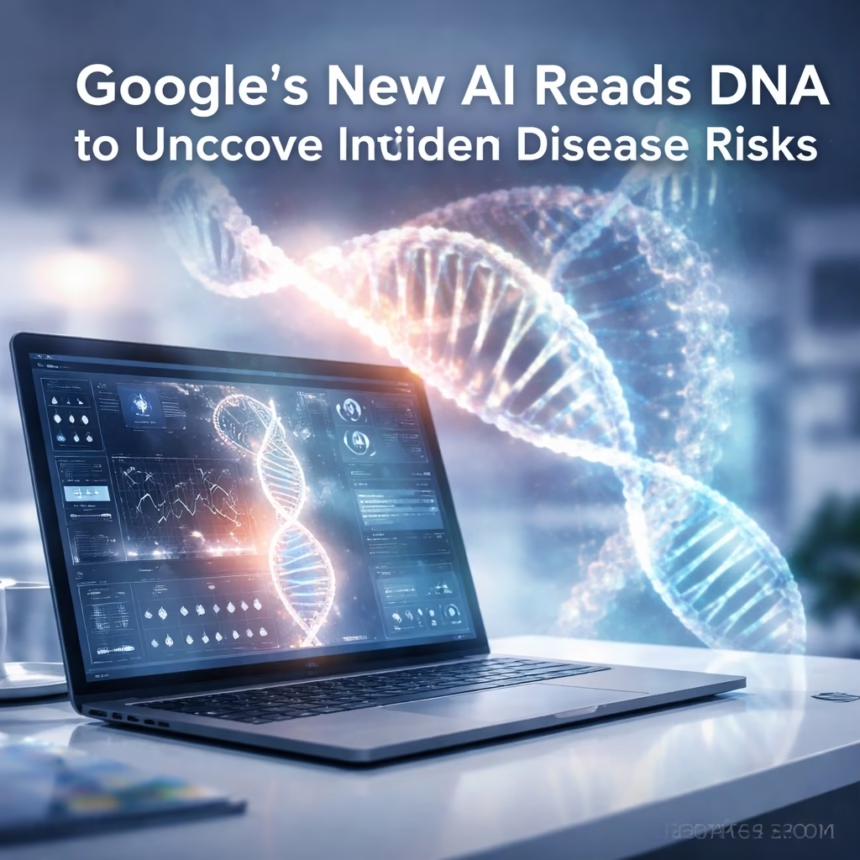
Future Health? Google's AI Deciphers Your Genetic Code
Google DeepMind has announced a significant advancement in artificial intelligence, demonstrating its ability to analyze DNA sequences with unprecedented accuracy to predict disease risks. The research, published in *Nature*, details a new AI model capable of identifying subtle patterns in genetic code linked to a range of conditions, potentially revolutionizing preventative healthcare. The findings were presented at the International Conference on Machine Learning (ICML) in Honolulu, Hawaii, on July 29, 2023.
Background
For decades, understanding the human genome has been a central goal of biomedical research. The Human Genome Project, completed in 2003, mapped the entire human genome, providing a foundational blueprint of our genetic makeup. However, interpreting this complex code to predict disease susceptibility has remained a formidable challenge. Traditional methods of genetic analysis are often slow, expensive, and limited in their ability to detect subtle, complex relationships between genes and health outcomes.
Machine learning, particularly deep learning, has emerged as a powerful tool in genomics. Researchers have been developing AI models to analyze vast datasets of genomic information, hoping to identify biomarkers – genetic indicators – of disease. Early efforts focused on specific diseases like cancer, but the goal has always been to create a more generalizable system capable of predicting risks across a wider range of conditions.
Key Developments
Google DeepMind’s latest AI model, called AlphaFold, initially gained prominence for its ability to predict protein structures from amino acid sequences. This breakthrough significantly accelerated drug discovery and biological research. Now, the team has adapted AlphaFold’s technology to analyze DNA sequences. This new iteration, unveiled in July 2023, demonstrates a significant leap forward in the accuracy and speed of disease risk prediction.
More Read

The model was trained on a massive dataset of over 200 million protein sequences and their corresponding DNA sequences. Using this data, AlphaFold can predict how variations in DNA affect protein structure and function, and consequently, influence disease development. During testing, the AI demonstrated a marked improvement in its ability to predict disease risk compared to existing methods, achieving higher accuracy in identifying genetic variants associated with conditions like heart disease, Alzheimer’s disease, and certain types of cancer. The model’s predictive power is particularly notable for identifying rare genetic variants that are often missed by traditional analyses.
Impact
The potential impact of this technology is far-reaching. Early applications could involve personalized risk assessments, allowing individuals to understand their predisposition to certain diseases. This information can empower people to make proactive lifestyle changes, such as adopting healthier diets or increasing exercise, to mitigate their risk. Healthcare providers could also use the AI to identify individuals who would benefit from early screening or preventative interventions.

Beyond individual risk assessment, the AI could accelerate drug discovery by identifying novel drug targets. By understanding how genetic variations influence disease pathways, researchers can design more effective and targeted therapies. The technology could also facilitate more precise diagnoses, leading to more appropriate and effective treatment plans. However, the ethical implications of widespread genetic testing and risk prediction are also being carefully considered. Concerns regarding data privacy, genetic discrimination, and the psychological impact of knowing one's genetic predispositions are being actively debated.
Ethical Considerations
The use of AI in genetic analysis raises significant ethical questions. Ensuring data privacy and security is paramount, as genetic information is highly sensitive. There are also concerns about potential genetic discrimination, where individuals could be denied insurance or employment based on their genetic risk profiles. Researchers and policymakers are working to develop ethical guidelines and regulations to address these challenges.
What Next
Google DeepMind plans to continue refining the AI model and expanding its capabilities. Future research will focus on improving the AI’s ability to predict the risk of complex diseases influenced by multiple genetic and environmental factors. The team also intends to make the technology more accessible to researchers and healthcare providers worldwide. A key goal is to integrate the AI into clinical workflows, making it a practical tool for personalized medicine. Initial clinical trials are expected to begin in 2024, focusing on specific disease areas. Wider availability is anticipated within the next 3-5 years, contingent on regulatory approvals and further validation of the technology's performance.