Nuclear Clock Ticking: Will Peace Prevail?
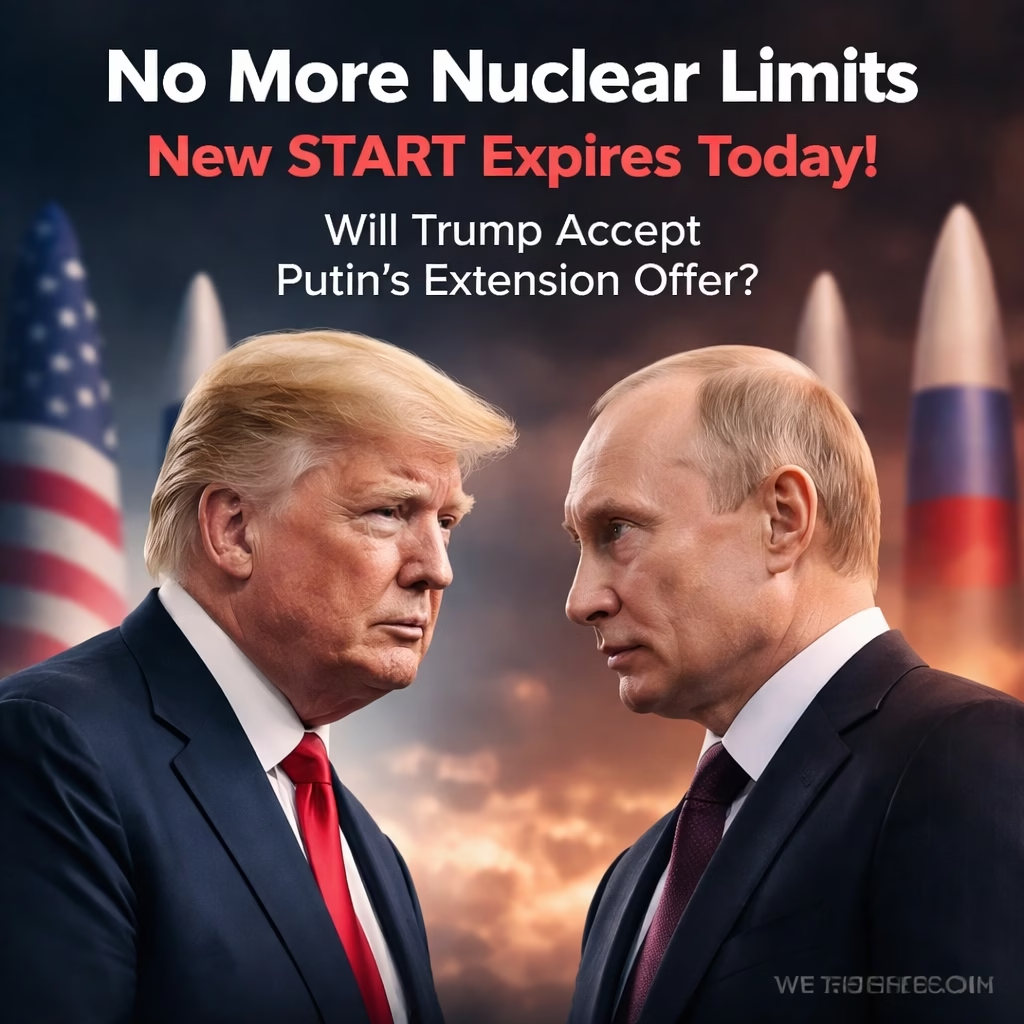
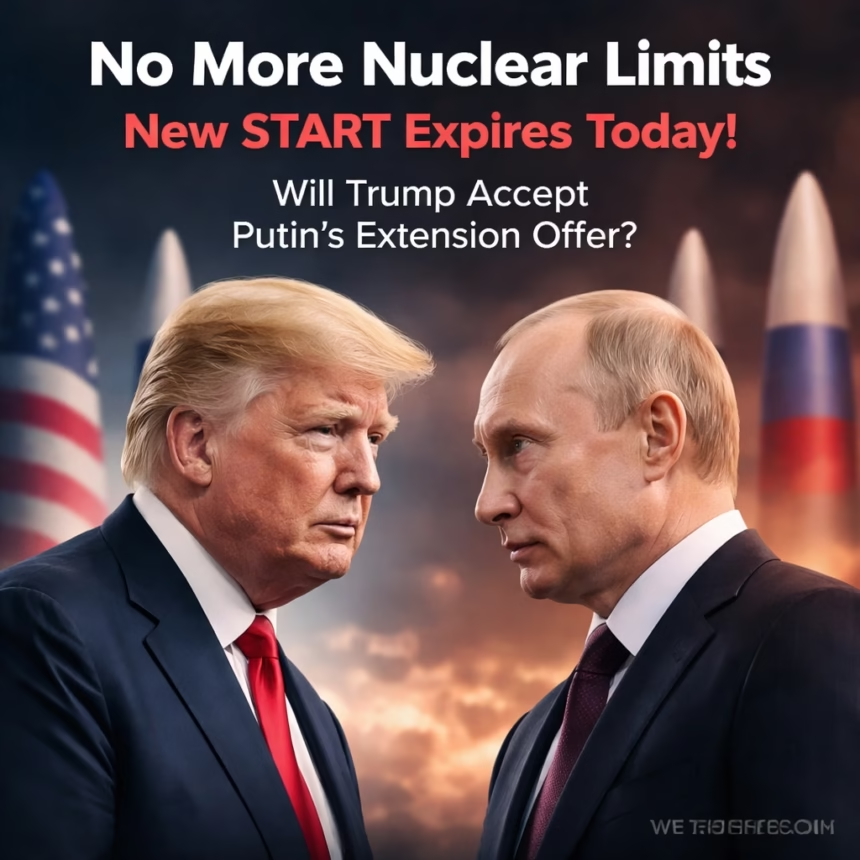
The New Strategic Arms Reduction Treaty (New START), the last remaining nuclear arms control treaty between the United States and Russia, expired today, February 5, 2023. This marks a significant moment in international security, raising questions about the future of nuclear arms control and the potential for increased tensions between the world's two largest nuclear powers.
Background
New START, signed in 2010 by then-U.S. President Barack Obama and Russian President Dmitry Medvedev, was a landmark agreement aimed at reducing the number of strategic nuclear warheads and delivery systems held by each country. It capped deployed strategic nuclear warheads at 1,550 and deployed intercontinental ballistic missile (ICBM) systems at 1,000. The treaty also included provisions for verification and data exchange, allowing both nations to monitor compliance. It replaced the 1991 Intermediate-Range Nuclear Forces (INF) Treaty, which was terminated by the U.S. in 2019.
The treaty was initially set to expire in 2026, but an extension was agreed upon in 2022, extending its lifespan until 2026. However, the extension hinged on Russia's willingness to participate. The agreement was reached amidst heightened geopolitical tensions, particularly following Russia's invasion of Ukraine in February 2022.
Key Developments
Negotiations for the extension were protracted and complex, marked by numerous rounds of diplomatic discussions between officials from the U.S. and Russia. Concerns over Russia’s actions in Ukraine significantly complicated the process. The U.S. maintained that the extension was crucial for maintaining stability and predictability in the nuclear arena.
More Read

In late February 2023, Russian President Vladimir Putin announced that Russia would extend its participation in New START. This decision came after intense discussions with his foreign minister, Sergey Lavrov. While the extension offers a reprieve, it does not resolve the fundamental issues underlying the strained relationship between Washington and Moscow.
Impact
The expiration of New START has immediate consequences for the strategic balance of power. Without the treaty's verification mechanisms, there is increased uncertainty about the size and capabilities of each country's nuclear arsenals. This lack of transparency can fuel mistrust and potentially escalate risks.
The impact extends beyond the two nuclear powers. Other nations, particularly those with concerns about nuclear proliferation, are closely watching the developments. The uncertainty surrounding nuclear arms control could embolden other countries to pursue their own nuclear weapons programs, further destabilizing the global security landscape. NATO allies have expressed relief at the extension, but remain vigilant regarding Russia's military posture.

What Next?
While the extension provides a temporary solution, the future of nuclear arms control remains uncertain. The U.S. and Russia have indicated willingness to engage in further discussions about potential future agreements, but significant obstacles remain.
Possible Future Scenarios
Further Arms Control Agreements: Negotiations could resume to address new weapons systems, such as hypersonic missiles, and to expand the scope of arms control beyond strategic nuclear weapons.
Continued Stalemate: Geopolitical tensions could prevent progress on arms control, leading to a gradual erosion of existing agreements and a further increase in strategic instability.
New Treaty Framework: A completely new treaty framework might be proposed, potentially incorporating new verification methods and addressing emerging threats to nuclear security.
The next few months will be critical in determining the direction of nuclear arms control. Diplomatic efforts will likely focus on establishing a framework for future dialogue and addressing the underlying issues that have hindered progress in recent years. The world watches closely as the nuclear clock continues to tick.