Space Tourism Just Leapt Forward: Private Spaceflight Gets a Massive Upgrade
Axiom Space, a leading company in commercial spaceflight, has announced significant advancements for its planned missions to the International Space Station (ISS), poised to dramatically expand opportunities for private citizens and commercial entities beginning in 2027.
Background: The Rise of Commercial Space
The commercialization of space began gaining traction in the mid-2010s, spearheaded by companies like SpaceX and Blue Origin. Initially focused on cargo resupply missions to the ISS, the industry has rapidly evolved to include crewed missions and, more recently, space tourism. Axiom Space, founded in 2018 by former NASA astronauts and leaders, specifically targets the burgeoning space tourism market and aims to facilitate private missions to the ISS.
Axiom’s strategy involves building its own commercial modules to the ISS, eventually creating a dedicated commercial space station. This modular approach allows for greater flexibility and customization for paying customers.
Key Developments: Enhanced Capabilities and Expanded Services
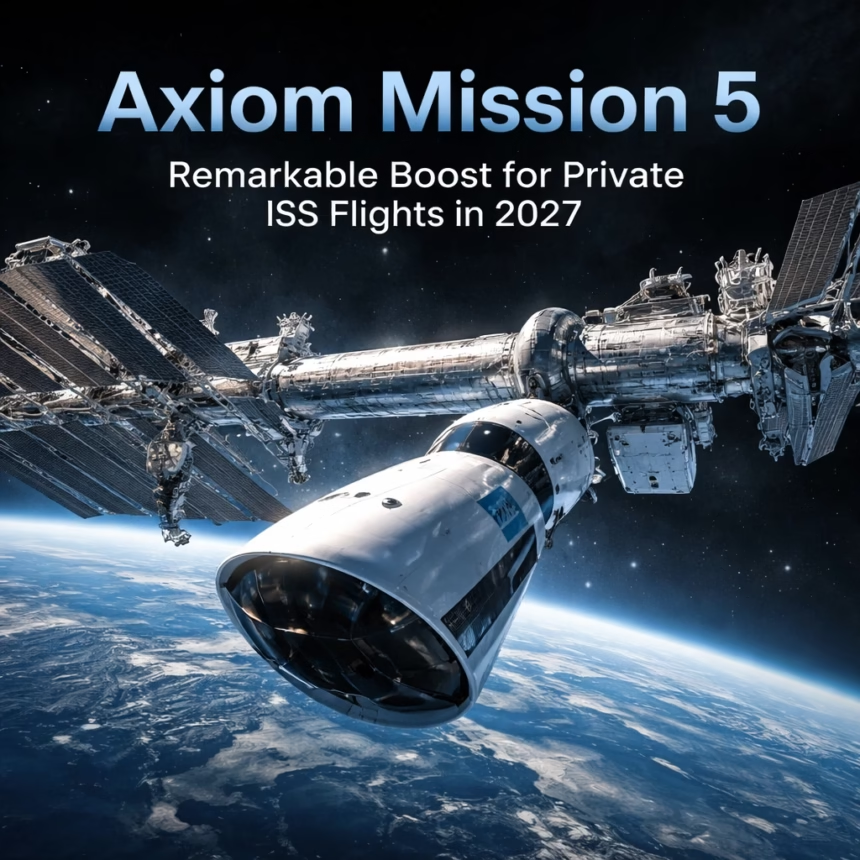
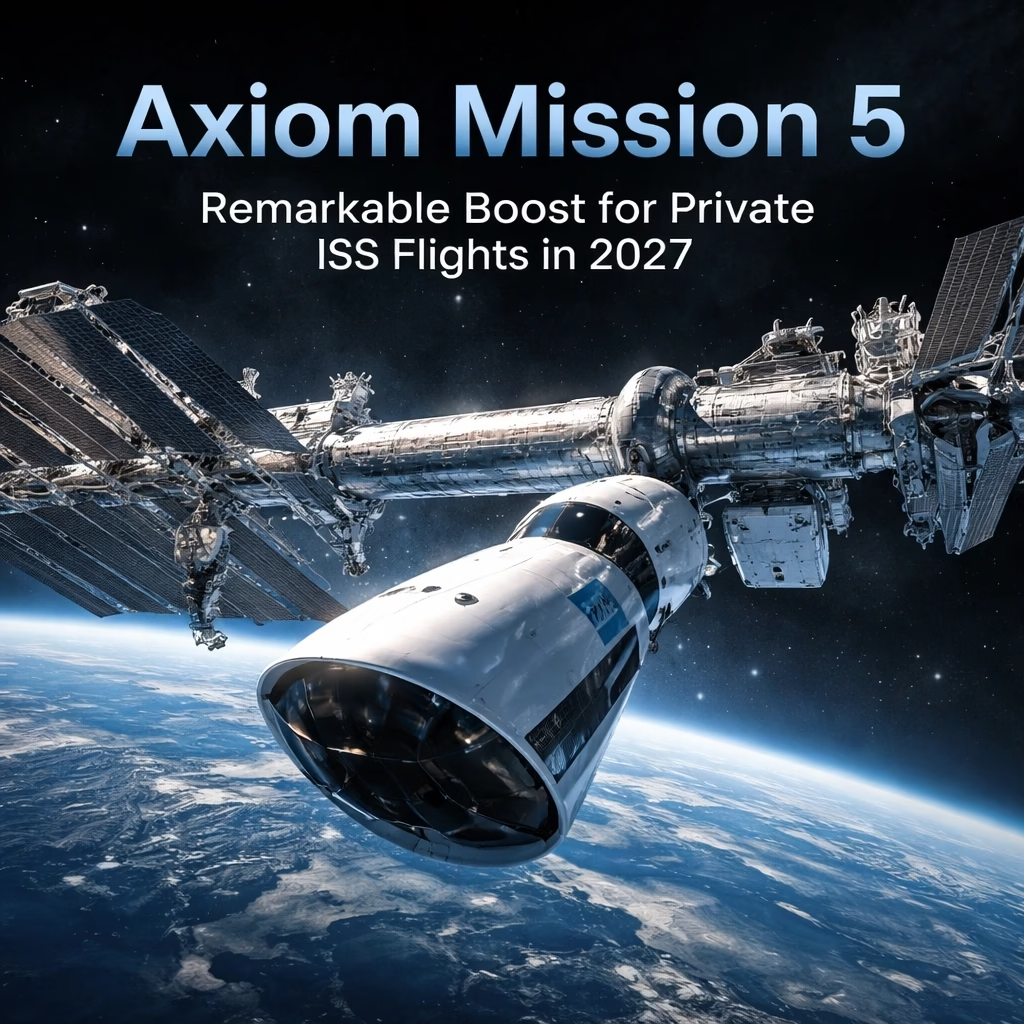
Axiom Space recently unveiled substantial improvements to its planned 2027 missions. These include a redesigned crew capsule offering increased life support capacity and enhanced safety features. The new capsule is designed to accommodate up to four passengers and two crew members, a significant increase from earlier plans.
More Read

Furthermore, Axiom has partnered with several aerospace technology firms, including Sierra Space, to integrate advanced research modules into its missions. These modules will allow researchers to conduct experiments in microgravity, opening doors for advancements in fields like pharmaceuticals, materials science, and biotechnology. The partnership includes the integration of Sierra Space’s DreamStation, a dedicated research module.
Crucially, Axiom has secured additional funding, totaling $500 million, from a consortium of private investors and government agencies, ensuring the financial viability of its expanded program. This funding will be directed towards capsule development, mission operations, and personnel training.

Impact: Who Benefits from the Upgrade?
The advancements announced by Axiom will have a ripple effect across various sectors. Space tourists will benefit from safer, more comfortable, and more scientifically enriching experiences. The increased capacity will allow for more frequent missions and a wider range of participants, potentially lowering the cost of space travel over time.
Researchers and scientists will gain access to a more robust platform for conducting experiments in microgravity, accelerating scientific discovery. Commercial entities can leverage the ISS for testing new technologies and developing products that cannot be replicated on Earth. Companies interested in developing new materials, pharmaceuticals, or manufacturing processes will find the ISS an increasingly attractive testbed.
The increased commercial activity is also expected to stimulate job growth in the aerospace industry, creating opportunities for engineers, technicians, and support personnel.
What Next: Milestones on the Horizon
Axiom Space is currently focused on completing the final stages of its crew capsule development and undergoing rigorous testing. The first crewed mission to the ISS using Axiom’s modules is still targeted for 2027, although potential delays are always possible in spaceflight programs.
Key Milestones for 2024-2026
- Q3 2024: Completion of capsule testing and certification.
- 2025: Finalization of commercial module integration with the ISS.
- 2026: First private astronaut training program commences.
Long-Term Vision
Axiom’s long-term vision extends beyond simply facilitating trips to the ISS. The company aims to establish its independent commercial space station, Axiom Space Station (AxS), by 2030. This station will serve as a hub for research, manufacturing, and tourism, furthering the commercialization of space and paving the way for deeper exploration of the solar system.
The company is actively exploring partnerships with international space agencies, including NASA, ESA, and JAXA, to collaborate on future space exploration initiatives.