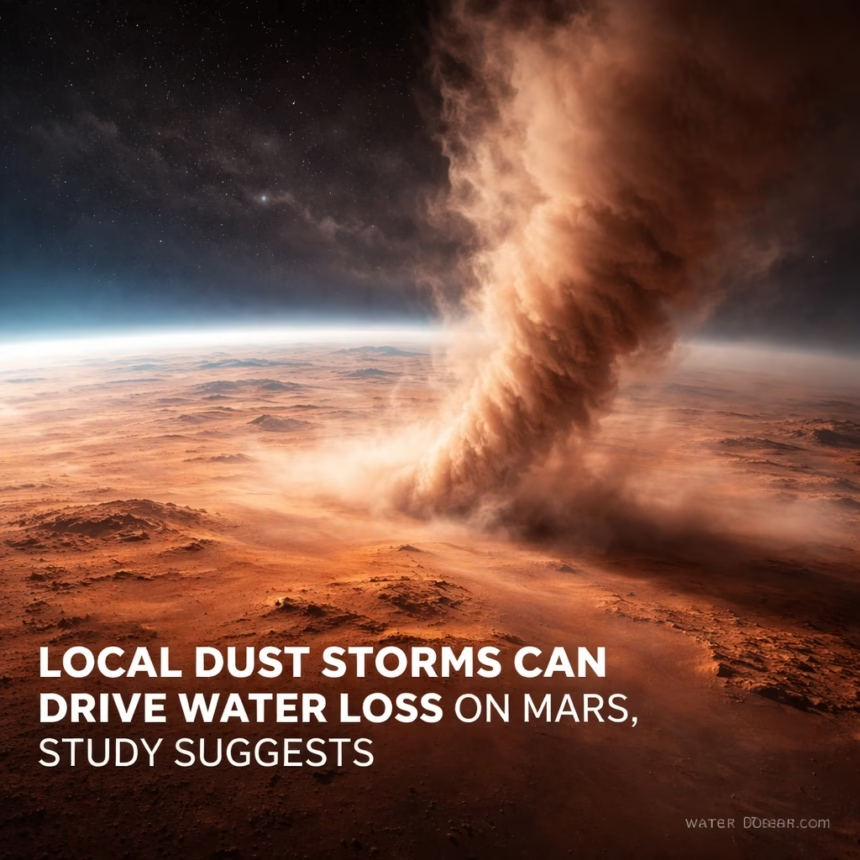
Mars' Tiny Troubles: Dust Clouds Fuel Dehydration Concerns
New research published in *Nature Communications* on October 26, 2023, suggests that even small dust storms on Mars can significantly contribute to water loss from the planet's surface. The findings have implications for understanding the long-term habitability of the red planet and the search for past or present life.
Understanding the Martian Climate: A Brief History
Mars, the fourth planet from the Sun, has long captivated scientists with its potential to have once harbored liquid water. Over billions of years, the planet’s atmosphere has thinned considerably, losing much of its initial water through various processes. The current Martian atmosphere is primarily composed of carbon dioxide, with trace amounts of water vapor. Understanding the mechanisms that govern water loss is crucial to reconstructing Mars' climatic history and assessing its present-day habitability.
Previous studies have focused on large-scale dust storms, which can engulf the entire planet, as major drivers of water loss. However, this new research highlights the often-overlooked impact of smaller, localized dust events.
The Dust’s Role: New Insights from Observations
Researchers at the University of Colorado Boulder, using data from the Mars Reconnaissance Orbiter (MRO) and the Mars Climate Sounder, have uncovered a surprising connection between dust storms and water loss. They focused on understanding how dust interacts with the Martian atmosphere and surface, particularly during events that don’t necessarily block sunlight globally.
More Read

The study revealed that dust storms, even those covering relatively small areas – sometimes just a few thousand square kilometers – can drastically increase the rate of water sublimation. Sublimation is the process where a solid, like ice, transitions directly into a gas without passing through a liquid phase.
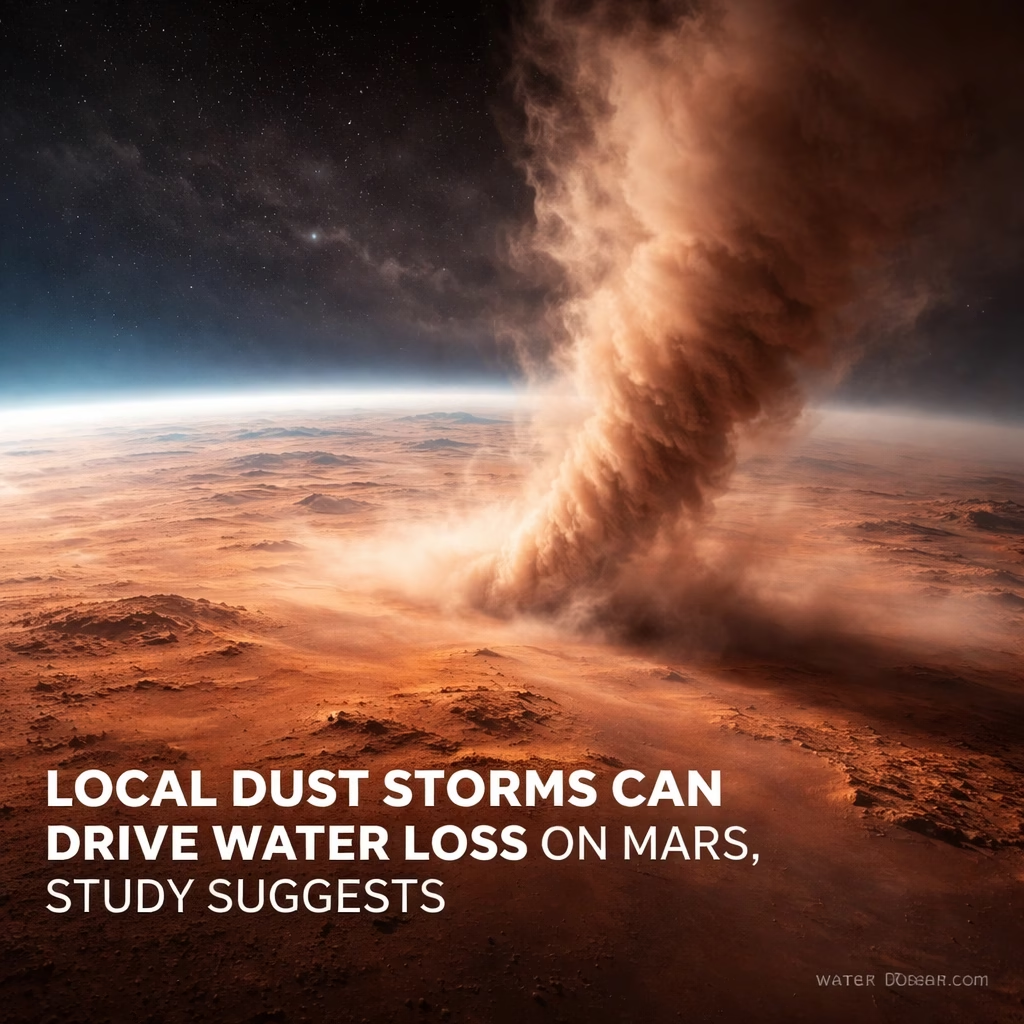
The team observed that dust particles absorb solar radiation, warming the surface. This increased surface temperature accelerates the sublimation of ice – present in the form of frost or ice deposits – and hydrated minerals. This process releases water vapor into the atmosphere, effectively contributing to a net loss of water from the planet.

The research specifically highlighted dust storms occurring in the mid-latitudes of Mars, particularly in the southern hemisphere, during the Martian spring and summer months (roughly March to September). These regions experience increased solar insolation, making them more susceptible to dust-driven water loss.
Who’s Affected? Implications for Exploration
The findings are important for future Mars missions, including those focused on searching for evidence of past life. Understanding the rate of water loss is critical for interpreting geological features and identifying potential sites where liquid water may have once existed.
For example, regions believed to have held subsurface ice deposits could have experienced accelerated dehydration due to dust storms, potentially altering the habitability of those areas over time. This impacts planning for resource utilization – extracting water for propellant or life support – which relies on knowing the availability and stability of water ice.
Future rovers and landers will need to account for the impact of dust storms on water resources and the overall Martian environment when planning their operations. The potential for dust to affect instrument performance is also a consideration.
Looking Ahead: Future Research and Missions
The research team plans to continue analyzing data from MRO and other Martian orbiters to refine their understanding of the link between dust storms and water loss. They are also developing more sophisticated models to predict the impact of future dust storms on the Martian climate.
The European Space Agency’s ExoMars Trace Gas Orbiter (TGO), which has been analyzing the Martian atmosphere since 2016, will continue to provide valuable data on atmospheric composition and water vapor levels. Future missions, such as NASA's Mars Sample Return campaign, will provide opportunities to directly analyze Martian samples and reconstruct the planet’s water history.
More Read

The findings underscore the complex interplay of factors that shape the Martian environment and highlight the importance of continued exploration to unravel the mysteries of the red planet. Further research is needed to determine the full extent of dust-driven water loss and its impact on the planet's long-term evolution.
Dust Storm Modeling
Researchers are developing advanced computer models to simulate dust storm behavior and predict their impact on surface temperatures and water sublimation rates. These models incorporate factors such as dust particle size, dust concentration, and atmospheric conditions.
Hydrated Minerals and Water Loss
The study also examined the role of hydrated minerals – minerals that contain water molecules within their crystal structure – in the water loss process. The researchers found that dust storms can accelerate the breakdown of these minerals, releasing water vapor into the atmosphere.
Implications for Future Human Exploration
For future human missions to Mars, understanding dust-driven water loss is crucial for ensuring the long-term sustainability of the mission. This includes developing strategies for water resource management and protecting equipment from dust contamination.