National Unity Under Scrutiny? All Party Leaders Called to Emergency Meeting
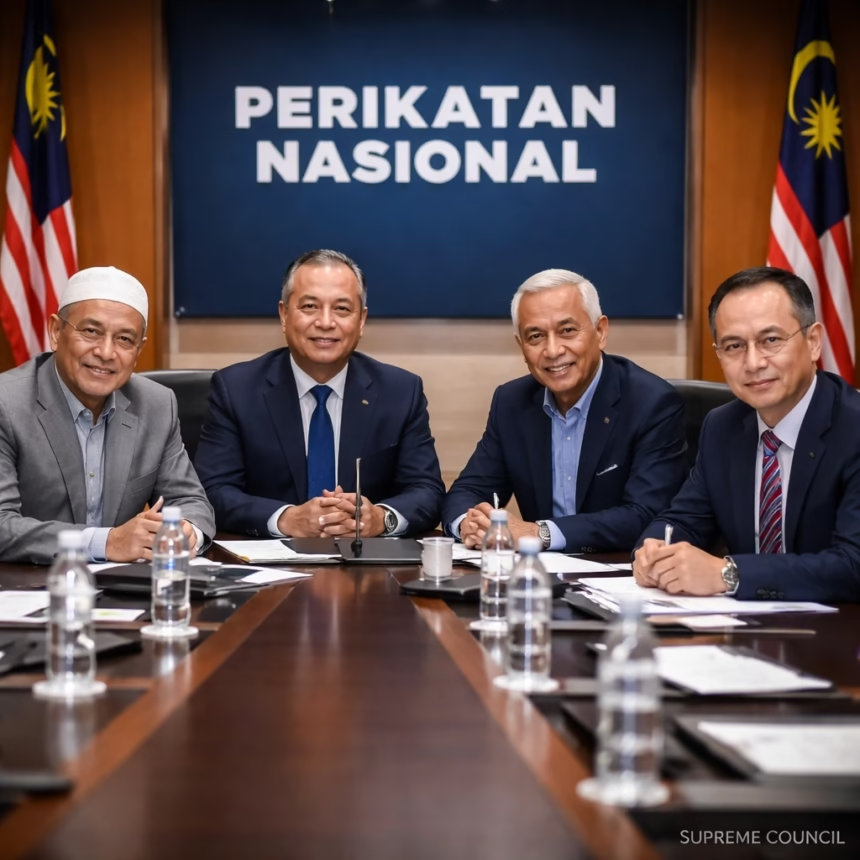
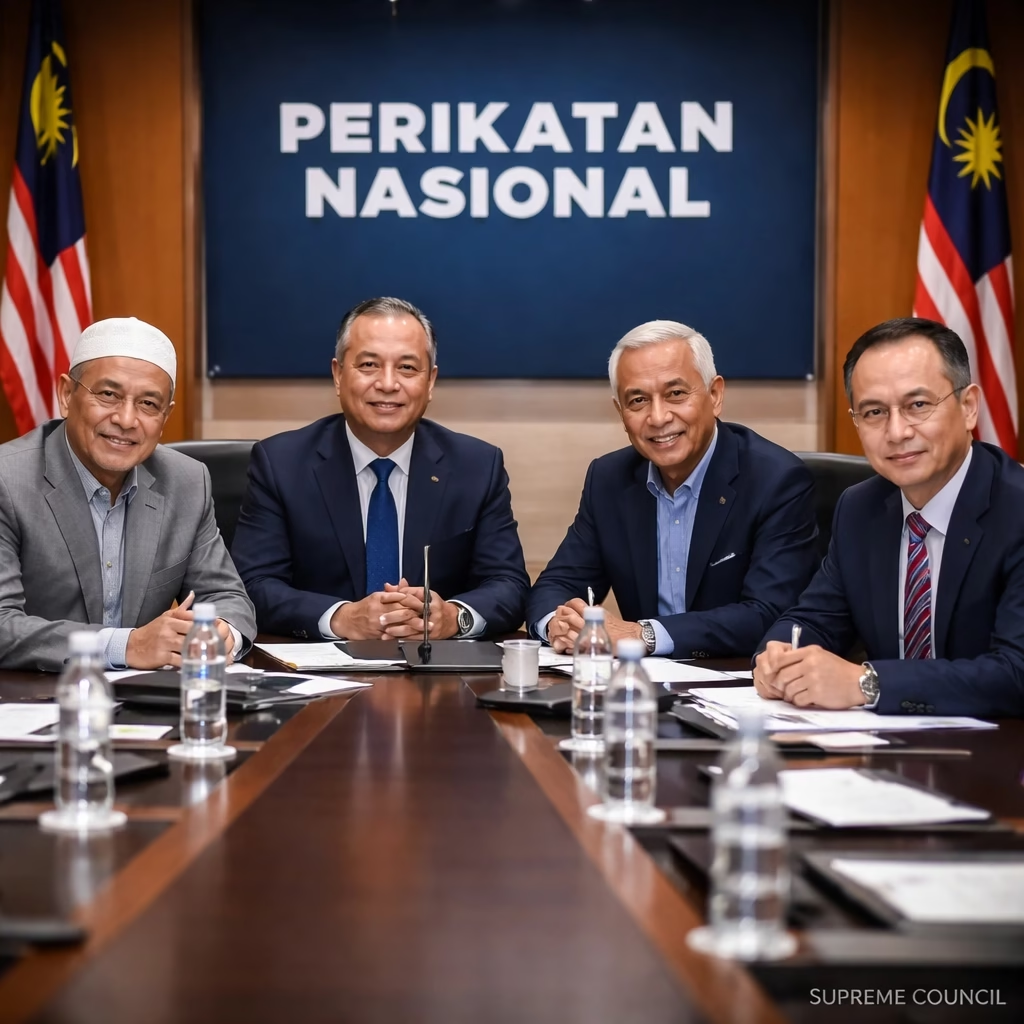
The Perikatan Nasional (PN) coalition has announced an emergency Supreme Council meeting, summoning the presidents of all four constituent parties to Kuala Lumpur on October 26, 2023. The move has sparked speculation about internal dynamics and potential shifts within the ruling coalition.
Background: A Coalition Forged in Political Shifts
Perikatan Nasional (PN) emerged in May 2023 following a political upheaval that saw the collapse of the Pakatan Harapan (PH) government. It was initially formed by Bersatu, led by Prime Minister Datuk Seri Anwar Ibrahim, and other opposition parties including PAS, Gerakan, and Parti Pribumi Bersatu Malaysia (MPMB). The coalition’s formation was largely triggered by dissatisfaction with the PH government’s handling of governance and allegations of corruption.
Since its inception, PN has maintained a fragile equilibrium, with various factions vying for influence. The coalition’s success hinges on navigating diverse ideologies and political ambitions amongst its constituent parties. Past disagreements over policy direction and leadership positions have occasionally strained the alliance.
Key Developments: A Sudden Call to Action
The announcement of the Supreme Council meeting came unexpectedly on October 24, 2023. PN Secretary-General Datuk Seri Hamzah Zainudin stated the meeting is to discuss "matters of national importance and to strategize for the future." The specific agenda remains undisclosed, fueling speculation about potential challenges within the coalition.
More Read

Recent weeks have witnessed increased political maneuvering. There have been reports of differing views on economic policy and the allocation of government resources. Furthermore, internal power struggles within Bersatu, the largest party in PN, are believed to have contributed to the urgency of the meeting. The Prime Minister's office has remained tight-lipped about the meeting's purpose, opting for a brief statement emphasizing the need for continued unity.
Impact: Ripple Effects Across the Political Landscape
The PN Supreme Council meeting has significant implications for the stability of the current government. Any perceived fractures within the coalition could embolden the opposition parties and potentially destabilize the political landscape.
More Read

Economically, uncertainty surrounding the coalition’s cohesion could impact investor confidence. Businesses may be hesitant to invest in a climate of political instability. The meeting's outcome will be closely watched by financial markets and business leaders.
Furthermore, the meeting’s results will influence policy decisions in the coming months. Disagreements within PN could lead to delays in implementing key economic reforms and social programs.
What Next: Towards a Unified Path?
Expected Outcomes
The Supreme Council meeting is expected to result in a reaffirmation of the coalition’s commitment to unity and a clarification of strategic priorities. Analysts suggest the meeting could lead to a more cohesive policy direction and a stronger stance on key issues.
Potential Outcomes
However, the meeting could also reveal deeper divisions within PN. If significant disagreements remain unresolved, it could signal potential strains on the coalition’s long-term viability. Possible outcomes include a strengthening of central leadership, a realignment of power within the coalition, or even the emergence of dissenting factions.
Timeline
The meeting is scheduled to conclude on October 26, 2023. A formal statement outlining the outcomes and future strategies is expected to be released shortly thereafter. Political observers will be closely monitoring the coalition’s actions in the days and weeks following the meeting to gauge the extent of any shifts in power and direction.