Blue Blood Boils: Centrist Democrats Rail Against AIPAC's Primary Power Play
Blue Blood Boils: Centrist Democrats Rail Against AIPAC's Primary Power Play
A significant rift has emerged within the Democratic Party, as centrist lawmakers express growing outrage over the American Israel Public Affairs Committee's (AIPAC) substantial spending in recent primary elections. This internal conflict, particularly amplified following the New York's 16th congressional district primary in late June 2024, signals a potential realignment of donor influence and political strategy ahead of the November general election.
Background: AIPAC’s Evolving Electoral Strategy
For decades, AIPAC maintained a reputation as a powerful, bipartisan lobbying group advocating for a strong U.S.-Israel relationship. Its traditional approach focused on direct lobbying of members of Congress and cultivating relationships across the political spectrum, largely avoiding direct electoral intervention in primaries.
However, this strategy began to shift noticeably around 2020 and accelerated in 2022 with the establishment of its Super PAC, the United Democracy Project (UDP). The UDP was created specifically to engage in direct electoral spending, including independent expenditures to support or oppose candidates. This move marked a significant departure from AIPAC’s historical non-electoral posture.
More Read

The UDP's targets have predominantly been progressive Democrats, often those who have been critical of Israeli government policies or have expressed solidarity with Palestinians. These interventions are frequently framed as efforts to ensure "pro-Israel" voices prevail within the Democratic caucus. In 2022, UDP spent millions in races across the country, including against progressive candidates like Summer Lee in Pennsylvania, though she ultimately won, and in support of moderate candidates against progressives in Ohio and Michigan.
The Shift in Funding and Focus
A key point of contention for many Democrats is the UDP's funding sources. While AIPAC itself receives contributions from a broad base, the UDP has reportedly received substantial donations from Republican megadonors and wealthy individuals who often support conservative causes. This influx of money from outside the traditional Democratic donor ecosystem, aimed at influencing Democratic primaries, has fueled accusations that AIPAC is actively working to undermine the party's progressive wing and sow internal discord.
Key Developments: The NY-16 Primary Fiasco
The most recent and potent catalyst for centrist Democratic anger was the June 25, 2024, primary in New York's 16th congressional district. Here, AIPAC's United Democracy Project poured an unprecedented amount of money into defeating incumbent Representative Jamaal Bowman, a prominent progressive and member of "The Squad."
More Read

UDP spent over $15 million in the NY-16 race, making it the most expensive House primary in U.S. history. This massive outlay supported George Latimer, the Westchester County Executive, who ran against Bowman. Bowman, known for his vocal criticisms of Israeli government actions and his calls for a permanent ceasefire in Gaza, became a prime target for the pro-Israel lobby.
The campaign tactics employed by UDP also drew criticism. Advertisements often painted Bowman as anti-Israel or even antisemitic, a charge vehemently denied by Bowman and his supporters. The sheer scale of spending, coupled with what many Democrats perceived as inflammatory rhetoric, created an environment of intense animosity. Latimer ultimately defeated Bowman by a significant margin, securing approximately 58% of the vote.
Centrist Outrage Mounts
While the progressive wing has long been critical of AIPAC's tactics, the outcome in NY-16 sparked a furious reaction from within the centrist and establishment wings of the Democratic Party. Anonymous and on-the-record statements from Democratic strategists and lawmakers reveal a deep-seated frustration. Many are not merely concerned about the defeat of a progressive, but the broader implications of AIPAC's aggressive interventionism.
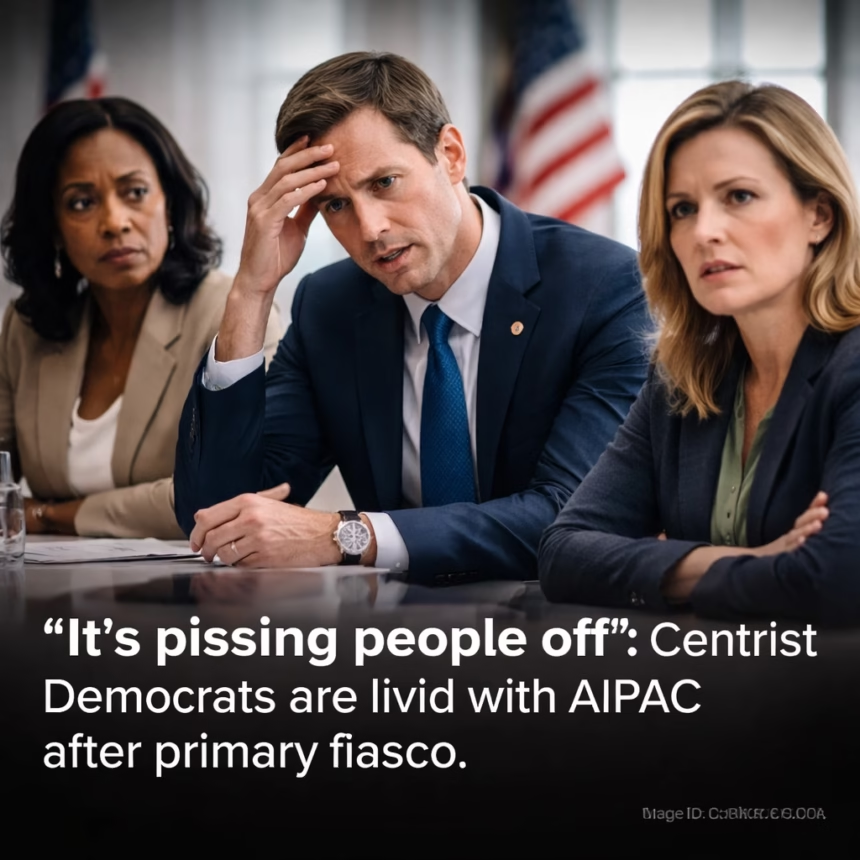
The core of the centrist complaint is multi-faceted: that AIPAC is using Republican-aligned money to weaken the Democratic Party, that it is targeting incumbent Democrats who otherwise support the party's agenda, and that its tactics are creating unnecessary internal divisions that could jeopardize Democratic chances in the general election. The sentiment, captured by one anonymous Democratic operative, that "it's pissing people off," encapsulates the widespread irritation with AIPAC's perceived overreach.
Impact: Fractured Unity and Shifting Dynamics
The fallout from AIPAC's aggressive primary strategy has profound implications for the Democratic Party. Firstly, it exacerbates existing ideological divisions between the progressive and moderate wings. The feeling among progressives that they are being actively purged from the party, aided by external money, could lead to a deeper sense of alienation and a reluctance to unite behind centrist candidates in other races.
Secondly, it raises questions about donor influence and the integrity of Democratic primaries. When an outside group, largely funded by non-Democratic sources, can outspend a sitting incumbent by such a vast margin, it highlights the power of Super PACs and the challenges faced by grassroots campaigns. This dynamic could discourage potential progressive challengers and solidify the influence of money in politics.
More Read

Finally, the internal strife could weaken the party's overall strength heading into the crucial November general elections. While the immediate impact of a primary loss is contained, the lingering resentment and the resources expended in these battles could detract from the broader effort to defeat Republican candidates and maintain Democratic control of Congress.
What Next: Navigating a Divided Path
The aftermath of the NY-16 primary is likely to shape several aspects of Democratic politics in the coming months and years. Democratic Party leadership, including House Minority Leader Hakeem Jeffries, has largely avoided direct criticism of AIPAC, often maintaining a stance of neutrality or subtly supporting the challengers in these primaries. However, the escalating anger from within the caucus may force a more direct engagement with the issue.
Looking ahead to the 2026 election cycle, there is an expectation that AIPAC and its UDP will continue to target progressive incumbents perceived as insufficiently "pro-Israel." Members like Cori Bush (MO-01) and Rashida Tlaib (MI-12), who have been outspoken critics of Israeli policy, could become future targets. This prospect ensures that the internal battle over AIPAC's influence will likely intensify.
Conversely, progressive groups and allied organizations are expected to redouble their efforts to counter AIPAC's spending. This could involve increased grassroots fundraising, voter mobilization, and potentially the formation of new Super PACs designed to protect progressive incumbents. The debate over campaign finance reform, particularly concerning Super PACs and dark money, may also gain renewed traction, though legislative action remains a long shot.
The Democratic Party faces a delicate balancing act: maintaining unity to win national elections while addressing the deeply felt grievances of its diverse factions. The ongoing conflict with AIPAC serves as a stark reminder of the evolving landscape of political influence and the internal ideological struggles shaping one of America's major parties.