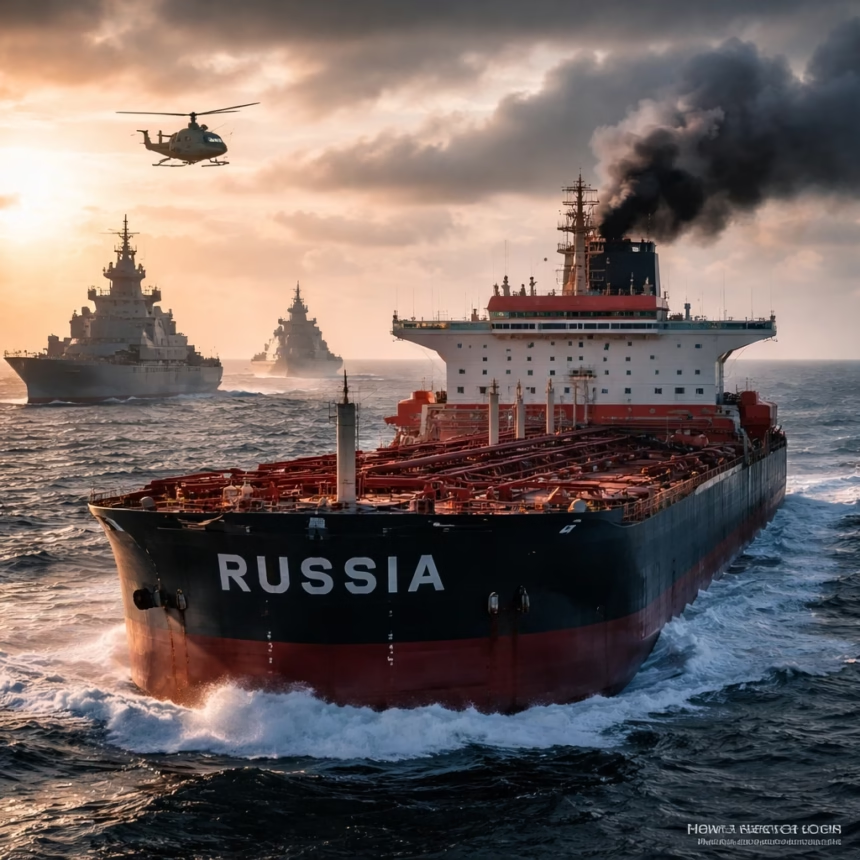
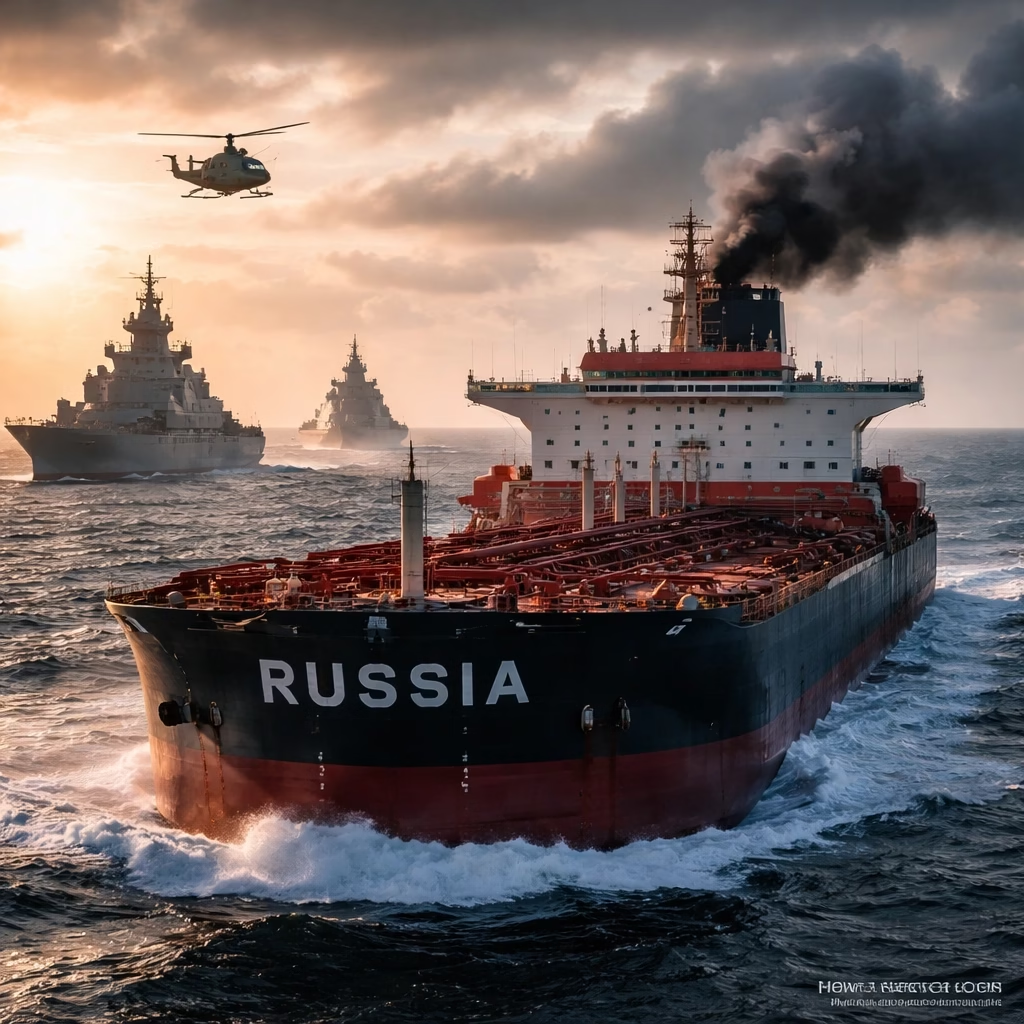
Western nations are escalating a coordinated campaign to dismantle Russia's "shadow fleet" of oil tankers, a crucial artery for Moscow's war funding. This intensifying pressure, primarily through targeted sanctions and insurance crackdowns, aims to significantly curtail the Kremlin's revenue from seaborne crude, directly impacting its ability to finance ongoing military operations in Ukraine. The offensive spans international waters and financial jurisdictions, unfolding rapidly in late 2023 and early 2024.
Background: The Genesis of the Shadow Fleet
Following Russia's full-scale invasion of Ukraine in February 2022, the G7, European Union, and Australia moved swiftly to impose unprecedented sanctions on Moscow's energy sector. A cornerstone of these measures was the price cap mechanism, introduced in December 2022. This cap stipulated that Western companies could only provide maritime services, such as insurance, financing, and shipping, for Russian seaborne crude oil if it was sold at or below $60 per barrel. The goal was dual: to limit Russia's war chest while ensuring Russian oil continued to flow globally, preventing a catastrophic spike in world energy prices.
The Rise of a Covert Network
In response, Russia embarked on a sophisticated strategy to circumvent these restrictions. Moscow began assembling a vast, covert shipping network, quickly dubbed the "shadow fleet" or "dark fleet." This fleet comprises hundreds of older tankers, many acquired from European owners selling off their aging vessels. These ships often operate under opaque ownership structures, fly flags of convenience from non-aligned nations, and rely on non-Western insurance and maritime services, making them difficult to track and regulate. Analysts estimate this fleet could number over 600 vessels, allowing Russia to transport a significant portion of its oil exports outside the Western price cap framework. For over a year, this network proved remarkably effective, enabling Russia to continue earning substantial revenues, often selling oil above the $60 cap to buyers in Asia, particularly India and China.
Key Developments: The West Tightens the Screws
The initial phase of the price cap saw limited enforcement, largely due to the complexity of identifying and proving violations within the shadow fleet's deliberately obscured operations. However, a significant shift began in late 2023, with Western powers adopting a far more aggressive and targeted approach.
US Treasury’s Targeted Actions
The U.S. Treasury Department's Office of Foreign Assets Control (OFAC) has emerged as a primary enforcer. Utilizing intelligence and data analytics, OFAC began systematically sanctioning specific vessels and the entities owning or operating them. These sanctions often target ships found to have carried Russian crude purchased above the $60 price cap, particularly when using Western-affiliated services. Notable examples include the sanctioning of vessels like the *SCF Primorye*, *NS Century*, and *Viktor Bakaev*, along with their respective owners and operators. These actions aim to directly disrupt the vessels' ability to access international financial systems and port services, effectively blacklisting them.
More Read

The Insurance Squeeze
A critical vulnerability for the shadow fleet is insurance. Most global maritime trade relies on Protection and Indemnity (P&I) clubs, predominantly based in Western countries, for third-party liability coverage. The West has intensified its focus on denying insurance to vessels breaching the price cap. Major P&I clubs are now under increased scrutiny, facing pressure to rigorously investigate vessels they insure. The UK, a hub for maritime insurance, has also revoked insurance coverage for several vessels identified as part of the shadow fleet. Without valid P&I insurance, vessels face severe difficulties entering most major ports and navigating international waters, as port authorities and canal operators often require proof of coverage. Russia has attempted to mitigate this by relying on its own state-backed insurer, the Russian National Reinsurance Company (RNRC), but its capacity and international acceptance remain limited.
EU and G7 Coordination
The European Union has also bolstered its sanctions regime, including clearer prohibitions on providing certain financial services and insurance to vessels involved in price cap violations. The G7 nations, alongside Australia, have committed to enhanced intelligence sharing and coordination to identify and track illicit shipments. This includes leveraging satellite imagery, artificial intelligence, and sophisticated data analytics to uncover ownership structures and track vessel movements, particularly ship-to-ship transfers often used to obscure origins.
More Read

Impact: Moscow’s Funding Under Pressure
The escalating Western campaign is beginning to register tangible effects on Russia's oil revenues and its broader economy. Moscow's federal budget relies heavily on oil and gas exports, historically contributing between 30% and 40% of its total revenue.
Moscow’s Financial Resilience Tested
While Russia has demonstrated remarkable economic resilience under sanctions, the increased pressure on its oil exports poses a significant threat. Reduced access to Western shipping and insurance forces Russia to incur higher operational costs. This includes paying premiums for older, less reliable vessels, securing alternative (and often more expensive) insurance, and offering deeper discounts to buyers to compensate for the added risks and logistical challenges. Reports indicate that the discount on Urals crude, Russia's primary export blend, has widened in recent months compared to benchmark Brent crude, directly impacting the per-barrel revenue.
The Cost of Secrecy
For the "shadow fleet" operators, the risks are mounting. Sanctioned vessels face difficulties obtaining fuel, repairs, and port access. Their owners and operators risk secondary sanctions, asset freezes, and blacklisting from the global financial system. This forces them into even more obscure and costly practices, such as frequent flag changes, disabling transponders, and engaging in dangerous ship-to-ship transfers in open seas, increasing the risk of accidents and environmental damage. These operational complexities translate directly into higher costs for Russia, effectively reducing the net revenue from each barrel sold.
Global Market Implications
The campaign aims to reduce Russia's war funding without disrupting global oil supply. However, a highly effective crackdown could introduce some volatility to the global oil market. Should a significant portion of Russia's fleet be incapacitated, it could temporarily tighten supply, potentially leading to price increases. Western policymakers are carefully balancing these risks, aiming for precision in enforcement rather than outright blocking of Russian oil from the market.
What Next: Escalating the Economic Warfare
The Western campaign against Russia's shadow fleet is expected to intensify further in the coming months, with several key developments anticipated.
Continued Enforcement and Technological Advancements
Expect a sustained barrage of targeted sanctions from the U.S. Treasury and its allies. The focus will remain on identifying and sanctioning specific vessels, shipping companies, and individuals facilitating price cap evasion. There will be an increased reliance on advanced technology, including sophisticated AI algorithms, enhanced satellite imagery analysis, and big data analytics, to track the shadow fleet's movements, identify ownership structures, and detect illicit transfers more efficiently.
More Read

International Cooperation and Loopholes
The G7 and its partners will likely seek to further refine and harmonize their enforcement mechanisms, aiming to close any remaining loopholes in the sanctions regime. This could involve stricter controls on the sale of older vessels to entities suspected of involvement with the shadow fleet, and increased pressure on jurisdictions that may be inadvertently or knowingly facilitating these operations.
Russia’s Adaptive Measures
Moscow is not expected to capitulate easily. Russia will likely continue to adapt its strategies, seeking new avenues for trade, potentially expanding its own state-controlled shipping and insurance capabilities, and exploring new payment mechanisms to bypass Western financial systems. The development of alternative shipping routes or increased reliance on rail transport for some exports could also be considered, though these options present significant logistical and cost challenges.
Long-Term Economic Pressure
As long as the conflict in Ukraine persists, the West is committed to maintaining and escalating economic pressure on Russia. The campaign against the shadow fleet is a critical component of this broader strategy, aiming to degrade Russia's financial capacity to sustain its war effort. The effectiveness of these measures will be closely monitored, with their impact on Russia's war funding directly influencing the duration and intensity of the conflict. The global shipping and energy industries will face continued scrutiny and compliance challenges as this economic warfare unfolds on the high seas.