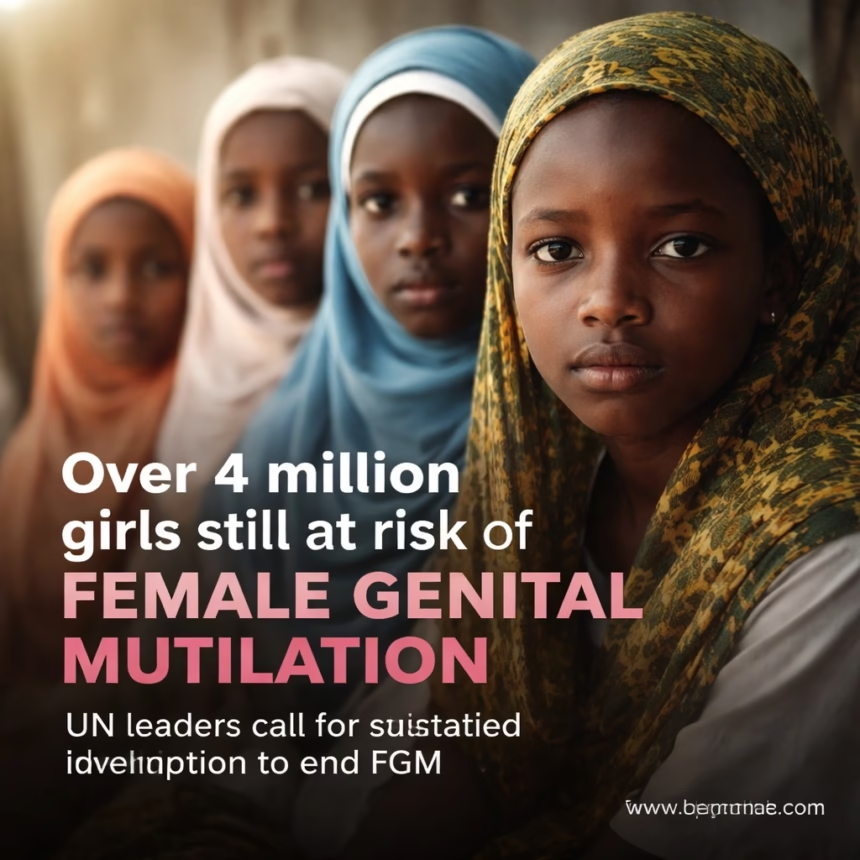
The Clock is Ticking: 4 Million Girls Still Vulnerable to FGM, UN Calls for Global Surge
The Clock is Ticking: 4 Million Girls Still Vulnerable to FGM, UN Calls for Global Surge
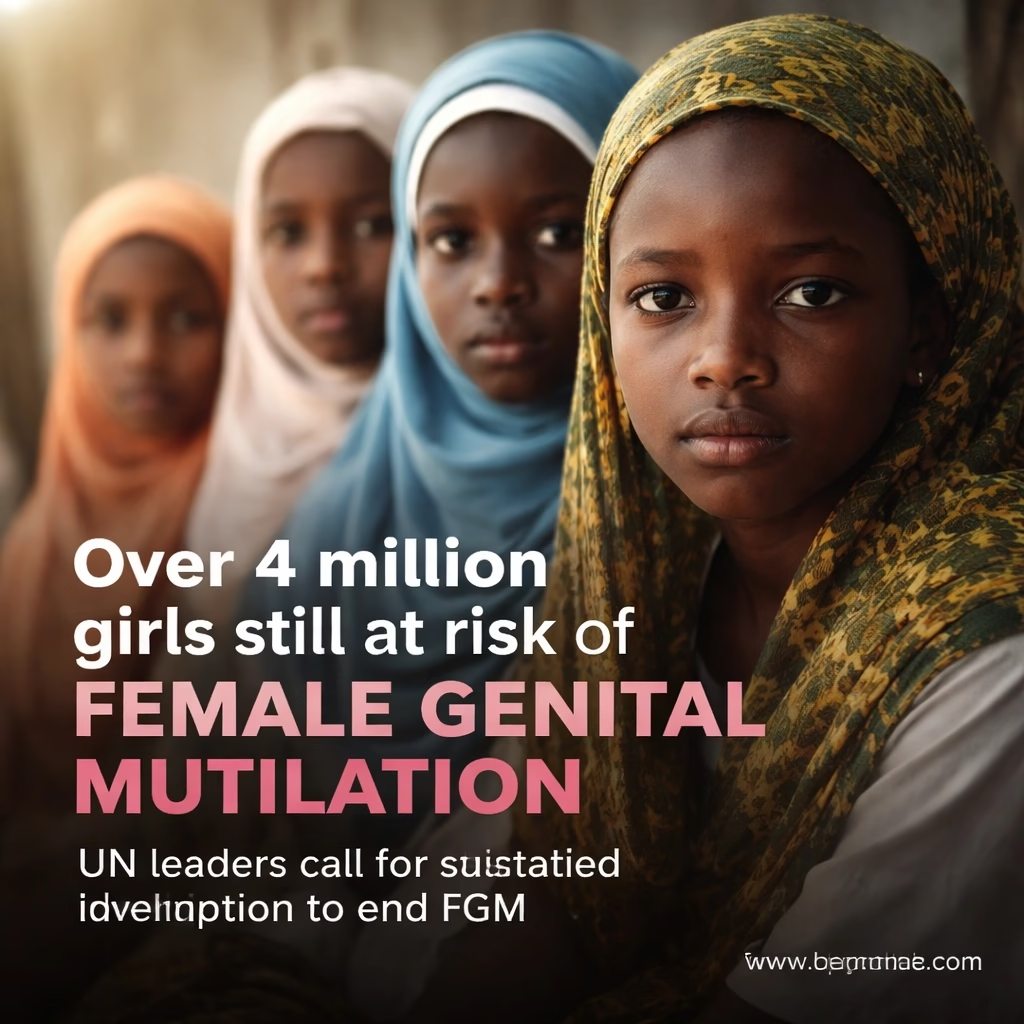
A stark warning from UN leaders, including the World Health Organization (WHO), reveals that over four million girls globally remain at grave risk of female genital mutilation (FGM) this year. This alarming figure underscores the urgent need for renewed and sustained commitment, alongside significant investment, to eradicate a practice that violates fundamental human rights and inflicts profound harm.
The international community is intensifying its efforts, calling upon governments, civil society, and communities worldwide to accelerate progress towards the 2030 target for ending FGM, a key component of the Sustainable Development Goals.
Background: A Deeply Rooted Violation
Female genital mutilation encompasses all procedures involving the partial or total removal of the external female genitalia, or other injury to the female genital organs for non-medical reasons. This deeply entrenched practice is predominantly concentrated in 30 countries across Africa, the Middle East, and Asia, yet its reach extends to diaspora communities globally.
FGM is rooted in a complex web of cultural, social, and religious beliefs, often mistakenly associated with purity, modesty, and pre-marital virginity. It is frequently seen as a prerequisite for marriage or a rite of passage into womanhood in certain communities, perpetuating a cycle that has persisted for centuries.
Internationally recognized as a human rights violation, FGM has no health benefits. Instead, it causes severe physical and psychological trauma. The World Health Organization has consistently condemned the practice, highlighting its devastating and irreversible consequences on girls and women.
Global efforts to combat FGM gained significant momentum in the late 20th and early 21st centuries. The United Nations General Assembly adopted resolutions against FGM, culminating in the establishment of the International Day of Zero Tolerance for Female Genital Mutilation on February 6th each year, serving as a global advocacy platform.
The inclusion of FGM eradication as target 5.3 under Sustainable Development Goal 5 (Gender Equality) by 2030 further solidified the global commitment. This target aims to eliminate all harmful practices, including FGM and child, early, and forced marriage.
Key Developments: Progress Hampered, Risks Escalating
Despite decades of advocacy and intervention, the latest projections from UN agencies, including UNICEF and UNFPA, paint a concerning picture. The figure of over four million girls at risk this year represents a significant challenge, largely driven by rapid population growth in countries where FGM is most prevalent.
While some progress has been observed, particularly in countries like Kenya, Ethiopia, and Burkina Faso, which have seen declines in prevalence rates over the past three decades, this progress is uneven and insufficient to meet the 2030 target. Laws banning FGM have been enacted in many countries, yet enforcement remains a critical hurdle.
The COVID-19 pandemic further exacerbated the situation, disrupting vital FGM prevention programs, school closures, and community outreach initiatives. This disruption created a shadow pandemic, leaving millions of girls more vulnerable to the practice, as resources were diverted and protection mechanisms weakened.
UN leaders are now calling for a "global surge" in political will and financial investment. They emphasize that current efforts are not enough to counteract the demographic trends and socio-economic pressures that continue to fuel the practice. The focus is on strengthening legal frameworks, empowering communities, and providing comprehensive support services for survivors.
More Read

Impact: A Lifetime of Suffering
The consequences of female genital mutilation are profound and far-reaching, affecting every aspect of a girl's life from childhood through adulthood. The physical, mental, and social impacts are often irreversible.
Physical Health Consequences
Immediately after the procedure, girls endure excruciating pain, severe bleeding, infection (including tetanus), and shock. In many cases, these complications can be fatal. Long-term physical health issues are common, including chronic pain, recurrent urinary tract infections, menstrual problems, and difficulty during sexual intercourse.
For women who have undergone FGM, childbirth often presents significant risks. They face higher rates of prolonged and obstructed labor, postpartum hemorrhage, and increased risk of maternal and infant mortality. FGM can also lead to obstetric fistulas, a devastating condition causing incontinence and social isolation.
More Read

Mental and Psychological Trauma
The psychological impact of FGM is equally devastating. Survivors often experience severe trauma, anxiety, depression, and post-traumatic stress disorder (PTSD). The violation of bodily integrity at a young age can lead to a profound loss of trust, self-esteem issues, and difficulties forming intimate relationships.
Many girls live in constant fear of the procedure, and those who undergo it carry the psychological scars for a lifetime, often in silence due to societal pressures and stigma.
Social and Economic Disadvantage
FGM frequently leads to girls dropping out of school, limiting their educational and economic opportunities. This perpetuates cycles of poverty and inequality within families and communities. It reinforces harmful gender norms, undermining efforts to empower women and girls and achieve gender equality.
The practice also places a significant burden on healthcare systems, requiring specialized care for complications, which is often unavailable in remote or underserved areas.
What Next: Accelerating Towards Zero Tolerance by 2030
To end FGM by 2030, a dramatic acceleration of current efforts is imperative. UN agencies, governments, and civil society organizations are collaborating on multi-faceted strategies that encompass legal, social, health, and educational interventions.
Strengthening Legal and Policy Frameworks
Enacting and rigorously enforcing national laws that criminalize FGM is crucial. This includes prosecuting perpetrators and protecting girls at risk. Cross-border collaboration is also vital to address FGM in refugee and migrant populations, ensuring that legal protections extend beyond national boundaries.

Community-Led Change
Sustainable change must come from within communities. Programs focusing on community dialogue, engaging religious leaders, traditional elders, men, and boys, are proving effective. These initiatives challenge harmful norms and promote alternative rites of passage that celebrate womanhood without mutilation.
Empowering women and girls through education and economic opportunities also plays a critical role, enabling them to make informed decisions about their bodies and futures.
Integrated Health and Education Services
Healthcare providers are at the forefront of prevention and care. Training healthcare workers to identify girls at risk, provide medical care for FGM complications, and offer counseling services is essential. Integrating FGM prevention messages into sexual and reproductive health programs and school curricula can raise awareness and change attitudes from a young age.
Sustained Investment and Global Partnership
The call for “sustained commitment and investment” is a critical plea. Ending FGM requires significant financial resources to fund prevention programs, support services for survivors, research, and advocacy. International donors, national governments, and philanthropic organizations must prioritize FGM eradication in their development agendas.
The collective goal is to ensure that no more girls endure this brutal practice. With renewed political will, increased funding, and concerted action across all sectors, the vision of a world free from FGM by 2030 remains achievable, offering millions of girls a future free from pain and fear.