Election Chaos Continues: Trump's Push for Voting Changes
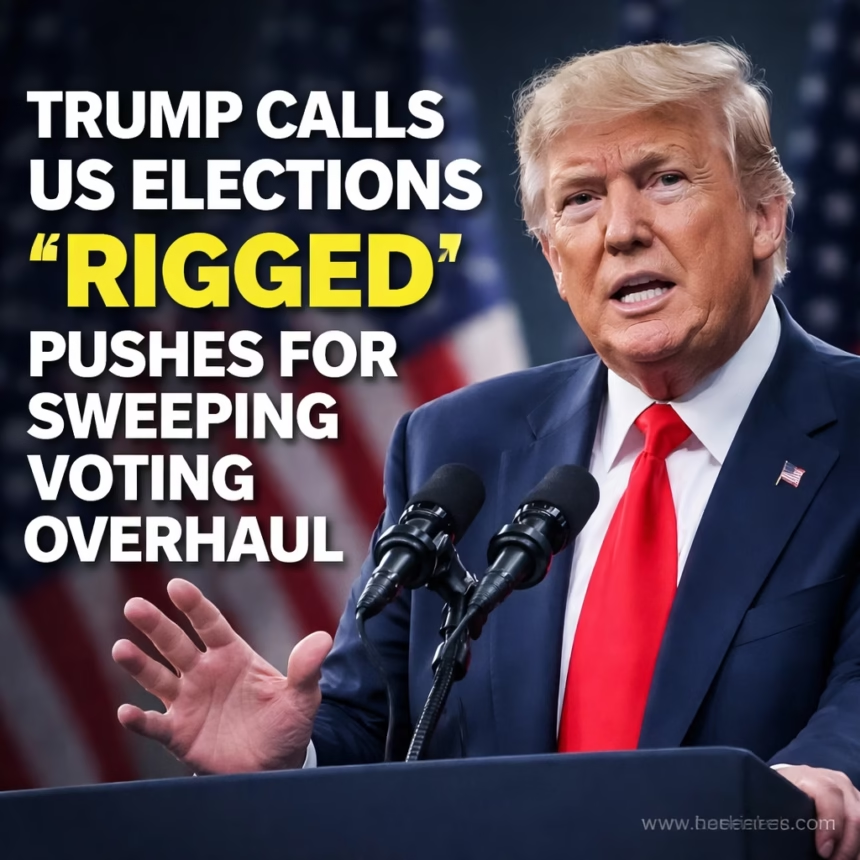
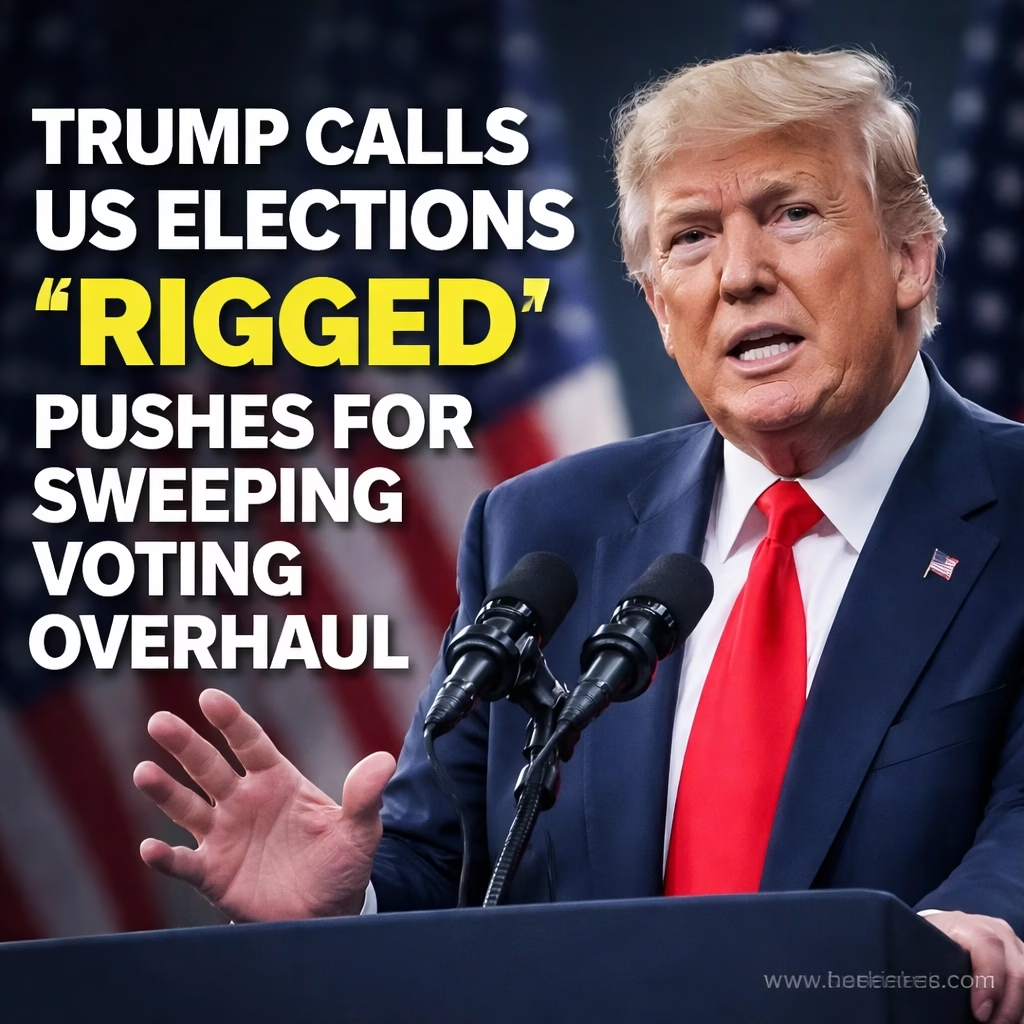
Former US President Donald Trump continues to assert that the 2020 election was unfairly "rigged," a claim repeatedly debunked by courts and election officials. His renewed push for comprehensive voting changes is gaining momentum, impacting the political landscape in several states and raising concerns about election integrity.
Background: Lingering Shadows of 2020
Following the 2020 presidential election on November 3, 2020, Donald Trump and his allies made unsubstantiated allegations of widespread voter fraud. These claims were widely challenged in numerous lawsuits filed across several states, including Arizona, Georgia, and Pennsylvania. The vast majority of these lawsuits were dismissed due to lack of evidence.
Federal agencies, including the Cybersecurity and Infrastructure Security Agency (CISA), declared the 2020 election the "most secure in American history." Recounts and audits in multiple states affirmed the original results. Despite this, Trump has consistently maintained his position, fueling distrust in the electoral process among a significant portion of his supporters.
Key Developments: A State-by-State Assault
Trump’s current strategy focuses on influencing voting laws at the state level. He has publicly endorsed legislation that Republicans argue will enhance election security, while Democrats and voting rights advocates contend it will restrict access to the ballot box.
More Read

Several states have seen significant changes in recent months. In Georgia, for example, the passage of the Election Integrity Act in 2022 altered absentee ballot procedures and increased signature verification requirements. Similarly, in Texas, new laws have tightened voter ID requirements and limited ballot drop box availability.
Arizona has been a focal point, with ongoing legal challenges to its election laws. The state’s Secretary of State, Kari Lake (a Republican), has been a vocal advocate for changes that include stricter voter ID laws and limitations on early voting.
Trump recently held rallies in states like Michigan and Pennsylvania, urging supporters to pressure state lawmakers to enact his preferred voting reforms. He has repeatedly emphasized the need for "stronger" voting rules, without detailing specific proposals beyond general calls for increased security and prevention of "fraud."

Proposed Reforms: A Glimpse into Trump’s Vision
While Trump hasn’t presented a single, comprehensive legislative plan, his comments and endorsements indicate a desire for measures including:
Stricter voter ID laws
Limitations on absentee voting
Increased audits and investigations
Restrictions on ballot drop boxes
More stringent signature verification processes
Impact: Who Bears the Burden?
The proposed voting changes have a disproportionate impact on certain demographics. Critics argue that stricter voter ID laws can disenfranchise minority voters, low-income individuals, and the elderly who may have difficulty obtaining or presenting required identification.
Restrictions on absentee voting can disproportionately affect working-class individuals, students, and those with disabilities who rely on mail-in ballots. Limited access to ballot drop boxes can also pose challenges, particularly for those with limited transportation options.
Civil rights groups like the NAACP and the Brennan Center for Justice have raised concerns that these changes will suppress voter turnout, particularly among historically marginalized communities. They have filed lawsuits challenging the legality of some of these laws.
More Read

What Next: The Road Ahead
The fight over voting rights is expected to continue throughout 2024. State legislatures are likely to remain active in enacting new voting laws, and legal challenges are anticipated.
The outcome of the 2024 presidential election will likely further shape the debate surrounding voting rights. A Republican victory could embolden further efforts to restrict access to the ballot box, while a Democratic victory could lead to legislation aimed at expanding voting rights.
Federal legislation on voting rights remains stalled in Congress, despite ongoing calls for reform. The John Lewis Voting Rights Advancement Act and the Freedom to Vote Act, both aimed at strengthening voting protections, have faced significant opposition and have not been able to pass both chambers of Congress.
Legal Battles and Potential Court Challenges
The enacted state laws are already facing numerous legal challenges. Lawsuits are focused on claims of voter suppression, discrimination, and violations of constitutional rights. These legal battles are expected to continue for the foreseeable future and could ultimately reach the US Supreme Court.
The Supreme Court's rulings in cases related to voting rights are particularly significant. The court's decisions in *Shelby County v. Holder* (2013) and *Allen v. Milligan* (2021) have had a profound impact on the legal landscape of voting rights, and future rulings could further shape the debate.