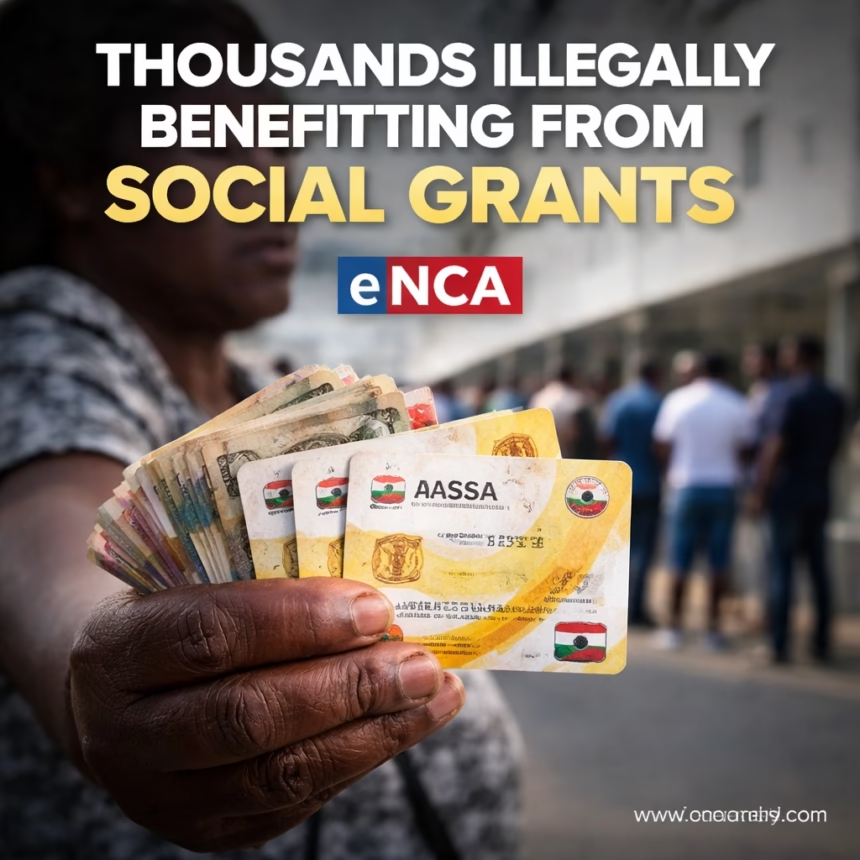
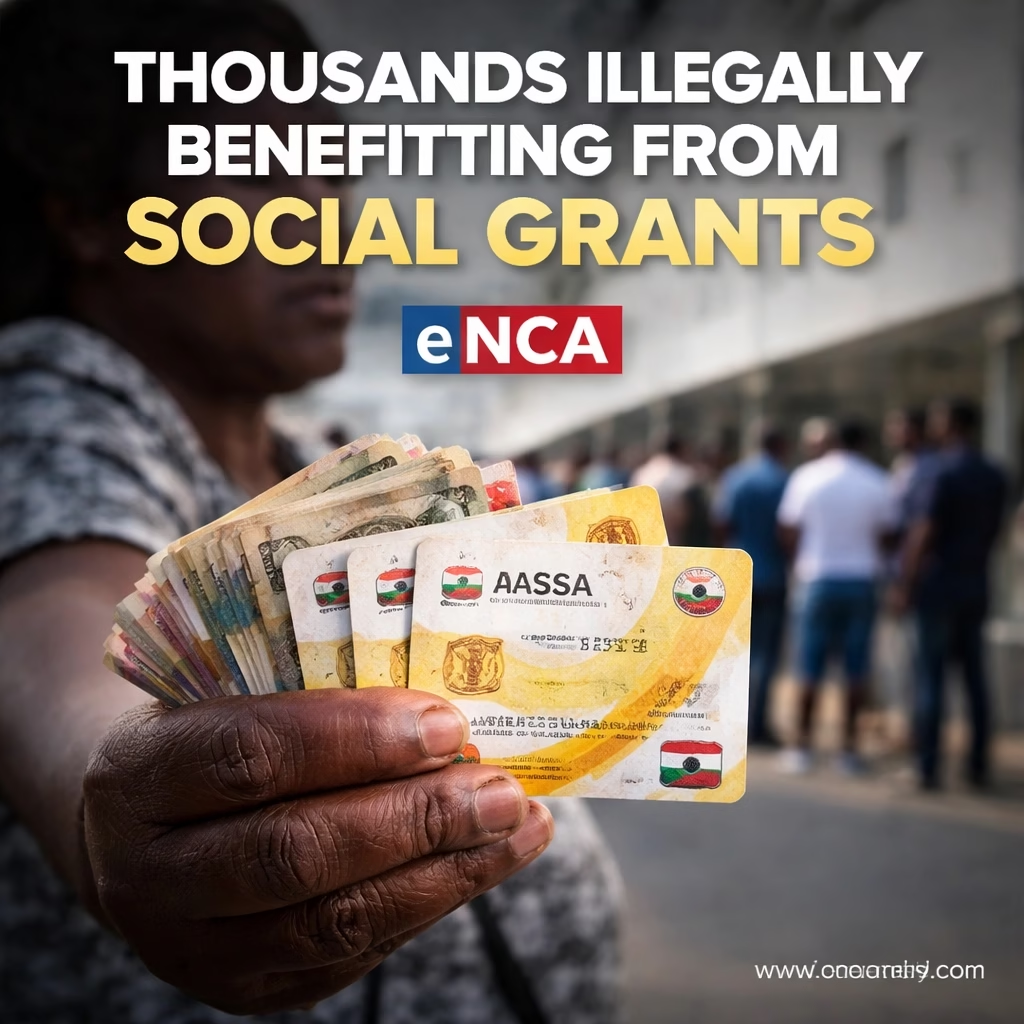
Recent revelations have brought to light a significant crisis within South Africa's social grant system. Thousands of individuals are reportedly benefiting illegally, siphoning off billions of Rands intended for the nation's most vulnerable citizens. This widespread fraud points to systemic vulnerabilities and a profound betrayal of public trust, demanding urgent and decisive action from authorities.
Background: The Foundation of Social Assistance Under Strain
South Africa's social grant system, administered primarily by the South African Social Security Agency (SASSA), stands as a critical pillar of the nation's welfare state. Designed to alleviate poverty and promote social inclusion, these grants provide essential financial lifelines to millions. With over 18 million beneficiaries across various categories – including Old Age, Disability, Child Support, and the more recent Social Relief of Distress (SRD) grants – the system represents one of the largest redistributive programmes globally. Annually, billions of Rands are disbursed, forming a crucial safety net in a country grappling with high unemployment and deep socio-economic disparities.
The genesis of this comprehensive social assistance framework dates back to the post-apartheid era, evolving from fragmented welfare programmes into a unified, rights-based system. Legislation such as the Social Assistance Act of 2004 formalised the state's commitment to protecting its most vulnerable populations. However, the sheer scale and complexity of the system have historically presented administrative challenges. Past concerns have included inefficiencies in payment distribution, allegations of "ghost beneficiaries," and isolated incidents of fraud, prompting various reforms over the years. These reforms aimed to enhance payment security, improve beneficiary verification, and streamline administrative processes, moving from cash payouts to electronic transfers via bank accounts and the South African Post Office. Despite these efforts, the recent scale of illegal claims suggests that persistent vulnerabilities have been exploited, undermining the very foundation of this vital social safety net. The integrity of the system relies heavily on accurate data, robust verification, and stringent oversight, areas where significant gaps have now been exposed.
Key Developments: Unmasking the Exploitation
Recent investigative reports and internal audits have peeled back layers of sophisticated and widespread fraud within the social grant system. These revelations indicate that thousands of individuals, often well-resourced or even employed within the public sector, have illegally accessed funds meant for the truly destitute. The scale of this illicit activity is staggering, with estimates suggesting billions of Rands have been diverted from legitimate beneficiaries.
One of the most alarming discoveries involves public servants illegally claiming Social Relief of Distress (SRD) grants. Investigations have identified tens of thousands of government employees, earning above the stipulated income threshold, who successfully applied for and received these grants. This specific form of fraud highlights not only individual dishonesty but also potential collusion or significant gaps in cross-referencing data between government departments like the Department of Public Service and Administration (DPSA) and SASSA. Furthermore, other prevalent methods of fraud include the exploitation of deceased beneficiaries, where grants continue to be paid out months or even years after a recipient's death. Identity theft, where criminals use the personal details of unsuspecting or vulnerable individuals to apply for grants, also contributes significantly to the problem. Misrepresentation of income and assets is another common tactic, with individuals falsifying their financial status to meet eligibility criteria.
More Read

SASSA, in collaboration with other state entities, has intensified its data analytics efforts to identify these anomalies. These efforts involve matching beneficiary data against various national databases, including the Department of Home Affairs (for death records), the South African Revenue Service (SARS) for income verification, and the Government Employees Pension Fund (GEPF) and PERSAL system for public servant employment records. While these technological interventions are crucial for detection, the sheer volume of fraudulent claims underscores the ingenuity of perpetrators and the historical ease with which the system could be manipulated. The ongoing investigations are not only about identifying current fraudsters but also about understanding the systemic weaknesses that allowed such widespread exploitation to flourish unchecked for an extended period.
Impact: The Real Victims and Eroding Trust
The widespread illegal claiming of social grants carries profound and multifaceted consequences, primarily affecting the most vulnerable members of South African society. Every Rand siphoned off by fraudsters means less money available for those genuinely in need, potentially leading to reduced grant values, stricter eligibility criteria, or slower processing times for legitimate applicants. This diversion of funds directly impacts households struggling with food insecurity, lack of access to basic services, and chronic poverty, effectively denying them their rightful support.
Beyond the immediate financial drain, the scandal inflicts severe damage on public trust in government institutions. When citizens witness widespread corruption and the exploitation of a system designed to help the poor, their confidence in the state's ability to govern fairly and effectively diminishes. This erosion of trust can foster cynicism, apathy, and even social unrest, particularly in a country where socio-economic inequalities are a persistent source of tension. Taxpayers, who ultimately fund these grants, are left with a sense of betrayal, questioning the efficacy of their contributions and the accountability of those managing public funds.

For SASSA itself, the impact is equally significant. The agency's reputation is under immense scrutiny, facing accusations of lax oversight and inadequate controls. This not only strains its already stretched administrative resources, as more effort must be diverted to investigations and system clean-up, but also undermines its credibility as a reliable and trustworthy administrator of social welfare. The resources expended on combating fraud could otherwise be invested in improving service delivery, expanding reach, or enhancing the efficiency of the grant distribution process. Ultimately, the scandal deepens the perception of corruption within the public sector, hindering efforts to build a more just and equitable society and perpetuating the cycle of poverty for those the system was designed to uplift.
What Next: A Path Towards Systemic Integrity and Accountability
Addressing the pervasive issue of social grant fraud requires a multi-pronged and sustained approach, with several key milestones expected in the coming months and years. The immediate focus is on intensifying investigations and ensuring accountability. Law enforcement agencies, including the South African Police Service (SAPS) and the Special Investigating Unit (SIU), are expected to broaden their probes, leading to a significant increase in arrests and prosecutions of individuals implicated in fraudulent claims. This includes both the beneficiaries who illegally received funds and any officials who may have facilitated such illicit activities. The successful prosecution of high-profile cases will be crucial in sending a strong deterrent message and restoring public confidence in the rule of law.
Concurrently, SASSA and the Department of Social Development (DSD) are committed to implementing comprehensive systemic reforms. A critical component of this involves strengthening data integration and verification processes. This includes real-time data matching with the Department of Home Affairs for death and identity records, SARS for income and employment status, and the Department of Public Service and Administration's PERSAL system to prevent public servants from claiming grants illegally. The introduction of more robust biometric verification methods for beneficiaries at various stages of the grant lifecycle is also under consideration to prevent identity fraud. These technological enhancements aim to create a more resilient and fraud-resistant system.
Furthermore, efforts to recover illegally claimed funds will be escalated. While challenging, particularly for smaller amounts or older claims, SASSA will pursue civil recovery actions where feasible. Public awareness campaigns will also play a vital role, educating beneficiaries about their responsibilities and the consequences of fraud, while also encouraging whistle-blowers to report suspicious activities. Legislative amendments may also be considered to close loopholes and enhance the punitive measures for grant fraud. The ultimate goal is to move towards a system of complete integrity, where every Rand reaches its intended recipient, safeguarding the social safety net for future generations and reinforcing the state's commitment to protecting its most vulnerable citizens. This journey towards full integrity will be complex and ongoing, but the recent exposures have undeniably set a critical agenda for reform.