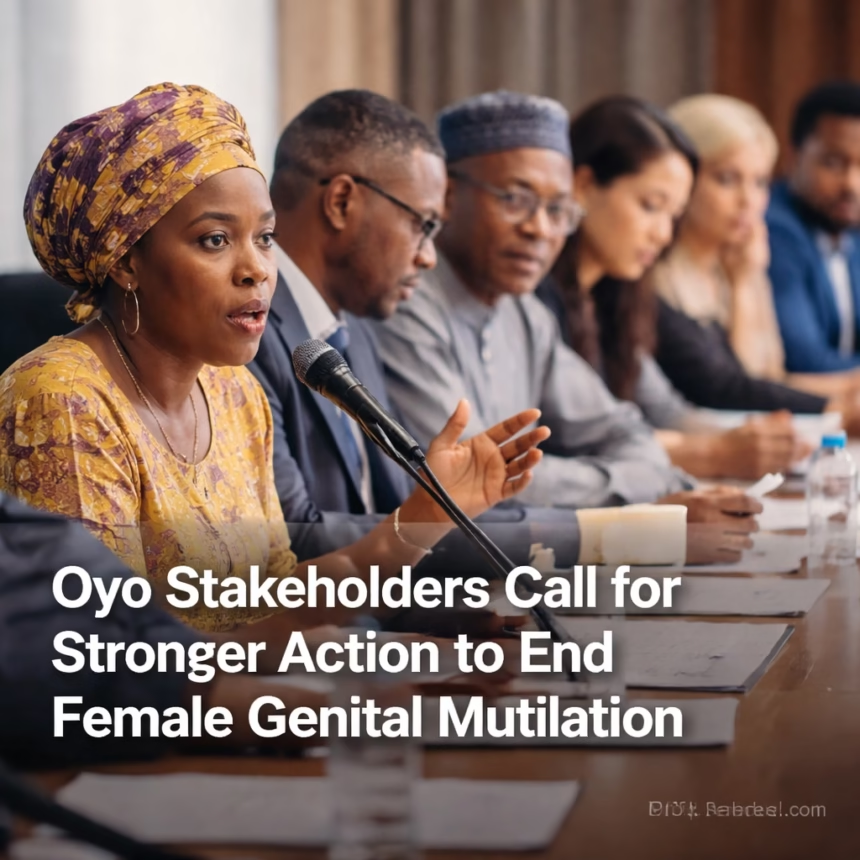
A powerful coalition of stakeholders in Oyo State recently convened in Ibadan, issuing a fervent call for intensified efforts to eradicate Female Genital Mutilation (FGM) across the state. This urgent plea comes amidst persistent high prevalence rates, demanding immediate, concerted action from all sectors to protect the rights and health of women and girls.
Background: A Deep-Rooted Challenge
Female Genital Mutilation, defined by the World Health Organization (WHO) as all procedures involving partial or total removal of the external female genitalia or other injury to the female genital organs for non-medical reasons, remains a critical public health and human rights issue in Nigeria, particularly in Oyo State. Globally, over 200 million women and girls have undergone FGM, predominantly in Africa, the Middle East, and Asia.
Nigeria, a signatory to international conventions prohibiting FGM, enacted the Violence Against Persons (Prohibition) Act (VAPP Act) in 2015, which criminalizes the practice. Furthermore, the Child's Rights Act of 2003 offers protection to minors. Despite these legal frameworks, enforcement and awareness remain significant hurdles.
Historically, FGM in Oyo State is often cloaked in cultural, religious, and social justifications, including beliefs about preserving virginity, preventing promiscuity, ensuring marriageability, and maintaining hygiene. These deeply entrenched beliefs have perpetuated the practice across generations, often performed by traditional circumcisers or, increasingly, by untrained medical personnel in clandestine procedures.
More Read

According to the 2018 Nigeria Demographic and Health Survey (NDHS), Oyo State recorded one of the highest prevalence rates in the South-West geopolitical zone, with 30.3% of women aged 15-49 having undergone FGM. This figure stands notably above the national average of 20% and is a stark reminder of the challenge ahead, despite a slight decline from previous surveys. Previous campaigns by organizations like UNICEF and UNFPA, alongside the Oyo State Ministry of Women Affairs and Social Inclusion, have aimed to raise awareness, but their impact has been limited by funding gaps and community resistance.
Key Developments: A Renewed Push for Change
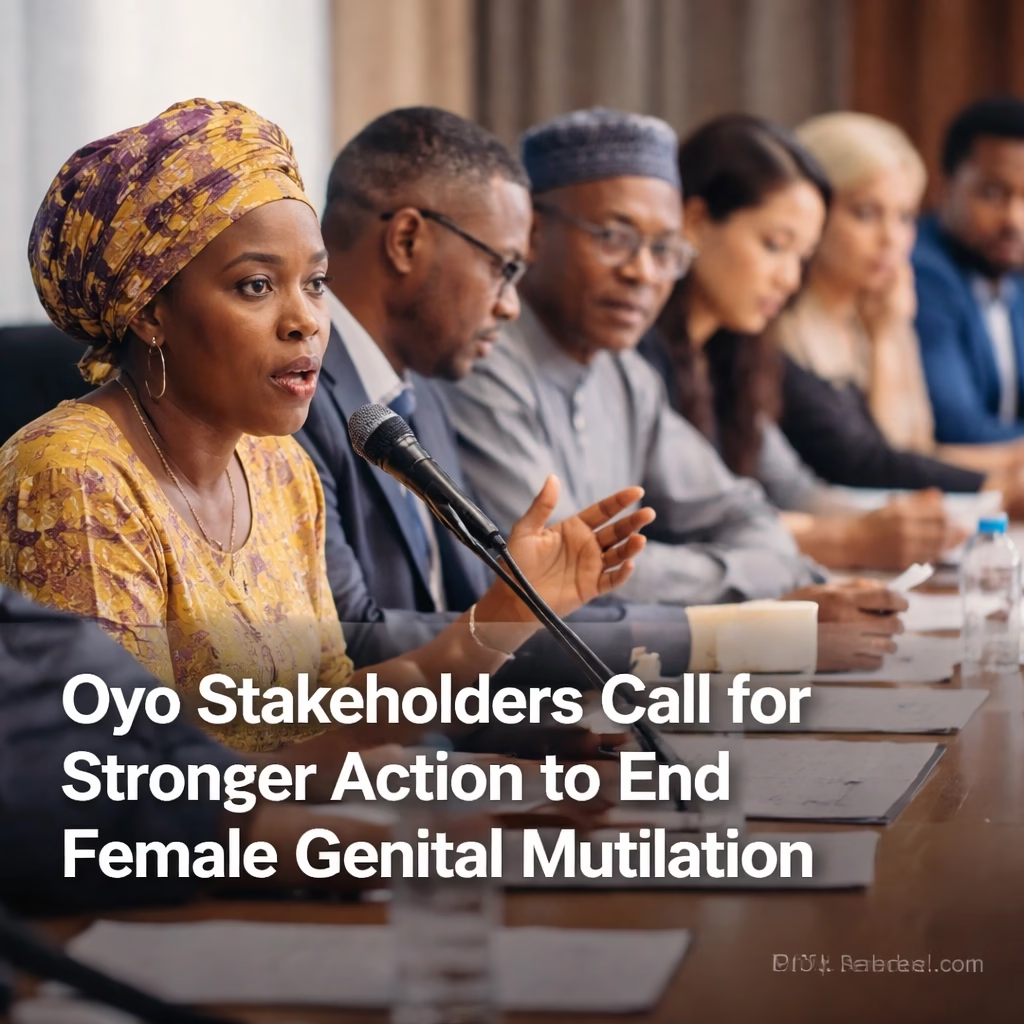
The recent high-level meeting in Ibadan brought together a diverse group of participants, including representatives from the Oyo State Government, traditional rulers, religious leaders, civil society organizations, community development associations, and international partners. The gathering, held at the Premier Hotel, served as a platform to assess current strategies and forge a more robust, unified approach to FGM eradication.
Dr. Taiwo Ladipo, the Commissioner for Women Affairs and Social Inclusion, articulated the state government's renewed commitment. She highlighted plans to strengthen the legal framework at the state level by domesticating relevant provisions of the VAPP Act more effectively, ensuring clearer penalties and enforcement mechanisms specific to Oyo State's context.
More Read

Traditional rulers, pivotal figures in community mobilization, pledged their support. Oba Adeyemi Alao, a prominent traditional leader, emphasized the importance of engaging local chiefs and community heads to drive behavioral change at the grassroots. He proposed integrating anti-FGM messages into traditional festivals and community gatherings.
Representatives from local NGOs, such as the Women's Rights Advancement and Protection Alternative (WRAPA) and the Oyo State Civil Society Coalition Against FGM, presented findings from recent community dialogues. These dialogues underscored the need for culturally sensitive awareness campaigns that address the underlying myths and misconceptions surrounding FGM, rather than solely focusing on punitive measures. They also called for increased funding for community-based organizations that are directly engaged in advocacy and support services.
A significant development discussed was the proposed establishment of a dedicated FGM Surveillance and Response Unit within the Ministry of Health. This unit would be responsible for data collection, monitoring cases, and coordinating rapid responses to reported incidents, ensuring that victims receive immediate medical and psychosocial support.
Impact: A Multifaceted Toll on Lives
The consequences of Female Genital Mutilation are far-reaching, impacting the physical, psychological, and social well-being of millions of women and girls. These effects can manifest immediately after the procedure or persist throughout a woman's life.
Health Ramifications
Immediately following FGM, girls often experience severe pain, excessive bleeding, shock, infections, and difficulty in passing urine. In some cases, these complications can be fatal. Long-term health consequences include chronic pain, recurrent urinary tract infections, menstrual problems, and the formation of cysts and abscesses.
Perhaps most devastating are the complications during childbirth. Women who have undergone FGM are at a significantly higher risk of prolonged and obstructed labor, postpartum hemorrhage, and obstetric fistula. Their babies are also more likely to experience birth trauma or even death. The WHO estimates that for every 1,000 deliveries, an additional 10-20 babies may die as a result of FGM.

Psychological and Social Trauma
Beyond the physical scars, FGM leaves deep psychological wounds. Victims often suffer from anxiety, depression, post-traumatic stress disorder (PTSD), and a diminished sense of self-worth. The traumatic experience can affect their relationships, intimacy, and overall mental health for decades.
Socially, FGM can limit educational opportunities, as girls may miss school due to recovery from the procedure or subsequent health complications. It can also influence marriage prospects, with some communities viewing it as a prerequisite for marriage, while others, increasingly aware of its harms, may shun those who have undergone it. The practice perpetuates gender inequality, reinforcing harmful norms that undermine women's autonomy and control over their bodies.
What Next: Charting a Course for Eradication
The recent stakeholder meeting concluded with a clear roadmap for intensified action, emphasizing collaboration and accountability across all levels. Several key milestones and initiatives are expected in the coming months and years.
Strengthened Legal Enforcement and Protection
A primary focus will be on ensuring the effective implementation of the VAPP Act in Oyo State. This involves training law enforcement agencies, including the police and judiciary, on the specific provisions of the Act related to FGM, ensuring that perpetrators are prosecuted and victims receive justice. There will be an emphasis on establishing clear reporting mechanisms and providing legal aid to survivors.
Enhanced Awareness and Education Campaigns
The Oyo State Government, in partnership with NGOs and community leaders, plans to launch a comprehensive, multi-platform awareness campaign. This initiative will utilize local languages and culturally appropriate messaging to dispel myths and highlight the severe health and human rights implications of FGM. Campaigns will target parents, community elders, religious figures, and young people through radio, television, social media, and community outreach programs in villages and towns like Ogbomosho, Oyo, and Iseyin.
Resource Mobilization and Support Services
Stakeholders underscored the critical need for increased financial allocation to anti-FGM initiatives. This includes funding for medical and psychosocial support services for survivors, establishment of safe spaces, and vocational training programs to empower women and girls. International partners like UNICEF and UNFPA are expected to continue providing technical and financial assistance to complement state efforts.
Community Engagement and Alternative Rites of Passage
Recognizing that FGM is deeply embedded in cultural practices, efforts will intensify to engage communities in dialogues that promote alternative rites of passage (ARPs). These ARPs celebrate a girl's transition into womanhood without involving harmful procedures, thereby preserving cultural heritage while safeguarding health and human rights. Traditional rulers and religious leaders will play a crucial role in advocating for and endorsing these alternatives.
Monitoring, Evaluation, and Research
To ensure sustained progress, a robust monitoring and evaluation framework will be developed. This will involve regular data collection on FGM prevalence, reporting rates, and the effectiveness of interventions. Research into the changing dynamics of FGM practice, including medicalization, will also be prioritized to inform future strategies.
The journey to eradicate FGM in Oyo State is complex, requiring sustained commitment and a multifaceted approach. However, the unified call to action from diverse stakeholders signals a renewed hope that the silent screams of millions of girls can finally be heard, leading to a future where every girl in Oyo State can grow up free from mutilation.