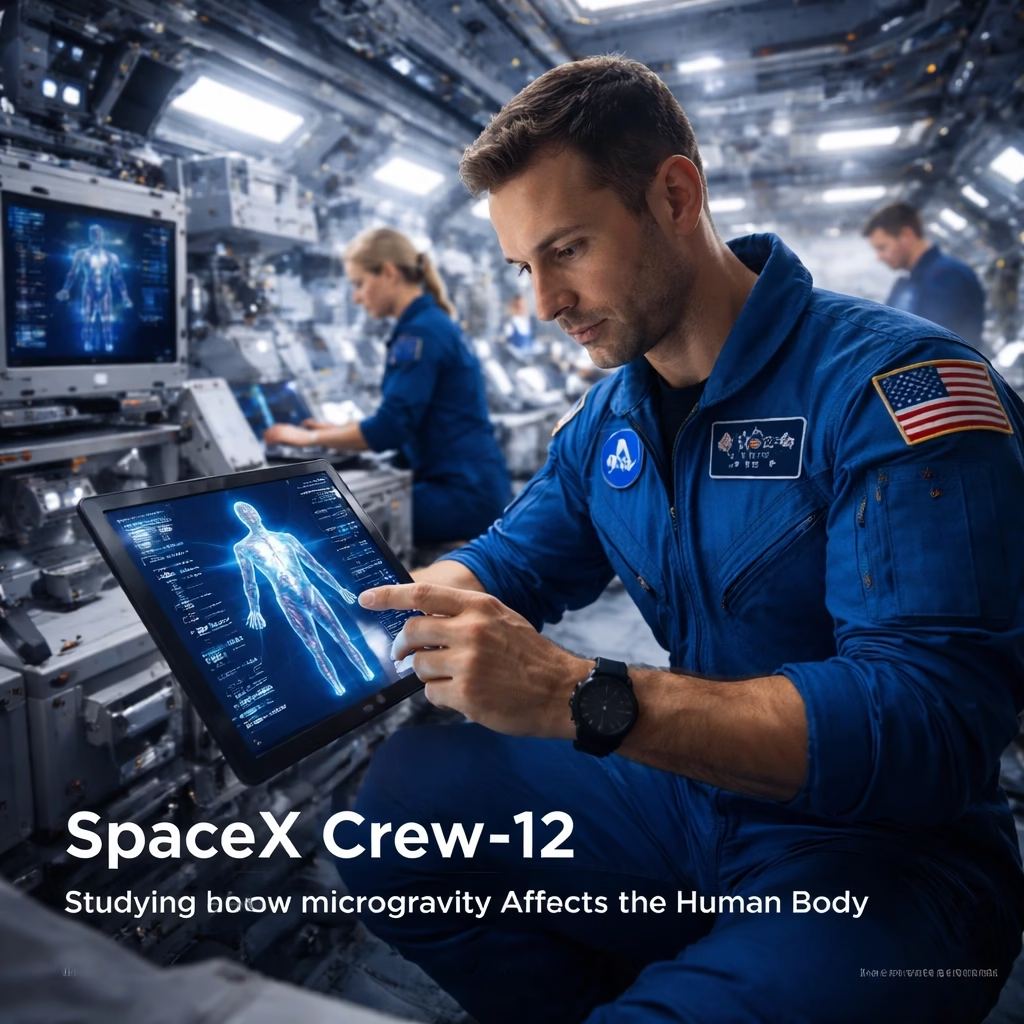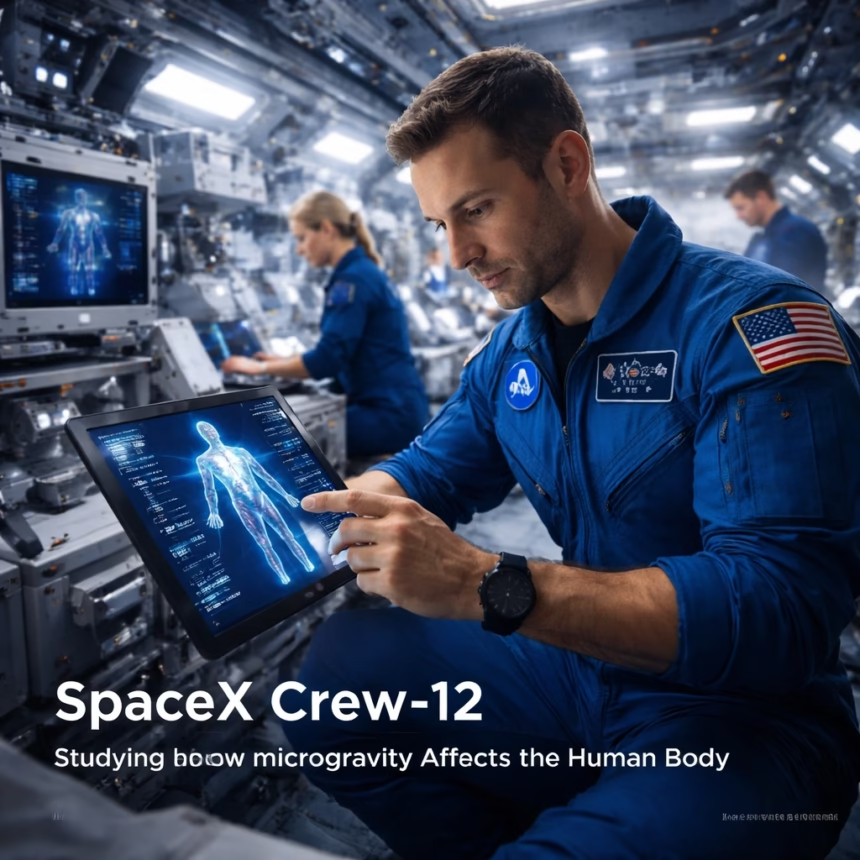
SpaceX Crew-12: Unveiling Microgravity's Deepest Impact on Humanity
SpaceX is meticulously preparing for its twelfth crewed operational mission, Crew-12, which will transport a team of international astronauts to the International Space Station (ISS). This upcoming mission is specifically designed to significantly expand critical research into how the unique environment of microgravity profoundly affects the human body, with far-reaching implications for both long-duration space travel and terrestrial health advancements.
Scheduled for launch from NASA's Kennedy Space Center in Florida, Crew-12 will deliver its crew and a suite of advanced scientific experiments to the orbiting laboratory, where they will reside for approximately six months. The primary focus of their tenure will be dedicated to understanding physiological and psychological adaptations to space, pushing the boundaries of human endurance beyond Earth.
Background: A New Era of Human Spaceflight Research
The journey to Crew-12 is rooted in NASA's Commercial Crew Program, an initiative launched to foster private sector innovation in human space transportation. This program designated SpaceX, alongside Boeing, to develop and operate systems capable of ferrying astronauts to and from the ISS, ending reliance on Russian Soyuz spacecraft for crew transport from U.S. soil.
SpaceX's Falcon 9 rocket and Dragon spacecraft have proven reliable workhorses since the Demo-2 mission in May 2020, which marked the return of human spaceflight launches from American soil. Subsequent missions, from Crew-1 through Crew-11, have consistently delivered astronauts and vital cargo to the ISS, establishing a robust cadence for orbital operations.
The International Space Station itself has served as a unique microgravity laboratory for over two decades. Astronauts from numerous nations have contributed to a vast repository of data concerning human physiology in space. Early research focused on fundamental adaptations like bone density loss, muscle atrophy, and cardiovascular deconditioning. Over time, the scope has broadened to include immunology, neurovestibular function, genetics, and behavioral health.
Each successive crew mission builds upon previous findings, refining experimental protocols and introducing more sophisticated analytical tools. The long-duration nature of ISS missions, typically around six months, provides an invaluable platform for observing chronic effects, which are paramount for planning future endeavors to the Moon, Mars, and beyond.
Key Developments: Crew-12’s Research Mandate
Crew-12 is set to embark with a crew of four highly trained astronauts, including Commander Dr. Anya Sharma (NASA), Pilot Captain Ben Carter (NASA), and Mission Specialists Dr. Kenji Tanaka (JAXA) and Dr. Maya Singh (ESA). Their mission profile emphasizes cutting-edge biomedical investigations designed to mitigate risks for future deep-space exploration.
Advanced Bone and Muscle Health Studies
One of the cornerstone research areas for Crew-12 will be an in-depth analysis of bone density loss and muscle atrophy. Building on decades of data, new experiments will utilize advanced imaging techniques and biomarker analysis to precisely track changes. One such experiment, “Osteo-Regen,” will test novel pharmaceutical countermeasures and exercise regimens aimed at preserving musculoskeletal integrity more effectively than current methods. This research holds direct implications for treating osteoporosis and sarcopenia on Earth.

Cardiovascular and Ocular Health
Microgravity significantly impacts the cardiovascular system, leading to fluid shifts and changes in heart structure. Crew-12 will participate in the “Fluid-Shift Dynamics” study, employing wearable sensors and non-invasive ultrasound to monitor intracranial pressure and ocular health, a critical concern given the observed Spaceflight Associated Neuro-ocular Syndrome (SANS) in some astronauts. Understanding these mechanisms is vital for protecting astronaut vision and brain health during extended missions.
Immune System Response and Microbiome Mapping
The immune system often shows altered function in space. The “Immune-Adaptation” experiment will collect comprehensive blood and saliva samples throughout the mission to analyze changes in immune cell populations, cytokine levels, and gene expression. Concurrently, the “Microbiome-Orbit” project will map the astronauts’ gut and skin microbiomes to understand how spaceflight influences these crucial microbial communities, which play a role in overall health and immune function.
Neuroscience and Behavioral Health
Beyond physical changes, the psychological and neurological effects of isolation, confinement, and altered gravity are paramount. Crew-12 will engage in “Cognitive Resilience” studies, using virtual reality environments and specialized tasks to assess cognitive performance, decision-making, and spatial orientation. Behavioral health monitoring, including sleep patterns and mood assessments, will provide crucial data for developing psychological support strategies for long-duration missions.
More Read

Bio-Fabrication and Organ-on-a-Chip Technologies
Crew-12 will also advance nascent fields like bio-fabrication. The “Tissue-Print in Space” experiment aims to test the viability of 3D printing human tissues in microgravity, potentially for medical applications in space or for creating better models for drug testing on Earth. Complementing this, “Organ-on-a-Chip” platforms will allow for the study of specific human organ systems (e.g., lung, liver, brain) in a microgravity environment, providing insights into disease progression and drug efficacy without involving human subjects directly.
Impact: Advancing Health On and Off Earth
The scientific dividends from Crew-12's mission extend far beyond the confines of the ISS. The comprehensive data gathered will directly inform strategies for ensuring astronaut health and performance during future missions to the Moon under the Artemis program and, eventually, to Mars. Mitigating risks like bone loss, radiation exposure, and immune suppression is critical for making multi-year interplanetary voyages feasible.
On Earth, the insights gained from microgravity research have profound terrestrial applications. Understanding the accelerated aging processes observed in space can lead to breakthroughs in treating age-related diseases. Research into bone and muscle loss directly benefits patients suffering from osteoporosis, sarcopenia, and prolonged immobility. Cardiovascular studies can inform treatments for heart disease and fluid balance disorders.
Furthermore, the development of advanced monitoring technologies, countermeasures, and pharmaceutical interventions for spaceflight often finds its way into clinical practice. Bio-fabrication and organ-on-a-chip technologies developed on the ISS could revolutionize drug discovery, personalized medicine, and regenerative therapies, offering new avenues for treating complex diseases.
The mission also contributes to the broader space economy, stimulating innovation in aerospace, biotechnology, and medical technology sectors. It fosters international collaboration, uniting scientific minds from diverse backgrounds towards common goals, pushing the boundaries of what humanity can achieve.
What Next: Launch, Orbit, and Future Horizons
The Crew-12 mission is targeting a launch window in late 2026, pending final readiness reviews and orbital mechanics. Following a precise launch atop a Falcon 9 rocket from Launch Complex 39A, the Dragon spacecraft will perform a series of orbital maneuvers to rendezvous and dock autonomously with the International Space Station.
Upon successful docking and hatch opening, the Crew-12 astronauts will be welcomed by the Expedition crew already aboard the ISS. They will then transition into their full research schedule, meticulously executing the array of experiments over their six-month stay. Data will be transmitted to ground control centers at NASA, JAXA, ESA, and other partner agencies for real-time analysis.
Towards the end of their mission, the crew will prepare for their return journey. They will undock from the ISS aboard the Dragon spacecraft, perform a deorbit burn, and splash down off the coast of Florida in the Atlantic Ocean. Post-flight medical evaluations and continued data analysis will be crucial for understanding the long-term effects of their time in microgravity.
The knowledge gleaned from Crew-12 will directly inform the design of future spacecraft, life support systems, and medical protocols for increasingly ambitious human exploration missions. Each mission like Crew-12 moves humanity closer to establishing a sustained presence beyond Earth, preparing us for a future among the stars while simultaneously improving life here on our home planet.