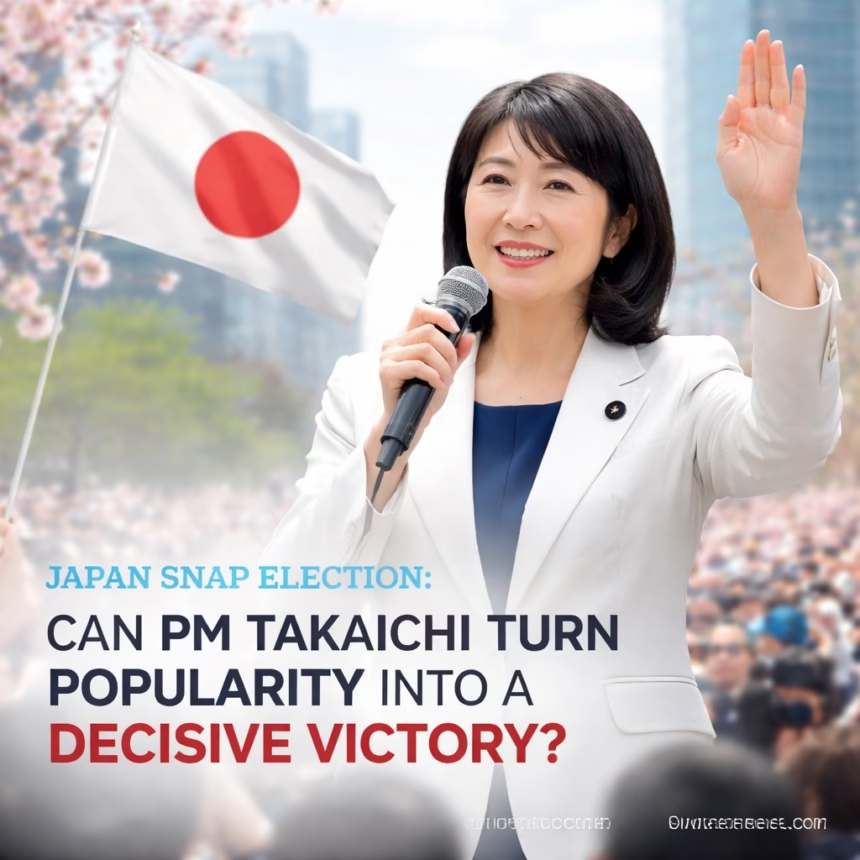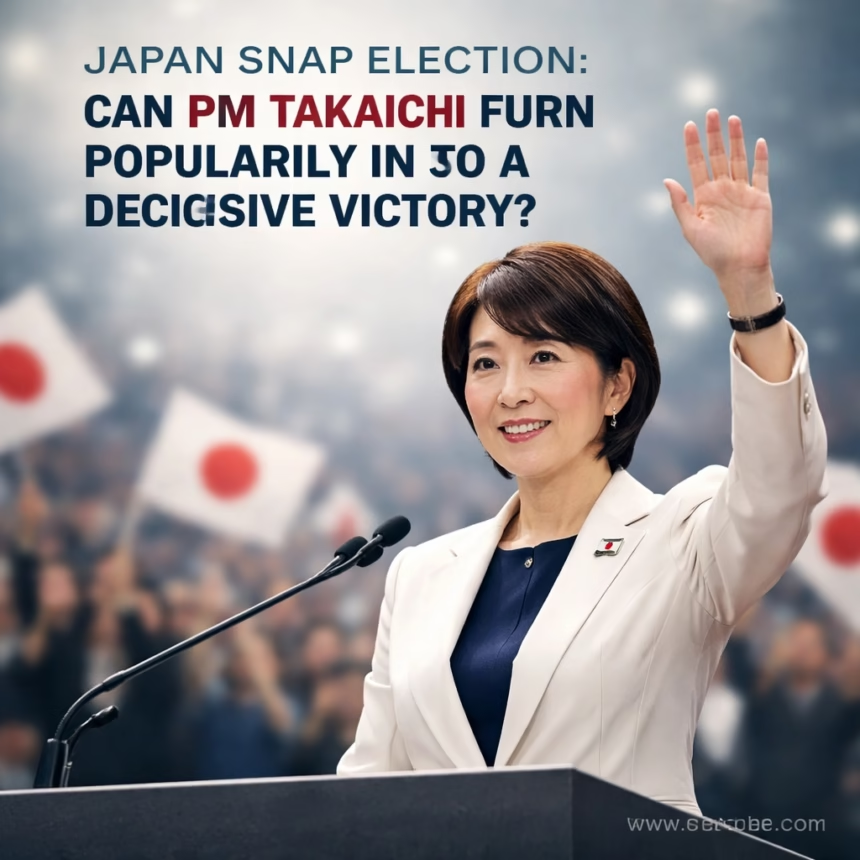
Japan's Political Crossroads: Can Takaichi Secure a Mandate?
Japan is heading to the polls on April 30, 2024, for a snap general election called by Prime Minister Fumio Kishida. This election presents a critical moment for the Liberal Democratic Party (LDP) and its coalition partner, the Komeito party, as they aim to strengthen their governing majority.
Background: A Shifting Political Landscape
The LDP has dominated Japanese politics for over seven decades, but recent years have seen a decline in its popularity. Fumio Kishida assumed the premiership in October 2021, promising an "economy focused on people." He initially enjoyed a popularity boost, but that has waned amid concerns about the government’s handling of inflation, cost of living pressures, and a series of political scandals.
The political climate has been further complicated by the opposition Constitutional Democratic Party of Japan (CDP), led by Tajio Mori. The CDP has struggled to gain significant traction, hampered by internal divisions and a lack of a clear ideological direction. The Japanese Communist Party (JCP) maintains a consistent, albeit limited, support base.
Recent Developments: A Tight Race Emerges
The decision to call a snap election was largely driven by Kishida’s desire to bolster the LDP's weakened position and secure a stronger mandate to implement his policies, including further economic measures and potential revisions to the pacifist constitution.
More Read

Recent polls indicate a closely contested election. While the LDP-Komeito coalition generally holds an advantage, the gap over the CDP has narrowed considerably. Several key factors are influencing voter sentiment, including economic anxieties, concerns about the government’s transparency, and the effectiveness of Kishida’s administration in addressing domestic challenges.
The election campaign has focused heavily on economic policy, with both the LDP and the CDP proposing different approaches to stimulate growth and combat inflation. Security concerns, particularly regarding China's assertiveness in the region, have also been prominent in the political discourse.
Economic Policy Focus
The LDP is emphasizing policies aimed at boosting corporate investment and supporting small and medium-sized enterprises (SMEs). They advocate for fiscal stimulus measures and targeted support for industries deemed crucial for Japan’s future competitiveness.
More Read

The CDP, on the other hand, is advocating for more substantial social welfare programs and greater government intervention in the economy to address income inequality and provide a stronger safety net for vulnerable populations.
Impact: Citizens and the Future of Governance
The outcome of the election will have far-reaching consequences for Japan’s domestic and foreign policies. A strong LDP victory would likely allow Kishida to pursue his agenda with greater authority, potentially leading to changes in economic policy, constitutional reform, and defense spending.
A victory for the CDP, or a coalition government led by the CDP, could result in a shift towards a more socially-oriented agenda and a re-evaluation of Japan’s security posture. It could also force a more collaborative approach to governance, requiring compromise and consensus-building between different political factions.
Regardless of the outcome, the election results will significantly shape the political landscape for the next few years and influence Japan's role on the international stage. Voters across the country, from Tokyo to Hokkaido, are closely watching the race.
What Next: Counting Votes and Forming a Government
Following the election on April 30th, vote counting will begin immediately. The results will determine the composition of the House of Representatives, Japan's lower house of parliament.
The process of forming a new government typically takes several weeks. If no single party or coalition secures a clear majority, negotiations between political parties will be necessary to forge a governing alliance. This could involve coalition governments or minority governments dependent on the support of smaller parties.

The new parliament is expected to convene in late June 2024. The first order of business will be to elect a new House Speaker, setting the stage for the initiation of legislative proceedings and the implementation of the government’s agenda. The future direction of Japan hinges on the choices made by voters in this crucial election.
Potential Coalition Scenarios
Several coalition scenarios are being discussed, including a continued LDP-Komeito coalition, a LDP-NHKP coalition (NHK Party), or a CDP-led coalition with support from smaller parties like the Japanese Association of Corporate Executives (JACEX).