China's Education Choice: Why Homeschooling Isn't Winning Over Parents
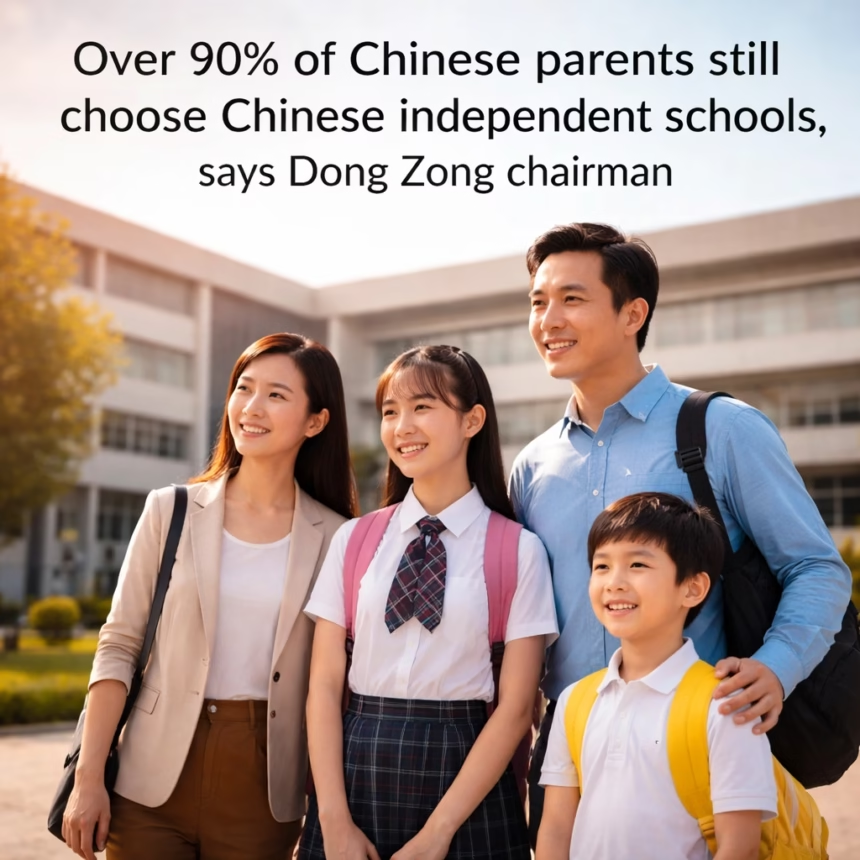
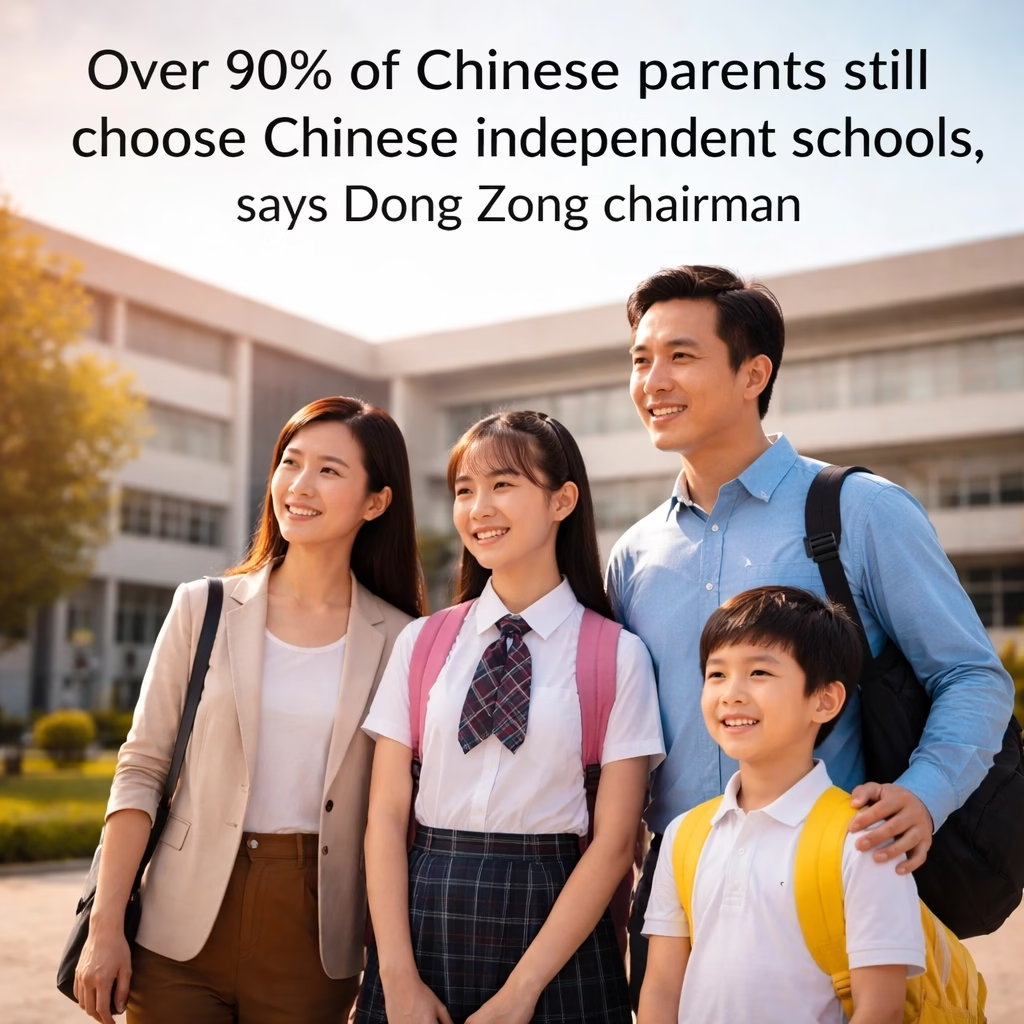
Beijing, China – A recent report indicates that over 90% of Chinese parents continue to favor independent schools for their children's education, despite the growing popularity of homeschooling and international schools. The findings, released by Dong Zong, a prominent education consulting firm, shed light on the enduring influence of traditional Chinese educational values and the perceived benefits of a structured school environment.
Background: A Shift in Educational Landscape
For years, China's education system has been a subject of intense discussion and reform. Following decades of centralized control, the government has gradually introduced more options for parents. In the early 2000s, the rise of international schools in major cities like Shanghai and Beijing offered an alternative to the state-run system. Simultaneously, homeschooling gained traction, fueled by concerns about academic pressure and a desire for more individualized learning experiences. The trend of choosing independent schools, both domestic and international, began to solidify around 2010, driven by economic growth and increasing parental investment in their children's futures.
Key Developments: The Rise of Independent Schools
Dong Zong’s report, released on November 15, 2023, highlights the continued dominance of independent schools. The firm surveyed over 5,000 parents across 15 major Chinese cities, including Shanghai, Beijing, Guangzhou, and Shenzhen. The results show that while homeschooling enrollment has seen moderate growth – estimated at 5-7% annually since 2020 – it still represents a relatively small fraction of the overall market. The report also notes a steady increase in demand for international schools, particularly those offering curricula like the IB (International Baccalaureate) and Cambridge programs. However, independent schools offering a blend of Chinese curriculum with international standards remain the most popular.
A significant factor contributing to this trend is the perceived quality of teaching and resources within independent schools. Many offer smaller class sizes, specialized programs, and experienced teachers, often attracting families willing to pay premium tuition fees. Furthermore, the emphasis on standardized testing in China has pushed many parents towards institutions that prepare their children for these exams.
More Read

Impact: Parents, Schools, and the Future of Education
This preference for independent schools has a considerable impact on various stakeholders. Independent schools benefit from sustained demand, allowing them to invest in infrastructure, teacher training, and innovative programs. However, this also contributes to the widening gap between quality education available to affluent families and those in less privileged areas. Homeschooling families, while growing, often face challenges related to access to resources and networking opportunities.
The government's educational reforms are also influenced by these trends. While promoting greater choice, the government continues to emphasize the importance of a strong foundation in Chinese language and culture. This has led to efforts to improve the quality of state-run schools and incorporate more flexible learning methods.
Economic Implications
The preference for independent schooling fuels a significant market for educational services, supporting a vast network of private tutoring centers, test preparation companies, and educational publishers. This economic activity is concentrated in major urban centers and contributes significantly to the overall growth of the education sector in China.
More Read

What Next: Future Trends and Challenges
Dong Zong predicts that the demand for international and independent schools will continue to rise in the coming years, driven by China's growing middle class and its commitment to global competitiveness. However, challenges remain. The high cost of independent schooling continues to be a barrier for many families, and the government faces the ongoing task of ensuring equitable access to quality education for all.
One expected milestone is increased government regulation of the private tutoring industry, following recent policy changes aimed at curbing excessive academic pressure on students. Another is the further development of online learning platforms, offering more affordable and accessible educational resources. The integration of technology into the classroom will also continue to be a key focus for both independent and state-run schools.
Government Initiatives
The Ministry of Education is actively promoting initiatives to improve the quality of state-run schools, including teacher training programs and curriculum reforms. These efforts are aimed at reducing the pressure on parents to send their children to expensive private schools and ensuring that all students have access to a quality education. The government is also exploring ways to make education more affordable through subsidies and financial aid programs.