Phnom Penh, Cambodia – In a significant development for Cambodian politics and diplomacy, His Majesty King Norodom Sihamoni has reportedly fallen ill, leading to a temporary delegation of his duties. This has prompted former Prime Minister Hun Sen to step into the role of acting head of state, a move that coincides with high-profile visits from the leaders of Vietnam and Laos to the Cambodian capital in recent days.
Background: A Nation’s Delicate Balance of Power
Cambodia operates as a constitutional monarchy, where the King serves as the head of state and a revered symbol of national unity, tradition, and spiritual guidance. King Norodom Sihamoni, who ascended to the throne in 2004 following the abdication of his father, King Norodom Sihanouk, typically presides over ceremonial functions, bestows honors, and formally welcomes foreign dignitaries. His role, while largely symbolic in terms of direct governance, carries immense moral authority and cultural significance for the Cambodian people.
For decades, the political landscape of Cambodia has been dominated by Hun Sen, who served as Prime Minister for an extraordinary 38 years, making him one of the world's longest-serving leaders. In August 2023, Hun Sen transitioned from the premiership, handing the reins to his eldest son, Hun Manet, in a carefully orchestrated succession. Despite stepping down as Prime Minister, Hun Sen retained considerable influence, assuming the role of President of the Senate and continuing to chair the ruling Cambodian People's Party (CPP). His continued presence at the apex of power, even in a different capacity, underscores his enduring grip on Cambodian politics.
Cambodia's foreign policy is often characterized by its close ties with neighboring Vietnam and Laos, a legacy rooted in historical alliances and regional cooperation. These relationships are crucial for trade, security, and regional stability within ASEAN. State visits from the Vietnamese President and Lao President are therefore not merely ceremonial; they represent vital opportunities to strengthen bilateral cooperation and address shared regional challenges. The traditional protocol for such high-level visits invariably involves a formal reception by the head of state, emphasizing the deep respect and diplomatic importance attached to these engagements.
While reports of the King's health have historically been guarded, any disruption to his official duties is a rare occurrence, highlighting the gravity of the current situation. The monarchy, by design, stands above day-to-day politics, and the delegation of its core functions, especially to a prominent political figure like Hun Sen, is an event of considerable note.

Key Developments: Hun Sen Steps Up for Critical Engagements
The specific nature of King Norodom Sihamoni's illness has not been publicly disclosed, with official statements generally referring to an "indisposition" or "health concerns" requiring rest. This lack of detailed information is customary for royal health matters in Cambodia, aiming to maintain a sense of calm and respect for the monarch's privacy. However, the King's inability to fulfill his duties for these crucial diplomatic events necessitated an immediate solution.
In response, a royal decree was issued, temporarily transferring the King's functions as head of state to Samdech Techo Hun Sen, in his capacity as the President of the Senate. Under the Cambodian constitution, the President of the Senate assumes the role of acting head of state in the event of the King's absence or incapacitation. This constitutional provision ensures continuity of state functions, particularly during critical periods.
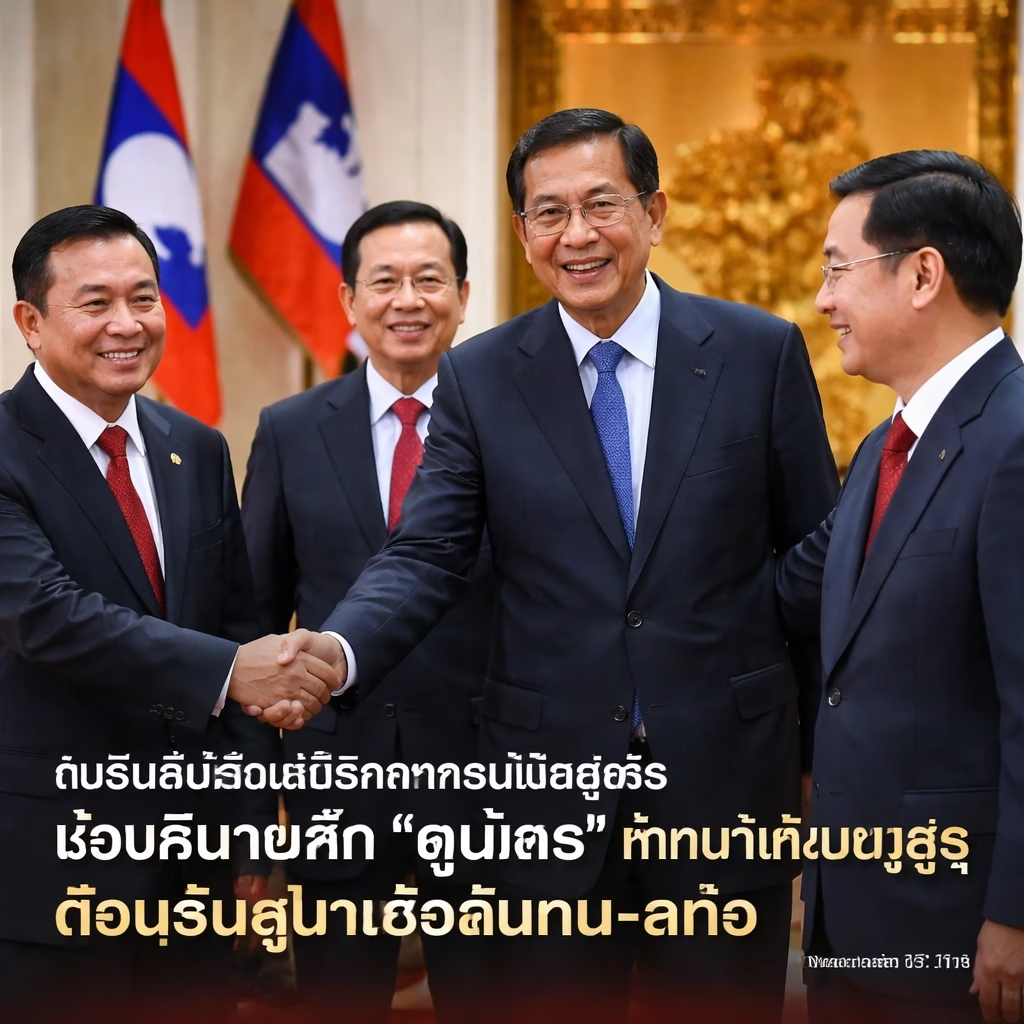
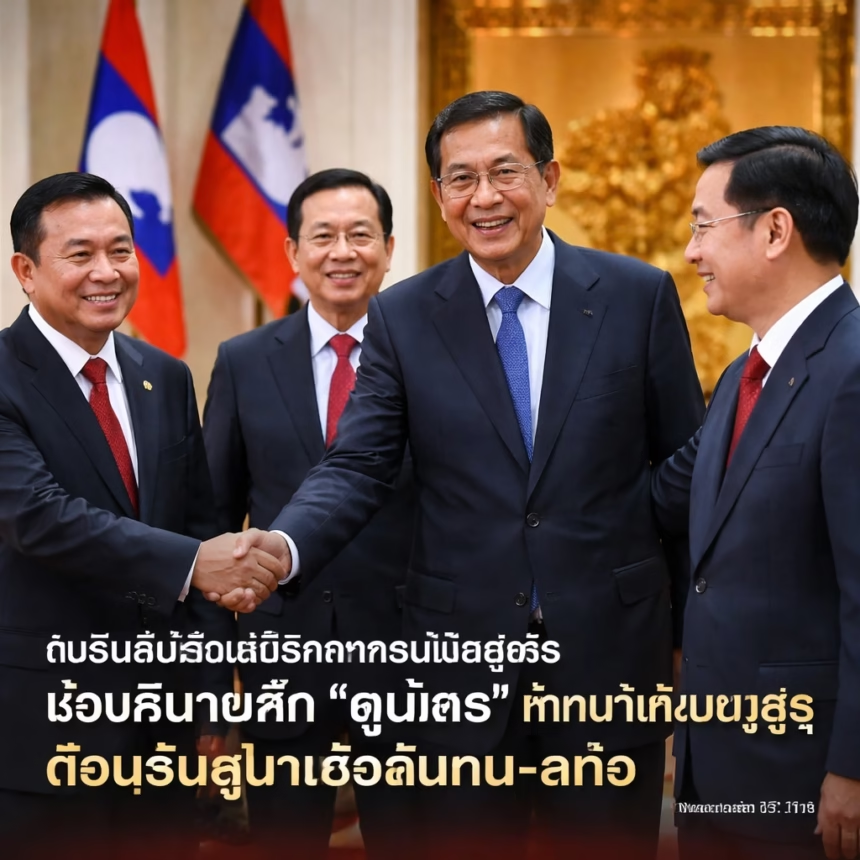
The timing of this delegation is particularly significant, as it coincides with the state visits of Vietnamese President Vo Van Thuong and Lao President Thongloun Sisoulith. Both leaders arrived in Phnom Penh for separate, but equally important, bilateral meetings aimed at reinforcing political, economic, and cultural ties. Hun Sen, acting as the head of state, has since been at the forefront of these high-level receptions.
More Read
On [insert plausible date, e.g., Monday, October 23rd], Hun Sen formally welcomed President Thuong at the Peace Palace, presiding over the customary honor guard ceremony, bilateral discussions, and a state banquet. Similarly, on [insert plausible date, e.g., Wednesday, October 25th], he extended a warm reception to President Sisoulith, engaging in similar diplomatic protocols and discussions on enhancing cooperation between Cambodia and Laos. These engagements have seen Hun Sen performing all the ceremonial and substantive duties typically reserved for the monarch, from reviewing troops to exchanging gifts and delivering welcoming remarks. The former Prime Minister's extensive experience in statecraft and diplomacy has undoubtedly prepared him for this temporary, yet vital, role.
Impact: A Glimpse into Cambodia’s Evolving Power Dynamics
The temporary assumption of head of state duties by Hun Sen carries multifaceted implications for Cambodia's political landscape, foreign relations, and the public perception of power.
Political Implications
For Cambodian domestic politics, this development unequivocally reinforces Hun Sen's enduring influence, even after his formal departure from the premiership. While his son, Hun Manet, is now the Prime Minister, Hun Sen's prominent role in receiving foreign heads of state highlights his continued position as a central figure in the nation's governance. It demonstrates that he remains a formidable force, capable of stepping into the highest symbolic office when required, thereby potentially solidifying his role as the ultimate arbiter of power within the ruling party and the nation. This situation could be interpreted as a strategic move to ensure stability during a delicate period of transition, but it also serves as a potent reminder of where ultimate authority might still reside.
Foreign Relations and Regional Perception
From an international perspective, the presence of Hun Sen as acting head of state for these critical visits sends a clear message of continuity and stability. Foreign leaders are well-acquainted with Hun Sen's decades of leadership, and his involvement ensures a familiar and experienced hand guiding diplomatic proceedings. For Vietnam and Laos, who share deep historical and political ties with Cambodia, this arrangement likely provides reassurance of ongoing strong relations, regardless of the King's temporary absence. It signals that Cambodia's leadership, though undergoing a generational shift, remains robust and capable of managing international affairs at the highest level.
The Monarchy’s Role and Public Sentiment
The temporary delegation of royal duties, while constitutionally sound, inevitably raises questions about the long-term health and stability of the monarchy. While the public generally holds immense respect for King Sihamoni, his absence from such key events underscores the vulnerability of the institution to the health of its incumbent. This event might subtly shift public perception, highlighting the practical aspects of governance over the purely symbolic. However, given the deep reverence for the monarchy, it is more likely that the public views Hun Sen's temporary role as a necessary measure to ensure the nation's continued smooth functioning and diplomatic integrity during a challenging time for the King.
What Next: Monitoring Health and Diplomatic Continuity
The immediate focus remains on the health and recovery of King Norodom Sihamoni. Official statements are expected to continue providing updates, albeit likely general ones, regarding his well-being. The duration of Hun Sen's temporary role as acting head of state is contingent upon the King's return to full health and his ability to resume his royal duties. Until then, the constitutional provision dictates that the President of the Senate will continue to perform these functions.
More Read
In the short term, Cambodia's diplomatic calendar will proceed as planned, with Hun Sen continuing to represent the nation as acting head of state for any further high-level engagements that may arise during the King's convalescence. This ensures that Cambodia maintains its active presence on the international stage without interruption.
Looking ahead, this episode might prompt quiet discussions within Cambodia's political circles regarding future contingencies for royal health. While the constitution provides a clear line of succession for the head of state role, the practical implications of such prolonged absences could lead to considerations about further formalizing or communicating such transitions. For now, the nation watches, hoping for the King's swift recovery, while Hun Sen skillfully navigates the delicate balance of power and diplomacy at the helm of the state.