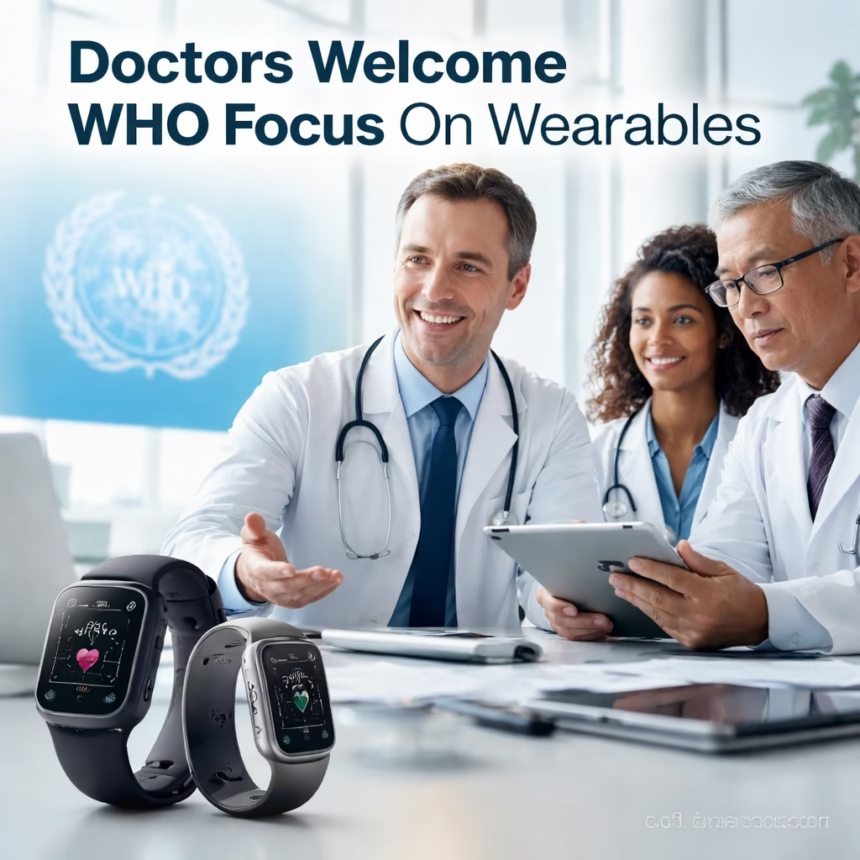
The global medical community has enthusiastically welcomed the World Health Organization's (WHO) recent announcement to prioritize research and guidelines for wearable health technology. Physicians and healthcare professionals worldwide see this strategic shift, unveiled at the WHO's Geneva headquarters this past Monday, as a pivotal moment for preventive care and remote patient monitoring. This initiative is poised to integrate personal health data from smart devices into mainstream medical practice, potentially transforming how chronic conditions are managed and how public health trends are understood.
Background: The Evolution of Health Monitoring
Wearable technology has undergone a significant transformation since its nascent stages. Initially, devices like simple pedometers emerged in the early 2010s, primarily tracking steps and basic activity levels. These rudimentary gadgets laid the groundwork for a burgeoning industry focused on personal fitness.
By the mid-2010s, smartwatches began integrating more sophisticated sensors, offering continuous heart rate monitoring and sleep pattern analysis. This period marked a crucial shift from mere activity tracking to collecting more indicative physiological data. While still consumer-focused, these advancements hinted at the potential for medical applications.
The late 2010s witnessed a breakthrough with the introduction of wearables capable of performing electrocardiograms (ECGs) and measuring blood oxygen saturation (SpO2). Several of these devices received regulatory clearances from bodies like the U.S. Food and Drug Administration (FDA) and the European CE mark, validating their medical accuracy for specific functions. This regulatory endorsement began to bridge the gap between consumer electronics and clinical tools.
The COVID-19 pandemic further accelerated the adoption and acceptance of remote monitoring solutions. Healthcare systems globally faced unprecedented strain, leading to a greater reliance on telehealth and home-based data collection. Wearables offered a non-invasive, continuous method to track vital signs and identify potential health deteriorations, proving invaluable in managing patient cohorts and reducing hospital visits.
More Read

Despite these advancements, the medical community remained cautious. Concerns over data accuracy, privacy, interoperability, and the lack of standardized clinical validation for many devices were prevalent. The WHO's previous digital health strategies, while acknowledging the potential of technology, had not specifically focused on wearables with the same intensity until now, leaving a vacuum for comprehensive global guidance.
Key Developments: WHO’s Strategic Shift
The recent announcement from the World Health Organization marks a definitive turning point. During a press conference at its Geneva headquarters on April 22, 2024, Dr. Tedros Adhanom Ghebreyesus, WHO Director-General, unveiled the "Global Initiative on Digital Health Wearables" (GIDHW). This new program aims to establish international standards, best practices, and ethical guidelines for the use of wearable health technologies in clinical and public health settings.
Formation of a Dedicated Working Group
As part of the GIDHW, the WHO has established a multi-stakeholder working group comprising medical experts, data scientists, ethicists, technology developers, and patient advocates. This group, co-chaired by Dr. Anya Sharma, a leading cardiologist from New Delhi, and Professor Julian Vance, a digital health ethicist from the University of Oxford, is tasked with developing the foundational framework for wearable integration into healthcare. Their initial focus areas include data privacy protocols, ensuring interoperability across different platforms, and defining rigorous clinical validation pathways for new devices.
More Read

Pilot Programs and Early Successes
Several pilot programs have already demonstrated the promise of wearables under informal WHO observation. In the UK, the National Health Service (NHS) has been trialing smartwatches for remote monitoring of patients with atrial fibrillation, reporting a 15% reduction in hospital readmissions for this cohort over a six-month period in selected regions like Manchester and Birmingham. Similarly, Singapore's Ministry of Health launched a program in late 2023 utilizing continuous glucose monitors (CGMs) for pre-diabetic patients, yielding improved adherence to lifestyle interventions and a 10% decrease in progression to type 2 diabetes among participants.
Medical Community Endorsement
The response from leading medical bodies has been overwhelmingly positive. Dr. Maria Rodriguez, President of the World Medical Association, stated, "The WHO's proactive stance is exactly what the global medical community needed. It provides the necessary framework to harness the immense potential of wearables responsibly and effectively." The American Medical Association (AMA) also issued a statement, applauding the initiative and emphasizing the need for robust clinician education on integrating wearable data into patient care.
Impact: Reshaping Healthcare Delivery
The WHO's focused attention on wearables is expected to have far-reaching impacts across the healthcare ecosystem, affecting patients, clinicians, healthcare systems, and technology developers alike.
Empowering Patients with Proactive Health Management
For patients, wearables offer an unprecedented level of insight into their own health. Individuals can continuously monitor vital signs, activity levels, sleep quality, and even stress indicators, fostering a more proactive approach to wellness. This self-management capability is particularly transformative for those living with chronic conditions like diabetes, hypertension, and various cardiac conditions. Early detection of anomalies, often before symptoms become severe, can lead to timely interventions and prevent acute health crises. For instance, continuous heart rate monitoring can alert users to potential arrhythmias, prompting earlier consultation with a cardiologist.
Enhancing Clinical Practice and Remote Monitoring
Doctors stand to gain powerful new tools for diagnosis, treatment, and long-term patient management. Wearable data can supplement traditional clinical assessments, providing a richer, longitudinal view of a patient's health status outside the clinic setting. Remote patient monitoring (RPM) programs, supported by validated wearable data, can reduce the need for frequent in-person visits, freeing up clinical resources and improving patient convenience. This is especially beneficial for elderly patients or those in rural areas with limited access to healthcare facilities. Furthermore, the objective data from wearables can help clinicians tailor treatment plans more precisely and evaluate their effectiveness in real-time.

Optimizing Healthcare Systems and Public Health
Healthcare systems are poised to benefit from increased efficiency and potential cost savings. By shifting towards preventive care and remote monitoring, the burden on emergency services and inpatient facilities can be significantly reduced. Early identification of health risks can prevent costly hospitalizations and complex treatments. On a broader public health scale, anonymized and aggregated wearable data could offer invaluable insights into population health trends, disease outbreaks, and the effectiveness of public health interventions. This data could inform policy decisions, resource allocation, and targeted health campaigns, particularly in areas like infectious disease surveillance and chronic disease prevalence.
Driving Innovation and Standardization in Technology
For technology companies, the WHO's initiative provides a clear pathway for innovation, emphasizing the need for clinical validity and ethical design. This will likely spur further development of more accurate sensors, advanced data analytics, and user-friendly interfaces. The push for standardization will also foster greater interoperability, allowing devices from different manufacturers to communicate seamlessly and integrate with electronic health records (EHRs), a critical step towards a truly connected healthcare ecosystem.
What Next: Milestones and Future Horizons
The Global Initiative on Digital Health Wearables (GIDHW) has outlined an ambitious roadmap for the coming years, with several key milestones expected to shape the future of digital health.
Publication of Initial Guidelines and Best Practices
The WHO's dedicated working group is anticipated to publish its first comprehensive set of international guidelines and best practices for wearable health technology by early 2025. These guidelines will address critical areas such as data privacy and security, clinical validation methodologies, ethical considerations for data use, and interoperability standards for device manufacturers. The aim is to provide a unified framework that can be adopted by national health authorities worldwide, ensuring consistency and reliability in the burgeoning field.
Expansion of Pilot Programs and Global Collaboration
Building on the successes of initial trials, the GIDHW plans to expand pilot projects globally, focusing on diverse populations and healthcare settings. New programs are slated to launch in sub-Saharan Africa and Southeast Asia by late 2025, exploring the utility of wearables in low-resource environments for maternal health monitoring and infectious disease surveillance. These initiatives will involve close collaboration between the WHO, local governments, non-governmental organizations, and technology partners to tailor solutions to specific regional needs.
Focus on AI Integration and Predictive Analytics
A significant area of future development will be the integration of artificial intelligence (AI) with wearable data for predictive analytics. Researchers are exploring how AI algorithms can analyze continuous streams of biometric data to identify subtle patterns indicative of impending health issues, such as the early onset of sepsis or cardiac events. The WHO plans to host an international symposium on "AI in Wearable Health" in mid-2026, bringing together experts to discuss ethical AI development, algorithmic transparency, and regulatory frameworks for AI-driven health insights.
Advancements in Sensor Technology and Non-Invasive Diagnostics
The initiative is also expected to catalyze further innovation in sensor technology. Future wearables may incorporate non-invasive glucose monitoring, advanced hydration tracking, and even continuous blood pressure measurement from the wrist. Research grants sponsored by the GIDHW will target breakthroughs in these areas, aiming to provide a more comprehensive, real-time physiological picture without the need for traditional, more invasive medical equipment.
The WHO's decisive move towards embracing wearable technology marks a pivotal moment, signaling a future where personal devices play an integral role in maintaining global health and well-being. The medical community stands ready to integrate these powerful tools, promising a new era of proactive, personalized, and preventative healthcare.