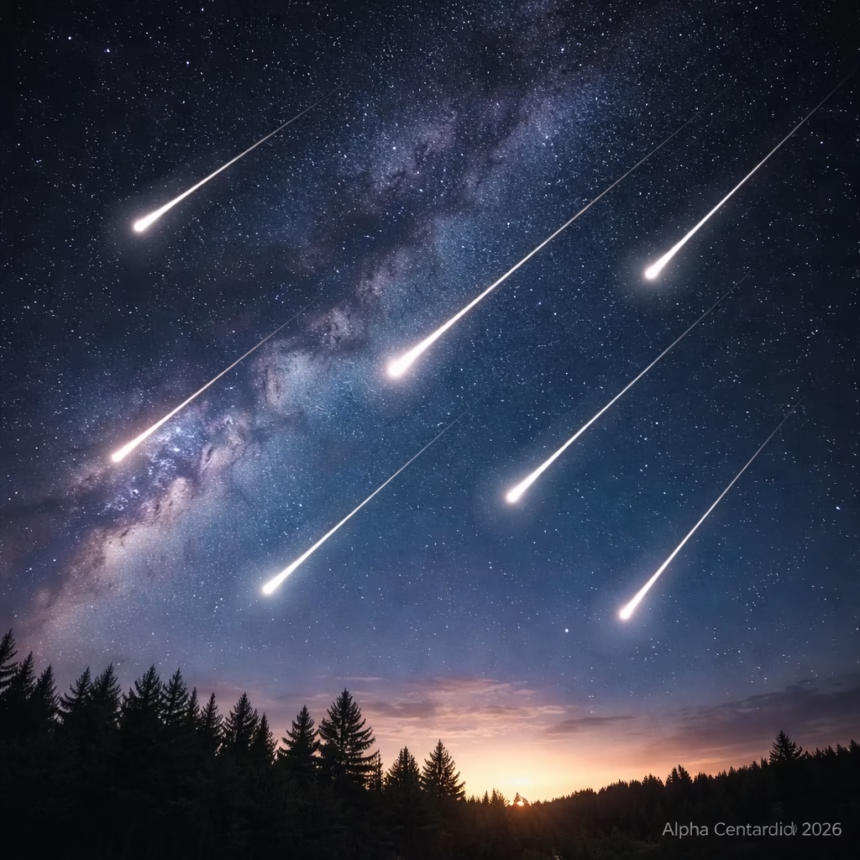
Skygazers across the Southern Hemisphere are anticipating a potentially spectacular display tonight as the annual Alpha Centaurid meteor shower reaches its peak activity. Astronomers predict an elevated Zenithal Hourly Rate (ZHR) for the 2026 event, with observers under optimal conditions potentially witnessing up to six meteors per hour. This celestial phenomenon, originating from the constellation Centaurus, offers a rare opportunity for both amateur and professional astronomers to observe fast-moving, often bright, meteors.
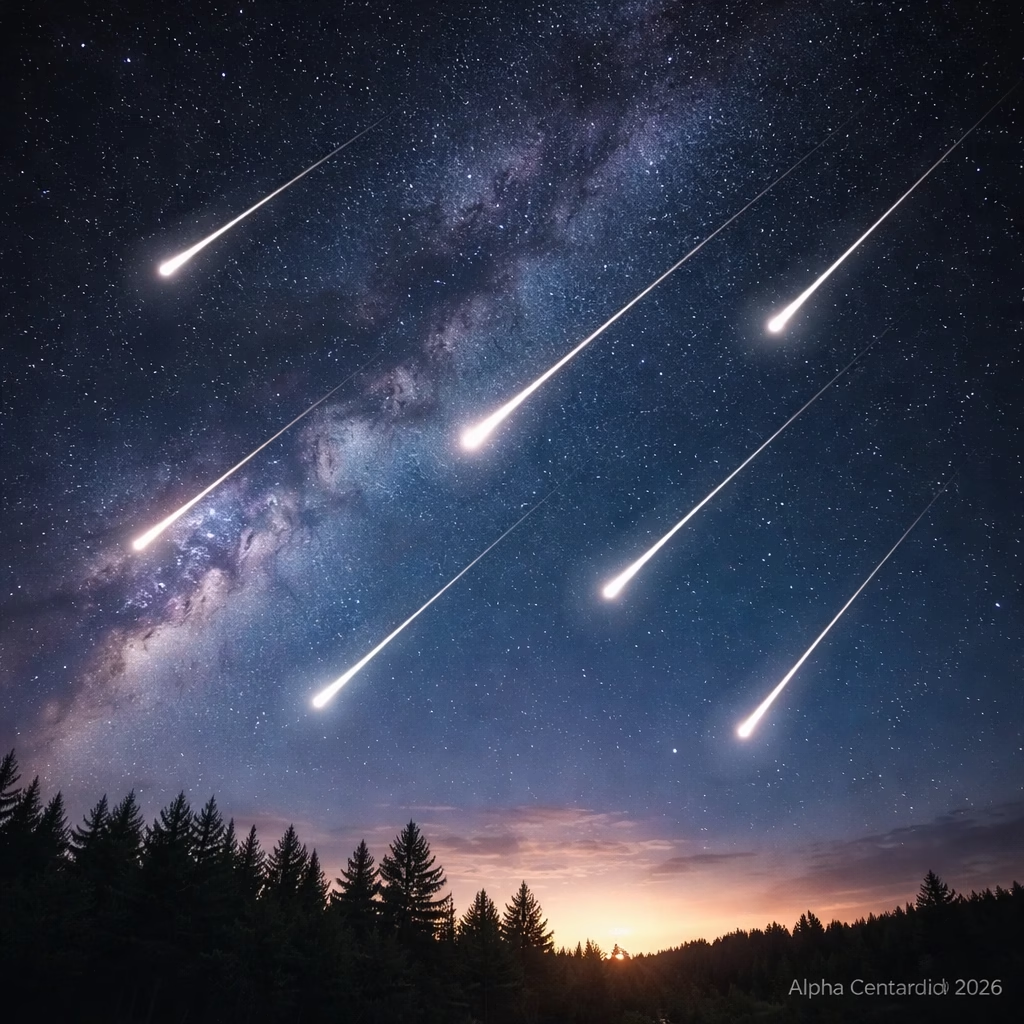
Background on the Alpha Centaurids
The Alpha Centaurid meteor shower, though less renowned than its northern counterparts like the Perseids or Geminids, holds a significant place in astronomical observation. Its radiant, the point from which meteors appear to emanate, lies near Alpha Centauri, the brightest star in the constellation Centaurus. This positioning makes it a prime target for observers situated south of the equator.
Origin and Discovery
The precise parent body of the Alpha Centaurids remains a subject of ongoing research. Unlike many prominent meteor showers directly linked to specific comets, the Alpha Centaurids are believed to originate from an as-yet-unidentified long-period comet. This mystery adds an intriguing layer to their study, requiring astronomers to model meteoroid streams based on observed meteor trajectories rather than a known cometary orbit. Early definitive observations of the shower date back to the early 20th century, with systematic studies confirming its annual recurrence and characteristics.
Typical Characteristics
Alpha Centaurid meteors are known for their remarkable speed, entering Earth’s atmosphere at approximately 56 kilometers per second (35 miles per second). This high velocity often results in brief, intense streaks of light across the night sky, sometimes accompanied by persistent trains of ionized gas. While their typical Zenithal Hourly Rate (ZHR) is usually modest, ranging from 2 to 5 meteors per hour in an average year, occasional enhancements have been recorded, such as a minor outburst in 1974. The meteors typically appear white or yellowish, though variations in color can occur depending on their chemical composition and atmospheric entry angle.
More Read

Key Developments for the 2026 Shower
This year’s Alpha Centaurid shower, peaking tonight, February 8th, 2026, is generating particular interest due to predictions of heightened activity. Several factors contribute to the anticipated increase in observable meteors, making it a noteworthy event for skywatchers.
Elevated Activity Prediction
Astronomical models developed by leading meteoroid stream specialists suggest that Earth will pass through a slightly denser filament of cometary debris this year. These models, which simulate the orbital paths of countless meteoroids ejected from a parent comet over millennia, indicate a favorable intersection with a more concentrated part of the stream. This enhanced density of particles in Earth’s path is the primary driver behind the forecast of up to six meteors per hour, a rate significantly above the shower’s average.
Favorable Lunar Conditions
A crucial element contributing to the excellent viewing prospects for 2026 is the phase of the Moon. Tonight, the Moon will be a waning crescent, meaning it will be relatively dim and will rise late in the night. This ensures that the peak hours of the meteor shower, typically in the pre-dawn darkness, will be largely free from lunar glare. Dark skies are paramount for observing faint meteors, and the absence of significant moonlight dramatically improves the visibility of even the fainter Alpha Centaurid streaks.
More Read

Recent Observational Insights
Ongoing research and recent data from specialized meteor detection systems, including ground-based radar arrays and space-based optical sensors, have provided updated insights into the Alpha Centaurid stream’s structure. These observations help refine predictive models, confirming the likelihood of a more active display. The scientific community continually monitors these streams to better understand their evolution and predict future encounters.
Impact of the Shower
The Alpha Centaurid meteor shower, particularly with its enhanced activity predicted for 2026, carries significance for various communities, from dedicated astronomers to the general public. Its occurrence stimulates scientific inquiry, encourages public engagement with astronomy, and can even influence local economies.
Scientific Community Engagement
For professional astronomers, the 2026 Alpha Centaurids offer a valuable opportunity for detailed study. Researchers will focus on collecting photometric and spectroscopic data to analyze the composition of the meteoroids, which can provide clues about their unknown parent body. High-resolution imaging can capture meteor trails, aiding in precise trajectory calculations and further refining models of the meteoroid stream’s structure. Understanding these streams contributes to our broader knowledge of cometary evolution and the early solar system.
Amateur Astronomy and Public Interest
The prospect of an elevated meteor count is a major draw for amateur astronomers and casual stargazers alike. Many will plan dedicated viewing sessions, often traveling to dark-sky locations to maximize their chances. This shared experience fosters a sense of community among enthusiasts and ignites public interest in celestial events. Educational institutions and observatories in the Southern Hemisphere may host special viewing events, providing accessible opportunities for the public to learn about and appreciate the night sky.
Astrotourism and Local Economies
Regions known for their exceptionally dark skies, particularly in countries like Australia, New Zealand, Chile, and South Africa, could see a boost in astrotourism. Travelers are often willing to venture to remote areas to witness significant astronomical events. This influx of visitors can benefit local economies through increased demand for accommodation, food services, and guided tours, highlighting the economic potential of celestial phenomena.
What Next: Maximizing Your Viewing Experience
To fully appreciate the Alpha Centaurid meteor shower tonight, observers should plan ahead and follow best practices for meteor watching. The peak activity is expected in the pre-dawn hours of February 8th/9th, 2026, offering the best chances for observation.

Optimal Viewing Times and Locations
The shower’s radiant, located in the constellation Centaurus, will be highest in the sky for observers in the Southern Hemisphere during the hours leading up to dawn. For example, in locations like Perth, Australia, the peak will occur late evening on February 8th, extending into the early morning of February 9th. In Santiago, Chile, or Cape Town, South Africa, the best viewing will be in the very early morning hours of February 9th. Viewers should seek out locations far from city lights, with an unobstructed view of the horizon, particularly towards the south.
Essential Viewing Tips
No special equipment is required to enjoy a meteor shower; your unaided eyes are the best tools. However, a few preparations can significantly enhance the experience:
- Dark Adaptation: Allow your eyes at least 20-30 minutes to fully adjust to the darkness. Avoid looking at bright lights, including phone screens, during this period.
- Comfort: Dress warmly, even on what seems like a mild night, as temperatures can drop significantly during prolonged outdoor observation. A comfortable reclining chair or a blanket on the ground will allow you to relax and scan the sky without strain.
- Patience: Meteor showers are inherently unpredictable. While predictions offer guidance, individual meteors can be sporadic. Be patient, and keep scanning different parts of the sky, not just directly at the radiant.
- Wide Field of View: While meteors appear to originate from the radiant, they can streak across any part of the sky. A wide field of view is more effective than focusing on a single point.
Future Outlook and Research
Observations from tonight’s shower will be crucial for refining future predictions of the Alpha Centaurids. Data collected by amateur and professional astronomers will feed into ongoing research, helping scientists better understand the dynamics of the meteoroid stream and potentially narrow down the identity of its elusive parent comet. Continued monitoring will track any changes in the stream’s density and distribution, providing insights into future opportunities for enhanced meteor displays.