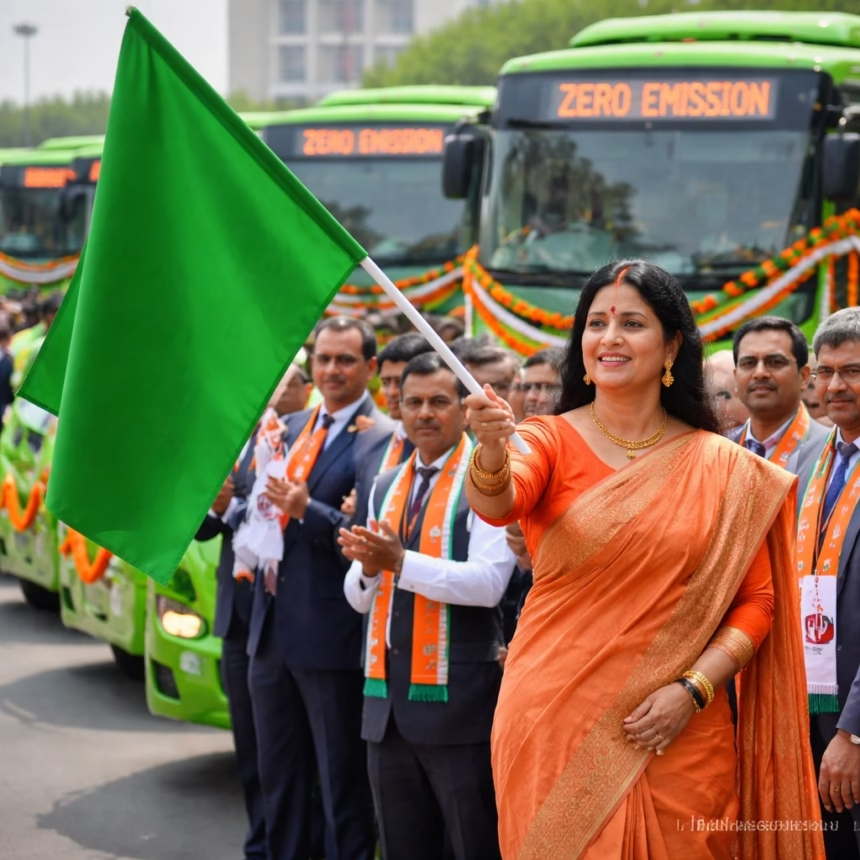
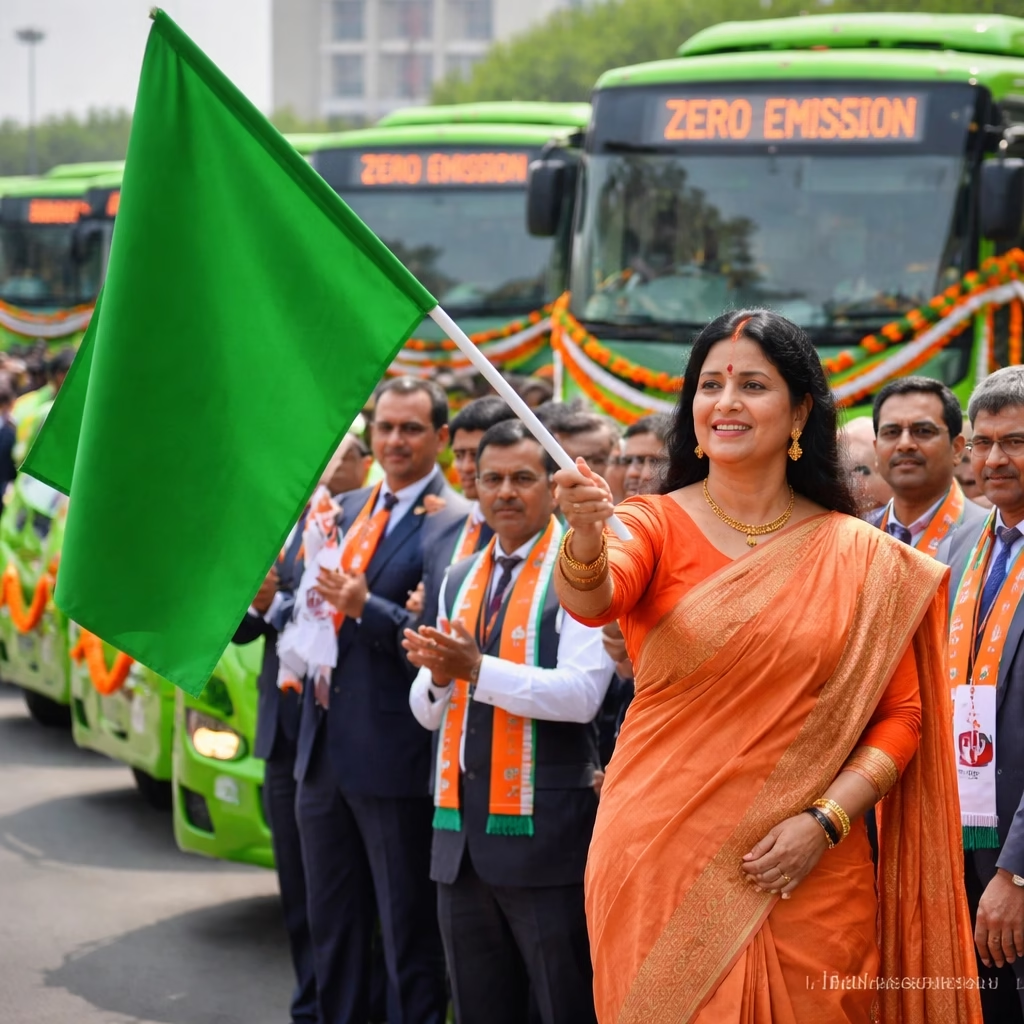
Delhi Chief Minister Rekha Gupta officially launched a substantial fleet of 500 new electric buses, marking a significant stride in the capital's commitment to sustainable public transportation. The ceremonial flag-off event, held on Thursday, April 25, 2024, at the Millennium Depot, coincided with the BJP-led Delhi government's first anniversary, underscoring a key achievement in its environmental and urban development agenda. This latest expansion is set to dramatically enhance air quality and improve the daily commute for millions across the National Capital Region.
Background: Delhi’s Drive Towards Sustainable Mobility
Delhi, a sprawling metropolis grappling with persistent air pollution challenges, has been at the forefront of India's efforts to transition towards cleaner transportation. The introduction of these 500 electric buses is a pivotal moment in the city's long-term strategy to combat environmental degradation and improve public health.
Addressing the Pollution Crisis
For decades, Delhi has consistently ranked among the world's most polluted cities, with vehicular emissions being a major contributor to poor air quality. The shift to electric vehicles (EVs) is a critical component of the government's comprehensive plan to mitigate smog and particulate matter, especially during winter months. Initiatives like the Graded Response Action Plan (GRAP) and various awareness campaigns have laid the groundwork for such transformative projects.
Government Policies and Vision
The Delhi Electric Vehicle Policy, initially launched in 2020 and subsequently updated, sets ambitious targets for EV adoption across various segments, including public transport. The policy aims to make Delhi a global leader in electric mobility by providing subsidies, incentives, and developing robust charging infrastructure. Chief Minister Rekha Gupta's administration has consistently emphasized its vision for a green, smart, and livable Delhi, with sustainable transport being a cornerstone. The current launch stands as a testament to the BJP-led government's dedication to fulfilling its electoral promises regarding environmental protection and urban infrastructure development within its first year.
Previous Phases of Electrification
The Delhi Transport Corporation (DTC) has been gradually integrating electric buses into its fleet over the past few years. Earlier phases saw the induction of smaller batches, including 150 buses in 2022 and another 300 in late 2023. These initial deployments provided valuable operational insights and helped refine the infrastructure and training protocols necessary for a larger-scale rollout. The current batch of 500 buses represents the largest single induction of electric vehicles into Delhi's public transport system to date.
More Read

Funding and Support
The procurement of these electric buses has been significantly supported by the Faster Adoption and Manufacturing of Electric Vehicles (FAME-II) scheme, a flagship initiative of the central government. This scheme provides financial incentives for the purchase of electric vehicles and the development of charging infrastructure. The Delhi government has also contributed substantial subsidies and allocated funds for depot upgrades and operational costs, demonstrating a collaborative approach to achieving sustainable transport goals.
Key Developments: A Modern Fleet for a Modern City
The newly launched fleet represents a significant upgrade in both capacity and technological sophistication for Delhi's public transportation network. These buses are designed to offer a superior commuting experience while adhering to stringent environmental standards.
Fleet Specifications and Features
The 500 new electric buses are primarily manufactured by leading Indian companies such as Tata Motors and Ashok Leyland, with models like the Tata Ultra Urban 9/9 Electric and Ashok Leyland Circuit series. These are 12-meter, low-floor, air-conditioned buses, designed for comfort and accessibility. Each bus has a seating capacity of approximately 35-40 passengers, with ample standing room. Powered by advanced lithium-ion battery technology, these vehicles boast an impressive range of 200-250 kilometers on a single charge, making them suitable for extensive daily routes across the city. The cost per bus is estimated at around INR 1.8 to 2.2 crore, reflecting the advanced technology and features integrated.
More Read

Infrastructure Expansion and Charging Network
To support the massive influx of electric buses, the Delhi government has undertaken a rapid expansion of its charging infrastructure. Five key depots – Millennium, Rajghat, Rohini Sector 37, Dwarka Sector 22, and IP Depot – have been extensively upgraded to accommodate the new fleet. These depots are now equipped with a total of 250 fast-charging points, capable of charging a bus to 80% capacity in approximately 90 minutes. Furthermore, an additional 150 public charging stations have been installed at strategic locations across the city, including major bus terminals and commercial hubs, to ensure operational efficiency and provide contingency charging options. Efforts are also underway to integrate renewable energy sources, such as solar panels, at several depots to power the charging infrastructure sustainably.
Route Rationalization and Connectivity
The 500 new electric buses will be deployed on 50 high-demand routes, specifically targeting areas with high passenger footfall, pollution hotspots, and previously underserved localities. These routes have been carefully rationalized to enhance last-mile connectivity and seamlessly integrate with the existing Delhi Metro and conventional bus networks. Digital route mapping and real-time tracking systems have been implemented to optimize schedules and provide accurate arrival times to commuters via mobile applications and public information displays.
Advanced Technological Integration
Each new electric bus is equipped with a suite of advanced technologies aimed at enhancing safety, convenience, and operational efficiency. This includes a robust GPS tracking system for real-time monitoring, multiple CCTV cameras (typically 3-4 per bus) for comprehensive surveillance, and strategically placed panic buttons connected to a central control room for immediate response in emergencies. Passengers will benefit from digital ticketing options, contactless payment systems, and dynamic passenger information displays providing details on the next stop, estimated arrival times, and route maps.
Comprehensive Staff Training
A dedicated training program has been conducted for over 1,500 drivers and technical staff to ensure the smooth operation and maintenance of the new electric fleet. This comprehensive training covered various aspects, including electric vehicle specific driving techniques, battery management systems, emergency protocols, and routine maintenance procedures. Technical staff received specialized training on EV diagnostics, repair, and safety precautions associated with high-voltage systems.
Impact: A Greener, Smarter, and More Accessible Delhi
The introduction of these 500 electric buses is expected to have far-reaching positive impacts across environmental, social, and economic spheres, significantly transforming urban life in Delhi.
Environmental Benefits
The most immediate and profound impact will be on Delhi's air quality. These electric buses produce zero tailpipe emissions, meaning no carbon dioxide (CO2), nitrogen oxides (NOx), or particulate matter (PM) are released into the atmosphere during operation. This is equivalent to removing approximately 15,000 internal combustion engine vehicles from the roads annually, or planting over 100,000 trees in terms of carbon sequestration. The reduction in noise pollution is another significant benefit, contributing to a quieter and more pleasant urban soundscape. This initiative strongly aligns with India's national climate goals and its commitment to reducing its carbon footprint.

Enhanced Commuter Experience
For millions of daily commuters, the new electric buses promise a significantly improved travel experience. The low-floor design ensures easy access for the elderly, persons with disabilities, and parents with strollers. Air-conditioning provides relief during Delhi's extreme summers, while comfortable seating and spacious interiors enhance passenger comfort. The integration of real-time tracking, digital displays, and reliable scheduling will lead to greater predictability and reduced waiting times. Enhanced safety features, including CCTV cameras and panic buttons, are expected to foster a greater sense of security, particularly for women and vulnerable passengers.
Economic and Social Benefits
The project has generated substantial economic activity. The procurement, deployment, and ongoing maintenance of such a large fleet have created numerous direct job opportunities for drivers, mechanics, and administrative staff. Indirectly, it has stimulated growth in the domestic electric vehicle manufacturing sector, battery technology, and charging infrastructure development. Furthermore, improved public transport accessibility will positively impact social equity, enabling better access to education, employment centers, and healthcare facilities for all segments of the population, particularly those in marginalized communities. Cleaner air will also lead to improved public health outcomes, reducing the incidence of respiratory and cardiovascular diseases linked to air pollution.
What Next: Delhi’s Vision for Future Mobility
The flag-off of 500 electric buses marks a significant milestone, but it is just one step in Delhi's ambitious long-term strategy for sustainable urban mobility. The government has outlined clear plans for further expansion and innovation in the coming years.
Future Phases of Expansion
The Delhi government aims to rapidly expand its electric bus fleet, with targets to reach 3,000 electric buses by the end of 2025 and an impressive 8,000-10,000 electric buses by 2027. This phased approach will involve further large-scale procurements, with the next batch of 1,000 buses expected to be inducted by early 2025. Plans also include the introduction of smaller electric feeder buses to enhance last-mile connectivity in residential areas and commercial hubs, complementing the larger fleet.
Integrated Smart City Transport
Future initiatives will focus on deeper integration of the electric bus network with other modes of public transport, including the Delhi Metro and the upcoming Regional Rapid Transit System (RRTS). The development of multimodal transport hubs, where commuters can seamlessly switch between different modes of transport, is a priority. Furthermore, the government plans to leverage smart traffic management systems and artificial intelligence to optimize bus routes, reduce congestion, and enhance overall operational efficiency across the city.
Continued Policy and Innovation
The Delhi government will continue to refine its EV policy, offering sustained subsidies and incentives to encourage the adoption of electric vehicles across all segments, from personal cars to commercial fleets and last-mile delivery services. Investment in research and development for advanced battery technologies, faster charging solutions, and smart grid integration will be a key focus. Public awareness campaigns will also be intensified to educate citizens about the benefits of electric mobility and encourage their participation in building a greener Delhi.
Delhi as a Global Benchmark
Through these concerted efforts, Delhi aspires to establish itself as a global leader in sustainable urban mobility, setting a benchmark for other megacities grappling with similar environmental and transportation challenges. The vision is to create a city where clean, efficient, and accessible public transport is the norm, significantly improving the quality of life for all its residents.