Unlocking Deeper Insights: Australia's Advanced Brain Scanner Arrives
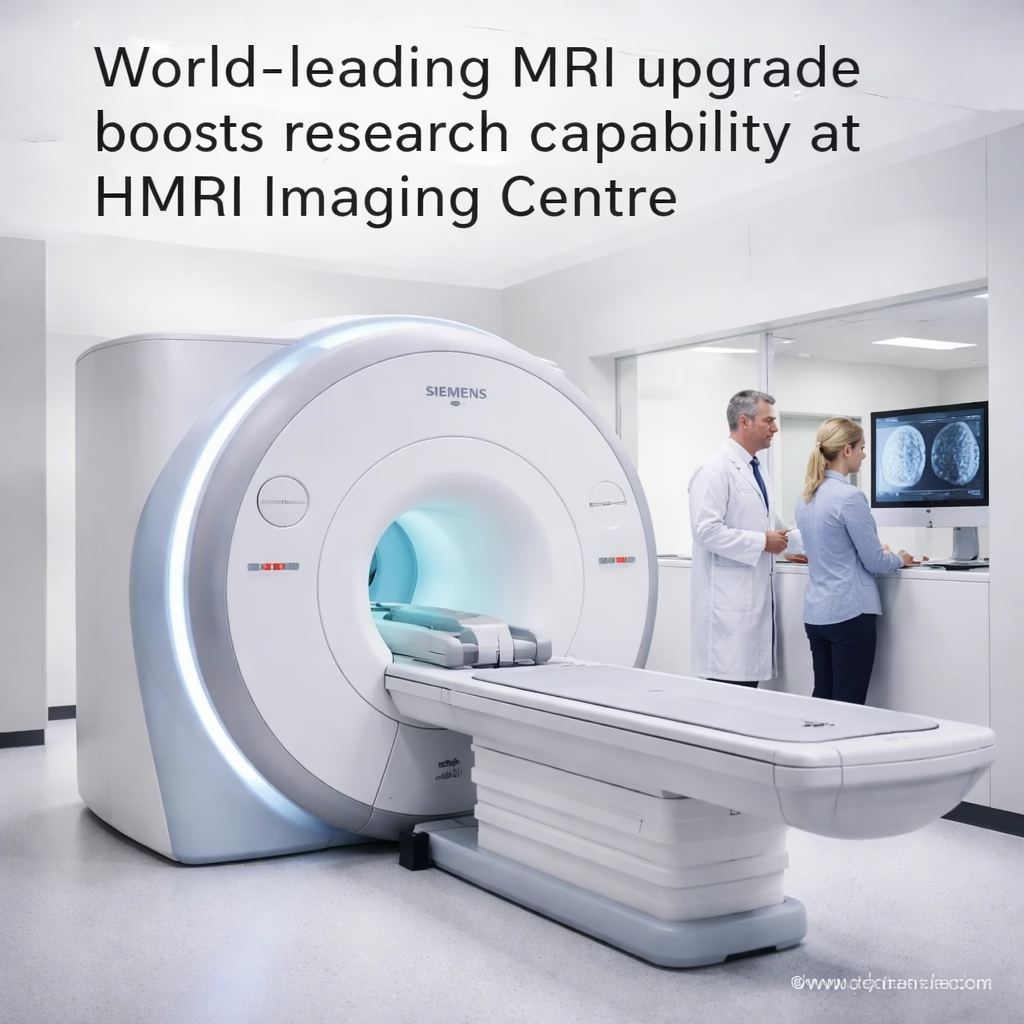
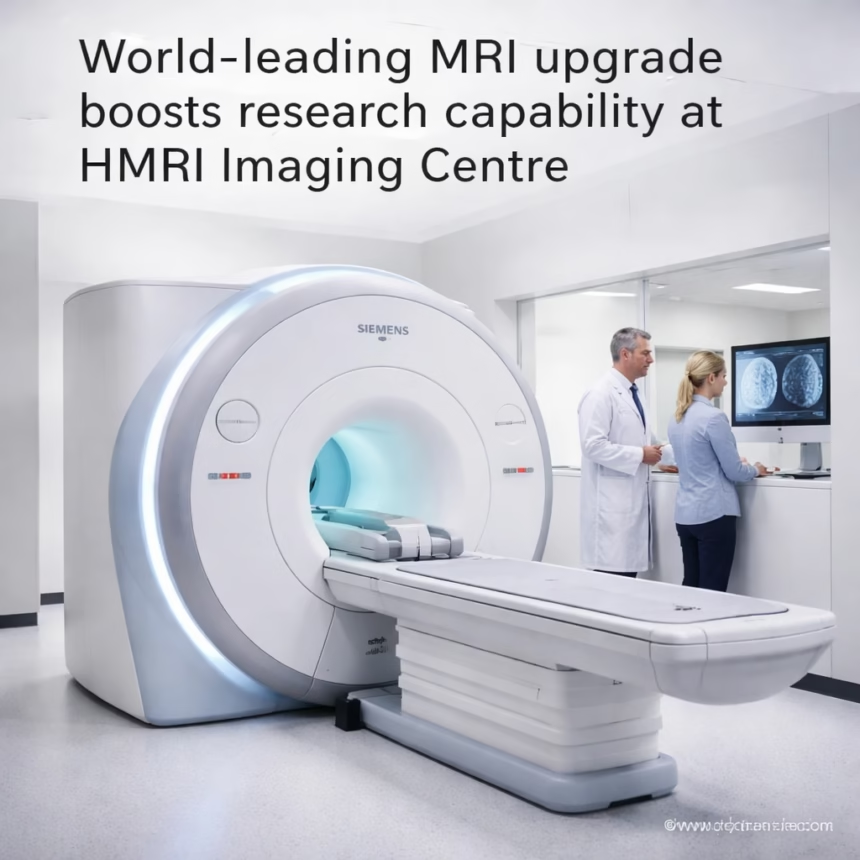
The Harry Medical Research Institute (HMRI) Imaging Centre in Melbourne has received a significant upgrade with the arrival of a cutting-edge Magnetic Resonance Imaging (MRI) system. This advanced technology promises to accelerate medical research and improve diagnoses for a wide range of conditions, starting in late 2023.
Building on a Legacy of Discovery
HMRI has long been a hub for medical innovation in Victoria, Australia. Established in 2005, the institute focuses on translating scientific discoveries into improved health outcomes. Its Imaging Centre, a vital component of HMRI, has served as a key resource for researchers and clinicians since its initial setup. Previous MRI systems at the Centre have supported research in areas such as brain disorders, cardiovascular disease, and cancer.
The upgrade builds upon years of investment in imaging technology, reflecting HMRI's commitment to staying at the forefront of medical advancement. Researchers have steadily increased the sophistication of imaging techniques at the Centre, enabling increasingly detailed and nuanced studies.
A Leap Forward in MRI Capabilities
The newly installed MRI system boasts significantly enhanced capabilities compared to its predecessor. Key upgrades include a higher magnetic field strength, allowing for greater image resolution and clarity. This translates to more detailed visualization of soft tissues within the body.
More Read

Specifically, the new system incorporates advanced pulse sequences that improve the detection of subtle changes in brain structure and function. It also features improved speed, reducing scan times and enhancing patient comfort. The system is equipped with state-of-the-art software for image analysis and processing, facilitating more efficient data interpretation.
Furthermore, the new MRI system offers enhanced functional imaging capabilities, enabling researchers to study brain activity in real-time. This is crucial for understanding neurological disorders and developing new therapies.
Enhanced Functional Connectivity Mapping
The improved functional imaging allows researchers to better map the connections between different regions of the brain. This is particularly important in studying conditions like Alzheimer’s disease and schizophrenia, where disruptions in brain connectivity are often observed.
More Read

Transforming Research and Patient Care
The upgrade will have a broad impact on medical research across various disciplines. Researchers at HMRI and collaborating institutions will gain access to a powerful tool for investigating the underlying mechanisms of disease. This includes studying the effects of genetic mutations, environmental factors, and lifestyle choices on brain health.
Clinical applications are also expected to benefit. Improved image resolution can lead to earlier and more accurate diagnoses of conditions such as stroke, multiple sclerosis, and brain tumors. This can enable more timely and effective treatment interventions.
The enhanced functional imaging capabilities are particularly promising for understanding and treating mental health disorders. Researchers can now study brain activity patterns associated with depression, anxiety, and other conditions, paving the way for personalized therapies.
Looking Ahead: Future Directions
HMRI plans to actively engage with researchers to develop new research projects leveraging the capabilities of the upgraded MRI system. Initial focus areas include studies on neurodegenerative diseases, traumatic brain injury, and the impact of chronic stress on brain health. The centre is also exploring collaborations with industry partners to translate research findings into clinical applications.
A key milestone is the planned integration of artificial intelligence (AI) algorithms into the image analysis workflow. AI will assist researchers in identifying subtle patterns in brain images, accelerating discovery and improving diagnostic accuracy. This integration is expected to be completed by late 2024.
HMRI is also committed to training the next generation of neuroimaging experts. The upgraded system will be used to provide advanced training opportunities for researchers, clinicians, and students, ensuring that Australia remains a leader in neuroimaging research.

Collaboration and Partnerships
HMRI actively fosters collaborations with universities, hospitals, and industry partners both nationally and internationally. These collaborations are crucial for maximizing the impact of the upgraded MRI system and accelerating the pace of medical discovery.