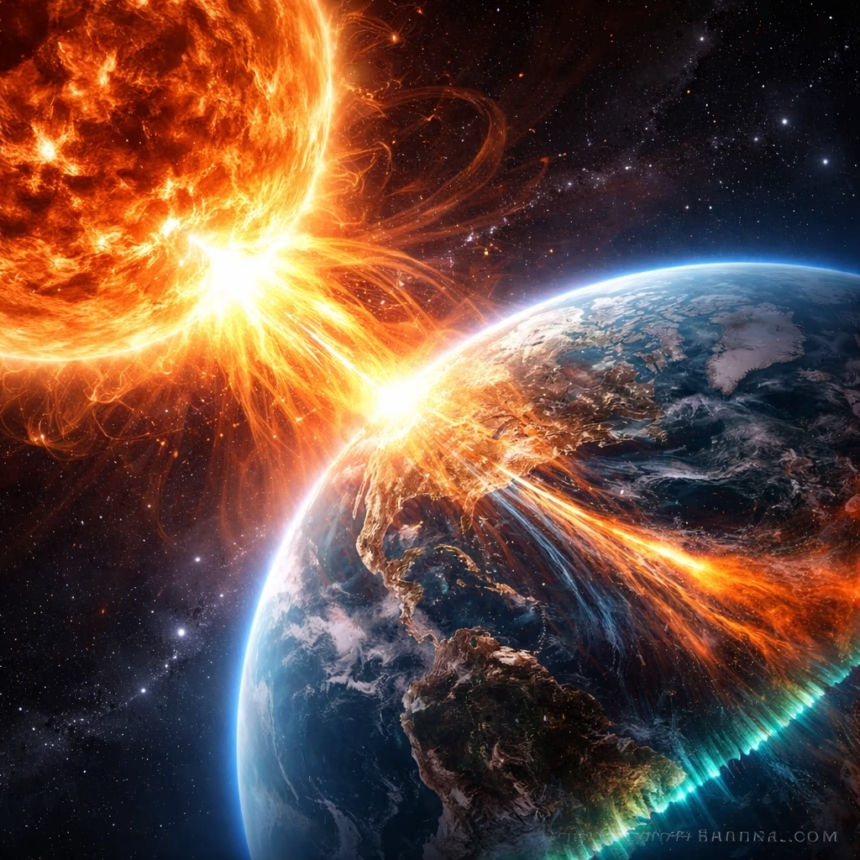
Cosmic Storm Unleashes Fury: Earth Brace for Solar Impact
A powerful solar storm, triggered by a mega-eruption on the sun, is currently impacting Earth. The event, first detected on October 14, 2024, is causing geomagnetic disturbances and raising concerns about technological disruptions across the globe. Scientists are closely monitoring the situation as the storm continues to evolve.
Background: Understanding Solar Eruptions
Solar eruptions are bursts of energy from the Sun, primarily composed of plasma and magnetic fields. These events occur as a result of the Sun's magnetic activity, which follows an approximately 11-year cycle of solar activity. A solar flare is a sudden, intense release of energy. Coronal Mass Ejections (CMEs) are large expulsions of plasma and magnetic field from the Sun's corona. When these events are directed towards Earth, they can interact with our planet's magnetosphere, creating geomagnetic storms.
Historically, significant solar storms have been recorded. The Carrington Event of 1859, the largest recorded geomagnetic storm, caused widespread telegraph system failures and auroras visible across the globe. While modern technology is far more sophisticated, the potential for disruption remains significant.
Key Developments: The Current Situation
The current mega-eruption began with a series of X-class solar flares – the most powerful classification – emanating from sunspot region AR3592. These flares, detected by observatories like the Solar Dynamics Observatory (SDO) and the Parker Solar Probe, released immense amounts of radiation.
More Read

Following the flares, a powerful CME was launched on October 14th at approximately 03:00 UTC. Preliminary data suggests the CME is traveling at speeds of over 700 kilometers per second. This speed indicates a potentially significant impact on Earth's magnetosphere. The National Oceanic and Atmospheric Administration (NOAA) Space Weather Prediction Center (SWPC) has issued multiple Geomagnetic Storm Watches and Warnings.
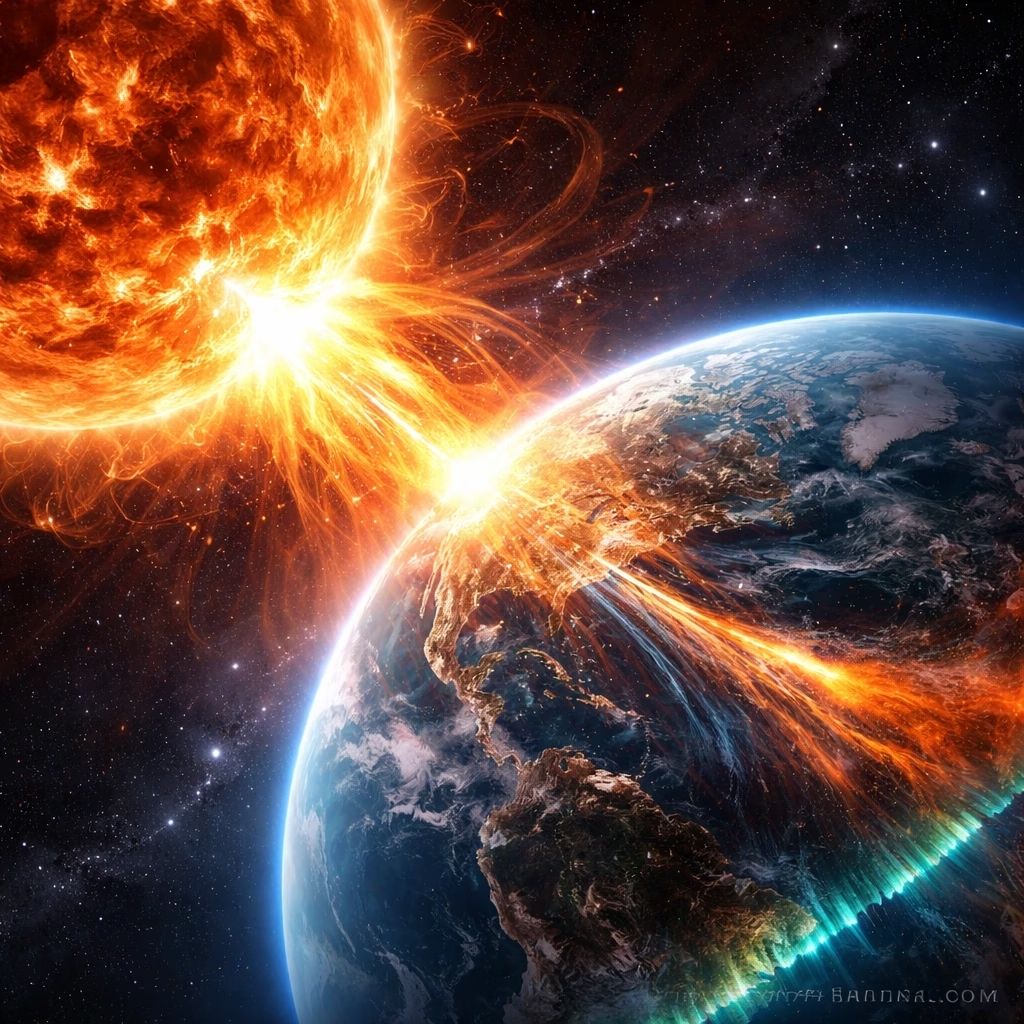
As of October 15th, the CME is expected to reach Earth's magnetosphere on October 16th, with the strongest effects anticipated within 24-48 hours after arrival.
More Read

Impact: Potential Disruptions
The geomagnetic storm is expected to cause several potential disruptions. These include:
Satellite Communications: Increased drag on satellites, potentially affecting their orbits and communication capabilities. Some satellite operators have already taken precautionary measures.
GPS Navigation: Disruptions to GPS signals, impacting applications reliant on accurate positioning, such as aviation, shipping, and agriculture.
Power Grids: Geomagnetically induced currents (GICs) can flow through power grids, potentially overloading transformers and causing widespread blackouts. Utilities are monitoring grid stability and implementing protective measures.
Radio Communications: Disruptions to high-frequency (HF) radio communications, affecting aviation, maritime, and emergency services.
Auroras: Spectacular auroral displays are expected to be visible at lower latitudes than usual, potentially as far south as the United States and Europe.
The severity of the impact will depend on the strength of the geomagnetic storm and the preparedness of infrastructure operators.
Specific Regional Concerns
Regions with critical infrastructure, such as those reliant on power grids or GPS navigation, are particularly vulnerable. Areas closer to the auroral oval, like Alaska, Canada, and Scandinavia, will experience the most intense auroral displays.
What Next: Monitoring and Mitigation
Scientists will continue to monitor the CME's progress and its interaction with Earth's magnetosphere. The NOAA SWPC is providing real-time updates and forecasts. The situation is dynamic, and predictions may evolve as more data becomes available.
Mitigation efforts are focused on protecting critical infrastructure. Power grid operators are taking steps to reduce GIC risk, and satellite operators are adjusting satellite operations to minimize disruption. Emergency services are preparing for potential communication disruptions.
More Read

The solar storm is a reminder of the Sun's powerful influence on our planet. Ongoing research and improved monitoring capabilities are crucial for mitigating the risks associated with space weather events.
Long-Term Outlook
The Sun is currently in the early phases of its solar cycle 25. Scientists predict that solar activity will continue to increase over the next few years, potentially leading to more frequent and intense solar storms. Continued investment in space weather forecasting and infrastructure hardening is essential to protect our increasingly technologically dependent society.