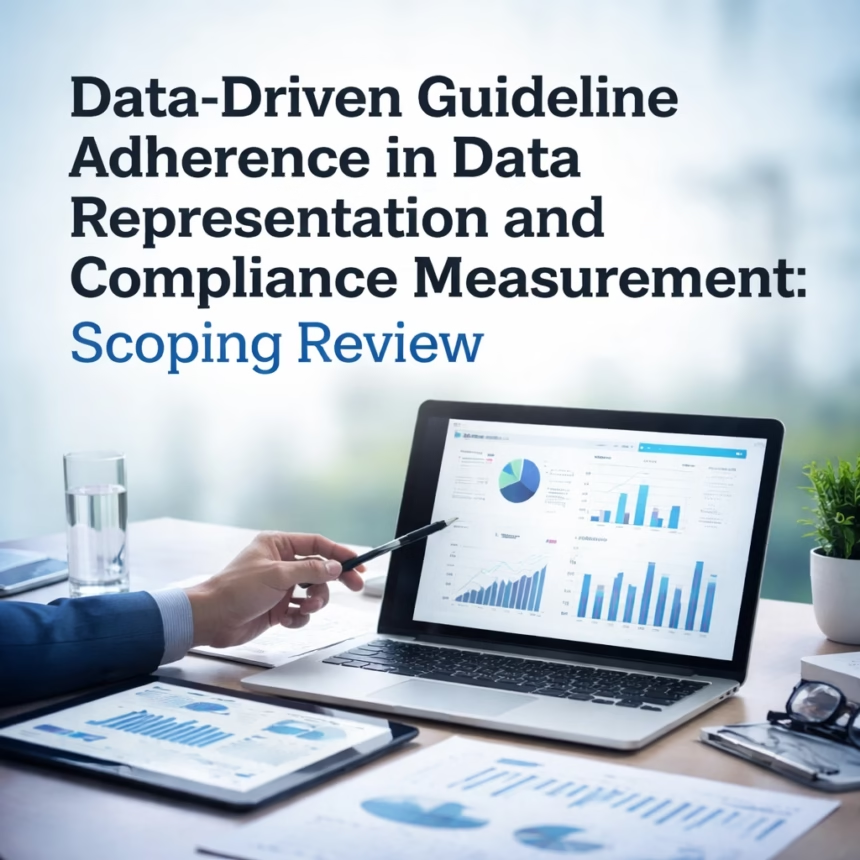
Decoding the Data: Are We Meeting Compliance Standards?
A recent scoping review examines how data analytics can improve adherence to regulatory guidelines across various sectors. The review, conducted in late 2023 and early 2024, explores the use of data-driven approaches to data representation and compliance measurement, with implications for organizations globally.
Background
For decades, regulatory compliance has relied heavily on manual audits and subjective assessments. Organizations in sectors like finance, healthcare, and technology have wrestled with interpreting complex rules and ensuring consistent application. The rise of big data and advanced analytics presents a potential shift, offering the opportunity to automate compliance monitoring and identify potential risks proactively. Initial explorations in this area began in the early 2010s, focusing on data quality and governance frameworks. However, the widespread adoption of these techniques has been relatively slow, hampered by concerns about data privacy, algorithm bias, and the need for specialized expertise.
Key Developments
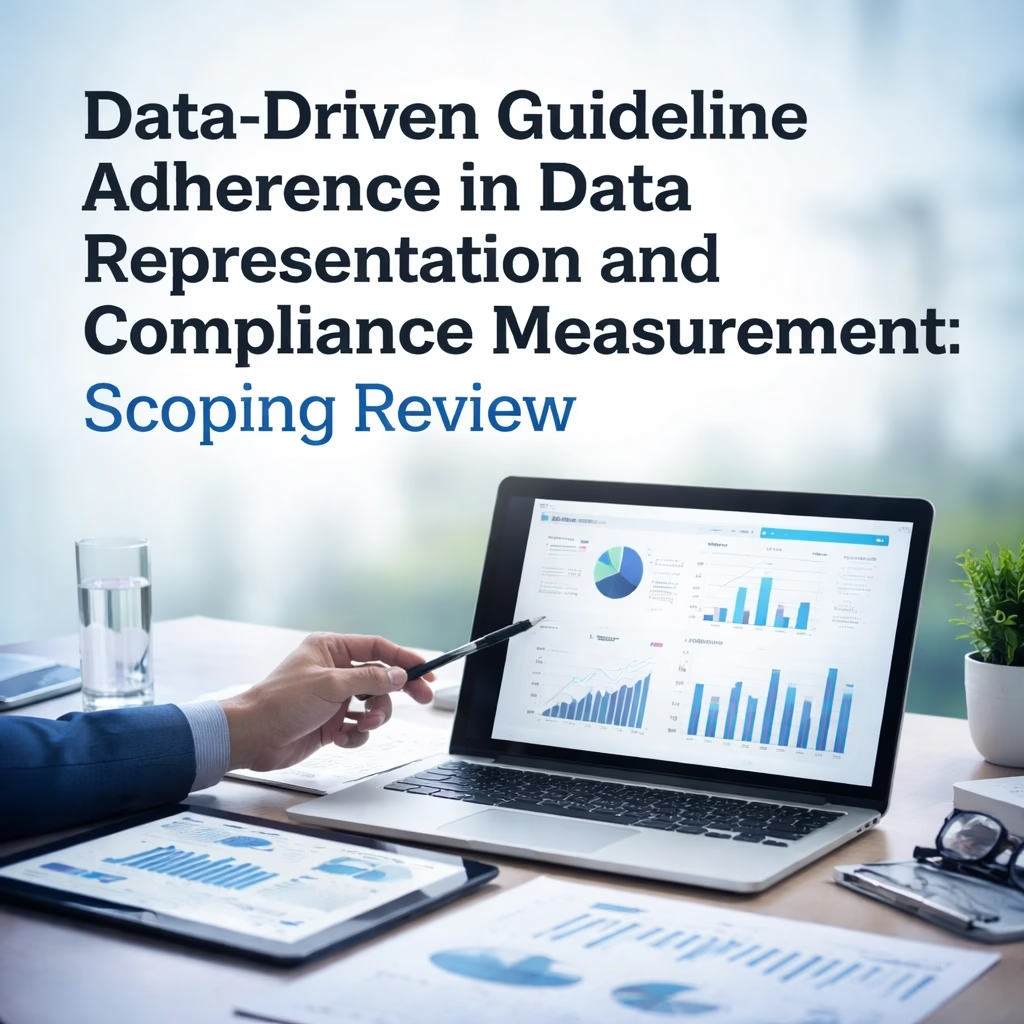
Recent years have witnessed significant progress. The increasing availability of machine learning (ML) and artificial intelligence (AI) tools has fueled innovation. Specifically, natural language processing (NLP) is now being employed to automatically extract compliance requirements from dense regulatory documents. Furthermore, data visualization techniques are enhancing the clarity and accessibility of compliance metrics. The EU's General Data Protection Regulation (GDPR), enacted in May 2018, spurred a surge in demand for automated compliance solutions. Similarly, the California Consumer Privacy Act (CCPA), effective January 1, 2020, added further impetus to the development of data-driven compliance tools.

Impact
The potential impact of these developments spans numerous sectors. Financial institutions are leveraging data analytics to detect and prevent money laundering, ensuring adherence to regulations like the Bank Secrecy Act in the United States and similar frameworks internationally. Healthcare providers are using data to improve patient data privacy and comply with HIPAA regulations. Technology companies are employing data-driven methods to address data security vulnerabilities and meet requirements like those outlined in the California Privacy Rights Act (CPRA), which amended the CCPA. Smaller businesses, often lacking dedicated compliance teams, stand to benefit significantly from more affordable and accessible data analytics solutions. Conversely, organizations that fail to adopt these technologies risk facing escalating fines and reputational damage.
Challenges in Implementation
Despite the promise, challenges remain. Data silos and inconsistent data formats across organizations hinder effective analysis. Ensuring data quality and addressing potential biases in algorithms are critical concerns. Moreover, the lack of standardized metrics and reporting frameworks complicates benchmarking and comparing compliance performance across different entities. The cost of implementing and maintaining sophisticated data analytics systems can also be a barrier for some organizations.
What Next
The next few years are expected to see continued growth and refinement of data-driven compliance solutions. Increased focus will be placed on explainable AI (XAI) – making the decision-making processes of AI algorithms more transparent and understandable. The development of federated learning techniques, which allow models to be trained on decentralized data without sharing sensitive information, will address data privacy concerns. Industry consortia are actively working on establishing common data standards and reporting frameworks. The European Data Protection Board (EDPB) is expected to release further guidance on the use of AI in compliance, providing clarity on ethical considerations and best practices. Experts predict that by 2026, a significant portion of organizations will be utilizing data analytics to automate at least some aspects of their compliance programs.
More Read

Future Trends
One emerging trend is the use of predictive analytics to anticipate potential compliance issues before they arise. By analyzing historical data and identifying patterns, organizations can proactively address risks and prevent violations. Another trend is the integration of data analytics with blockchain technology to enhance data security and transparency. These advancements promise to further transform the landscape of regulatory compliance, making it more efficient, effective, and adaptable to evolving regulatory requirements.