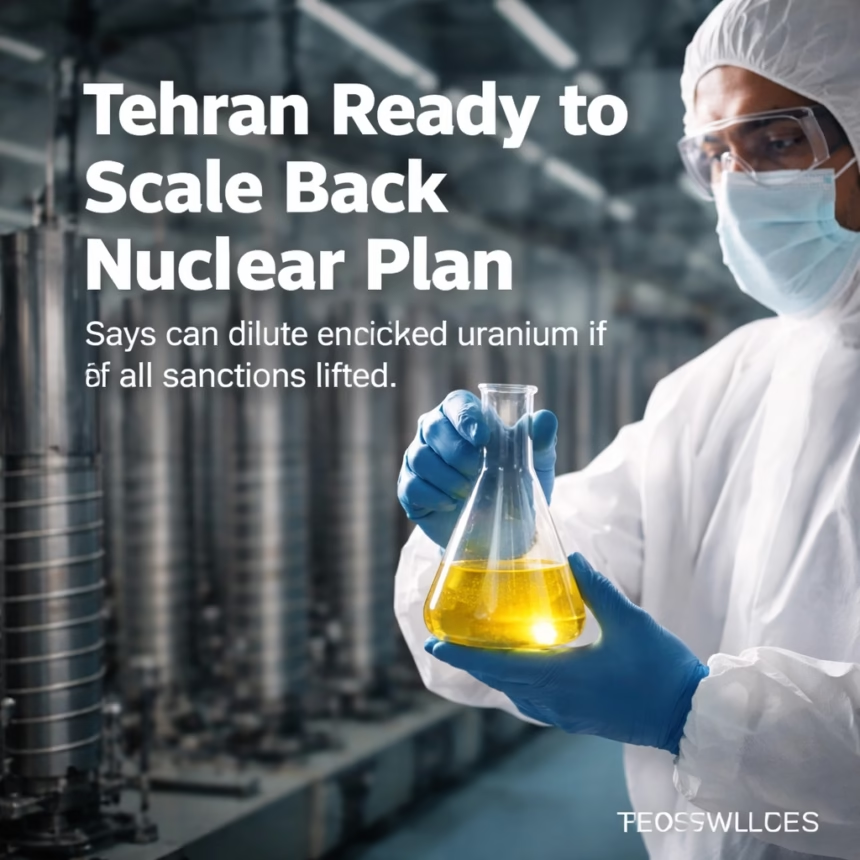
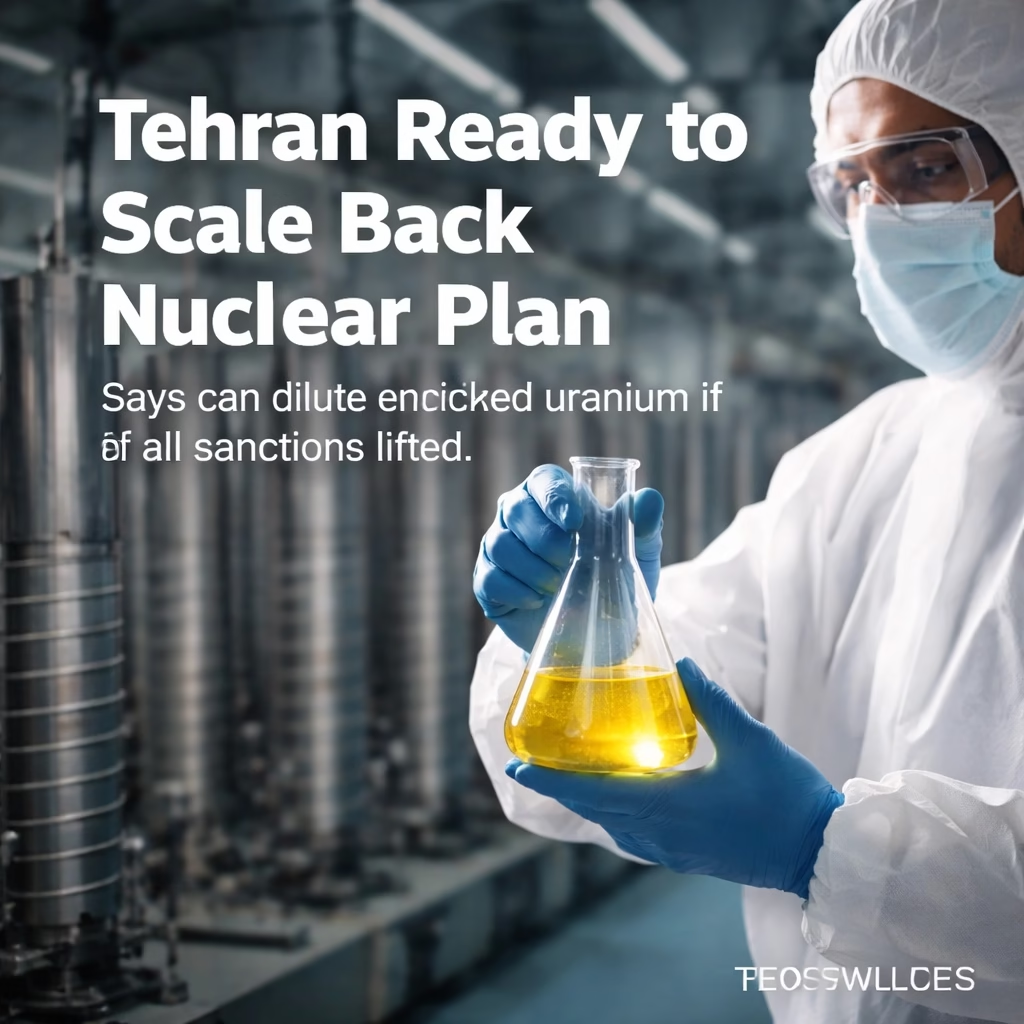
Tehran has signaled a significant shift in its nuclear posture, indicating a willingness to dilute its highly enriched uranium stockpile if all international sanctions are lifted. This proposal, emerging from high-level diplomatic discussions, potentially reopens a critical dialogue between Iran and Western powers, offering a glimmer of hope for de-escalation in a long-standing geopolitical standoff. The announcement, made by senior Iranian officials, marks a pivotal moment in the complex negotiations surrounding Iran's nuclear program and its economic isolation.
Background: A Decade of Tensions and Agreements
The trajectory of Iran's nuclear program has been a central concern for global security for over two decades. Initially shrouded in secrecy, the program came under intense international scrutiny, leading to a series of UN Security Council resolutions and multilateral sanctions. These measures aimed to prevent Iran from developing nuclear weapons capabilities, a claim consistently denied by Tehran, which asserts its program is purely for peaceful energy, medical, and research purposes.
The Joint Comprehensive Plan of Action (JCPOA)
A landmark agreement, the Joint Comprehensive Plan of Action (JCPOA), was forged in 2015 between Iran and the P5+1 group (China, France, Germany, Russia, the United Kingdom, and the United States), plus the European Union. This accord significantly curtailed Iran's nuclear activities in exchange for the lifting of international sanctions. Under the JCPOA, Iran committed to reducing its uranium enrichment levels to 3.67% purity, drastically limiting its stockpile, redesigning the Arak heavy water reactor, and allowing intrusive inspections by the International Atomic Energy Agency (IAEA). The agreement was hailed as a triumph of diplomacy, effectively extending Iran's "breakout time" – the period needed to produce enough fissile material for a single nuclear weapon – from a few months to over a year.
US Withdrawal and “Maximum Pressure”
The delicate balance of the JCPOA was disrupted in May 2018 when the United States, under then-President Donald Trump, unilaterally withdrew from the agreement. Citing Iran's ballistic missile program, its regional activities, and the deal's sunset clauses, the US administration reimposed and expanded a comprehensive "maximum pressure" campaign of sanctions. These sanctions severely targeted Iran's oil exports, banking sector, and other vital industries, aiming to cripple its economy and force a new, more restrictive nuclear deal.
Iran’s Retaliatory Steps
In response to the US withdrawal and the failure of European signatories to fully mitigate the economic impact of US sanctions, Iran began a phased reduction of its JCPOA commitments starting in 2019. These retaliatory measures included exceeding the 3.67% enrichment limit, increasing its enriched uranium stockpile beyond the allowed 300 kg, and deploying advanced centrifuges. By 2021, Iran escalated its enrichment to 20% purity, and later to 60%, a level significantly closer to weapons-grade (around 90%) and far beyond the needs for civilian power generation. These actions raised alarms globally, shrinking the theoretical breakout time and intensifying concerns about proliferation.
More Read

Key Developments: Tehran’s New Offer
The latest development represents a potential turning point after years of escalating tensions and stalled diplomatic efforts. Iranian officials have explicitly stated their readiness to take a significant step back from their current nuclear advancements.
The Dilution Proposal
The core of Tehran's offer involves diluting its highly enriched uranium. This process typically entails blending down uranium enriched to higher purities (like 60% or 20%) with natural uranium or uranium enriched to much lower levels. The result is a larger quantity of uranium at a significantly reduced purity, rendering it unsuitable for rapid weaponization. This technical maneuver is a direct reversal of Iran's previous escalatory steps and would signal a tangible commitment to de-escalation. While the exact modalities of dilution—whether it involves physical blending within Iran or transfer to another country—remain subject to negotiation, the principle signifies a willingness to reduce proliferation risk.
Condition: “All Sanctions Lifted”
Crucially, Iran's offer is conditional on the complete lifting of "all sanctions." This broad demand likely encompasses not only the primary and secondary sanctions reimposed by the US but potentially also a range of other punitive measures targeting individuals, entities, and sectors of the Iranian economy. The definition of "all sanctions" will be a critical point of contention in any future negotiations. Western powers, particularly the US, have maintained that some sanctions, particularly those related to human rights, terrorism, and ballistic missiles, are separate from the nuclear issue and would remain in place. Reconciling these differing interpretations will require intricate diplomatic maneuvering.
More Read
Context of the Offer
This concession comes amidst a complex regional and international landscape. Ongoing conflicts in the Middle East, including the Gaza conflict, have heightened regional instability. Domestically, Iran faces persistent economic challenges, exacerbated by years of sanctions, leading to high inflation and social unrest. Globally, major powers are grappling with numerous crises, potentially creating an impetus for resolving the Iranian nuclear file to prevent further regional destabilization. The offer also follows numerous indirect talks and attempts, primarily facilitated by Oman and Qatar, to bridge the gap between Tehran and Washington.
Impact: A Ripple Effect Across Geopolitics
Should this offer lead to concrete diplomatic breakthroughs, its impact would resonate across multiple domains, from nuclear non-proliferation to regional security and global energy markets.
Nuclear Non-Proliferation
The most immediate and significant impact would be on nuclear non-proliferation efforts. Diluting Iran's 60% enriched uranium stockpile would substantially increase its breakout time, easing fears of Iran rapidly developing a nuclear weapon. This would strengthen the global non-proliferation regime and potentially pave the way for a return to full IAEA verification and monitoring, restoring transparency and confidence in Iran's nuclear program.
Regional Stability
Regional actors, particularly Israel and Saudi Arabia, have consistently expressed deep concerns about Iran's nuclear ambitions and its regional influence. Israel views an Iranian nuclear weapon as an existential threat and has advocated for stringent measures against Tehran. A verifiable de-escalation of Iran's nuclear program could alleviate some of these security anxieties, potentially reducing the likelihood of military confrontation. However, broader regional rivalries and Iran's ballistic missile program would likely remain points of contention. Gulf states, while wary of Iran, also seek stability and could benefit from reduced tensions, potentially opening doors for further regional dialogue.
Economic Implications for Iran
For Iran, the lifting of sanctions would be a massive economic boon. Sanctions have severely hampered its ability to export oil, access international financial markets, and import essential goods. The removal of these restrictions would allow Iran to significantly boost its oil revenues, stabilize its currency, attract foreign investment, and alleviate the economic hardships faced by its population. This economic relief could also strengthen the current government's standing domestically.
Global Energy Markets
The re-entry of Iranian oil into global markets, unhindered by sanctions, could have a notable impact on energy prices. Iran possesses vast oil and gas reserves, and increased supply from Tehran could help stabilize or even lower global oil prices, benefiting consuming nations and potentially countering inflationary pressures. This prospect holds particular appeal for countries grappling with energy security concerns.

US-Iran Relations and International Diplomacy
A successful resolution would represent a significant diplomatic achievement, potentially resetting the contentious relationship between the US and Iran. It could also revitalize multilateral diplomacy, demonstrating that complex international disputes can still be resolved through negotiation. The European Union, which has consistently championed the JCPOA, would also see its diplomatic efforts vindicated.
What Next: Hurdles and Pathways to Resolution
Despite the positive signal from Tehran, the path forward is fraught with significant diplomatic and technical challenges.
Western Response and Negotiation
The immediate next step involves a formal response from the P5+1 nations, particularly the United States and the E3 (France, Germany, UK). Western powers will need to carefully assess the sincerity and specifics of Iran's offer. Any new round of negotiations would likely focus on the exact scope of sanctions relief, the verification mechanisms for Iran's compliance, and the sequencing of actions. The US has repeatedly stated its preference for diplomacy but also insists on a "longer and stronger" deal that addresses issues beyond the original JCPOA, such as ballistic missiles and regional behavior.
Verification and Trust Deficit
A core challenge remains the deep trust deficit between Iran and Western powers. Any agreement will necessitate robust and intrusive verification by the IAEA to ensure Iran's full and sustained compliance. This includes real-time monitoring, access to nuclear sites, and resolution of outstanding questions regarding past nuclear activities. Iran, in turn, will demand verifiable and irreversible sanctions relief, fearing a repeat of the US withdrawal from the JCPOA.
Defining “All Sanctions”
The interpretation of "all sanctions lifted" will be a major sticking point. Iran will likely push for the removal of all US sanctions, including those imposed for non-nuclear reasons. The US, conversely, may be reluctant to lift sanctions related to human rights or terrorism, arguing they are separate issues. Finding a mutually acceptable definition and scope for sanctions relief will require intense negotiations.
Timeline and Milestones
There is no clear timeline for potential progress. Past negotiations have often been protracted and complex. Key milestones would include an agreement on the framework for renewed talks, the establishment of a clear roadmap for reciprocal steps, and ultimately, the implementation of agreed-upon measures, verified by the IAEA. The process could involve several rounds of direct or indirect diplomacy, potentially through intermediaries like Oman or Qatar. The political will on all sides to compromise and make difficult concessions will ultimately determine the success or failure of this renewed diplomatic opening.