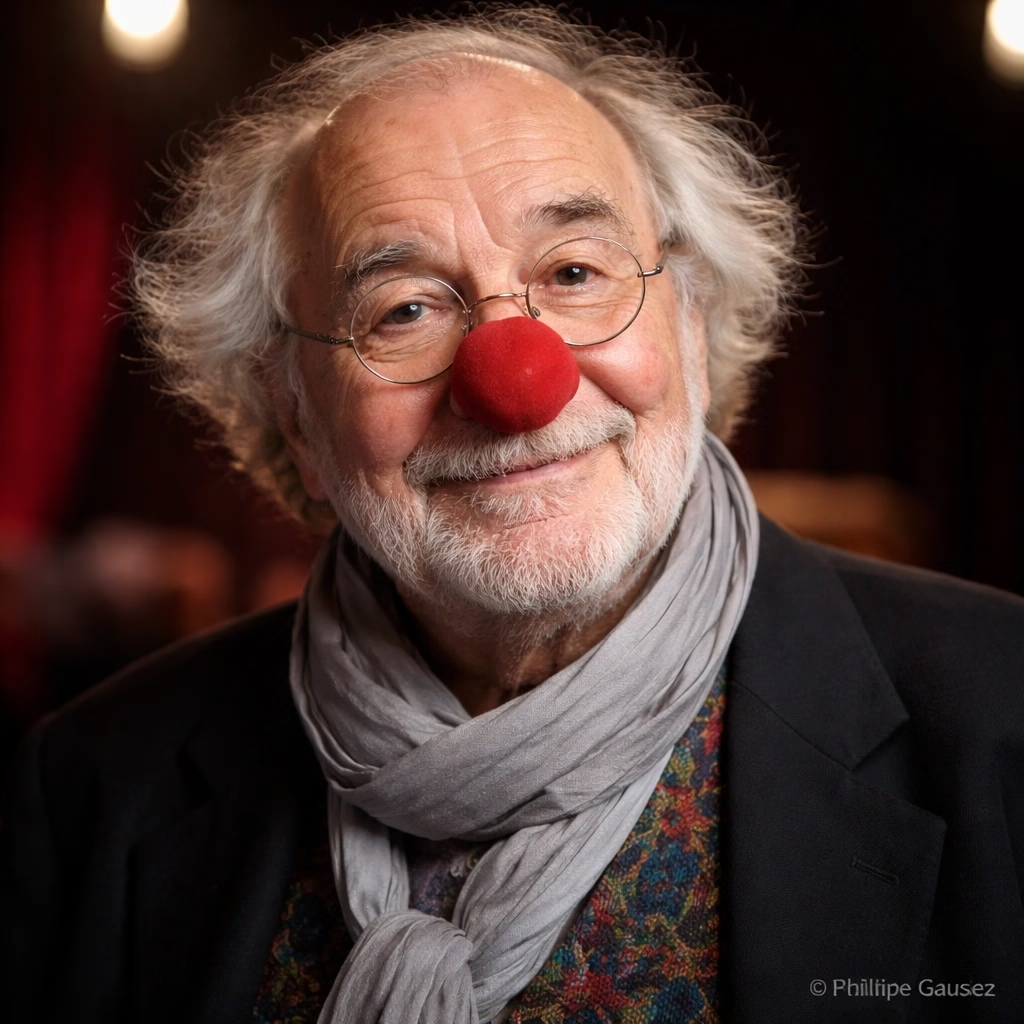
Philippe Gaulier, the revered French clown, theatre director, and influential pedagogue whose unique and often challenging teaching methods shaped generations of comedic talent worldwide, has died at the age of 82. His passing marks the end of an era for the global physical theatre and clowning community, leaving behind an indelible legacy of artistic rigor and profound impact on performance.
Background: A Life Dedicated to ‘Le Jeu’
Born in France in 1943, Philippe Gaulier embarked on a journey that would redefine the landscape of contemporary clowning and physical theatre. His foundational training at Jacques Lecoq's prestigious École Internationale de Théâtre in Paris in the 1960s was pivotal. Lecoq, a pioneer in physical theatre, instilled in Gaulier a deep understanding of movement, mime, and the fundamental principles of play, or "le jeu." This concept of "le jeu"—the pleasure of playing, the joy of presence, and the essential connection with the audience—became the cornerstone of Gaulier's own philosophy.
After graduating, Gaulier worked as a director and performer, but it was his transition into teaching that solidified his legendary status. He taught at Lecoq's school for several years before establishing his own institution, first in London in the late 1980s and later relocating it to Étampes, France, in the early 2000s, where it became known as École Philippe Gaulier.
Gaulier's teaching style was famously unconventional and often polarising. He demanded absolute honesty and vulnerability from his students, pushing them to shed inhibitions and embrace their authentic selves on stage. His classes were renowned for their intense atmosphere, where students would present short improvisations and receive immediate, often blunt, feedback. Gaulier’s critiques, delivered with a piercing gaze and sharp wit, could range from a simple "Oui!" (yes) indicating success, to a devastating "Non!" or even "You are boring me!" This directness earned him the affectionate moniker of "tormentor" among his students, yet it was precisely this uncompromising approach that many credited with unlocking their true potential.
His methods focused on finding the "flaw" or the unique, endearing vulnerability in a performer, rather than striving for technical perfection. He taught that true comedy and connection came from embracing one's own humanity, including its imperfections. This philosophy attracted a diverse array of aspiring performers from across the globe, many of whom went on to achieve significant acclaim. Notable alumni include Sacha Baron Cohen, Emma Thompson, Helena Bonham Carter, Simon McBurney (Complicité), and many other influential figures in comedy, theatre, and film.
More Read

Key Developments: An Enduring Influence
Throughout his career, Gaulier remained an active and formidable presence in the theatre world. He continued to teach at his school in Étampes well into his late 70s and early 80s, maintaining a rigorous schedule that belied his age. His classes were consistently oversubscribed, a testament to his enduring relevance and the unique value of his pedagogical approach.
In addition to his teaching, Gaulier authored "The Tormentor," a book that encapsulates his philosophy and teaching exercises, offering insights into his often-mystical understanding of performance. The book became a vital resource for theatre practitioners and students unable to attend his exclusive workshops. His work also inspired numerous documentaries and articles, further cementing his reputation as a singular figure in contemporary theatre education.
The relocation of his school to France allowed Gaulier to cultivate a dedicated artistic community around his teaching, fostering an environment where students could immerse themselves fully in his demanding curriculum. His sustained presence ensured that his specific brand of physical comedy and clowning continued to evolve and adapt, influencing new generations of performers who sought to break free from conventional theatrical norms. His passing comes after a lifetime dedicated to these principles, maintaining his unique vision until the very end.
More Read

Impact: A Legacy of Laughter and Self-Discovery
Philippe Gaulier's impact on the world of performing arts is immeasurable. He didn't just teach clowning; he taught performers how to be truly present, how to connect with an audience on a profound level, and how to find the "pleasure" in their performance. His influence extends far beyond the realm of traditional circus acts, shaping physical theatre, stand-up comedy, and even dramatic acting.
His alumni populate the highest echelons of entertainment, carrying his lessons into diverse projects. Sacha Baron Cohen, for instance, frequently credits Gaulier with teaching him the critical skill of playing to an audience's reaction, a technique central to his character-based comedy. Emma Thompson has spoken extensively about how Gaulier's classes helped her find her authentic comedic voice and overcome stage fright.
Beyond famous names, Gaulier's school cultivated thousands of artists who now teach, direct, and perform globally, propagating his methodology and philosophy. He instilled in his students a resilience and self-awareness that transc transcended mere theatrical skills, often describing his work as helping people "become more human." The confidence and vulnerability he encouraged were not just for the stage but for life itself, making his lessons profoundly transformative on a personal level. His legacy is etched into the very fabric of modern comedic performance, encouraging a return to authenticity and joy.
What Next: Carrying the Torch
The immediate future will undoubtedly see a wave of tributes and commemorations from the global theatre community. Organisations, festivals, and former students are expected to share their memories and reflections on Gaulier's profound influence. These tributes will serve as a collective acknowledgment of his singular contribution to the arts.
The question of the future of École Philippe Gaulier remains pertinent. While Gaulier himself was the undeniable heart and soul of the institution, his methods and principles have been thoroughly documented and are embodied by many of his long-standing associates and former students who have become teachers themselves. It is anticipated that efforts will be made to continue his work, perhaps under new leadership, ensuring that his unique pedagogical approach remains accessible to future generations of aspiring performers.
His published works, recordings of his masterclasses, and the countless testimonials from his students will continue to serve as invaluable resources, allowing his wisdom to resonate for years to come. The challenge will be to maintain the spirit and integrity of his teaching without his physical presence, a task that will fall to those who learned directly from the master. Philippe Gaulier's passing marks the end of an extraordinary life, but his laughter, his lessons, and his legacy will undoubtedly echo through the halls of theatre for generations to come.