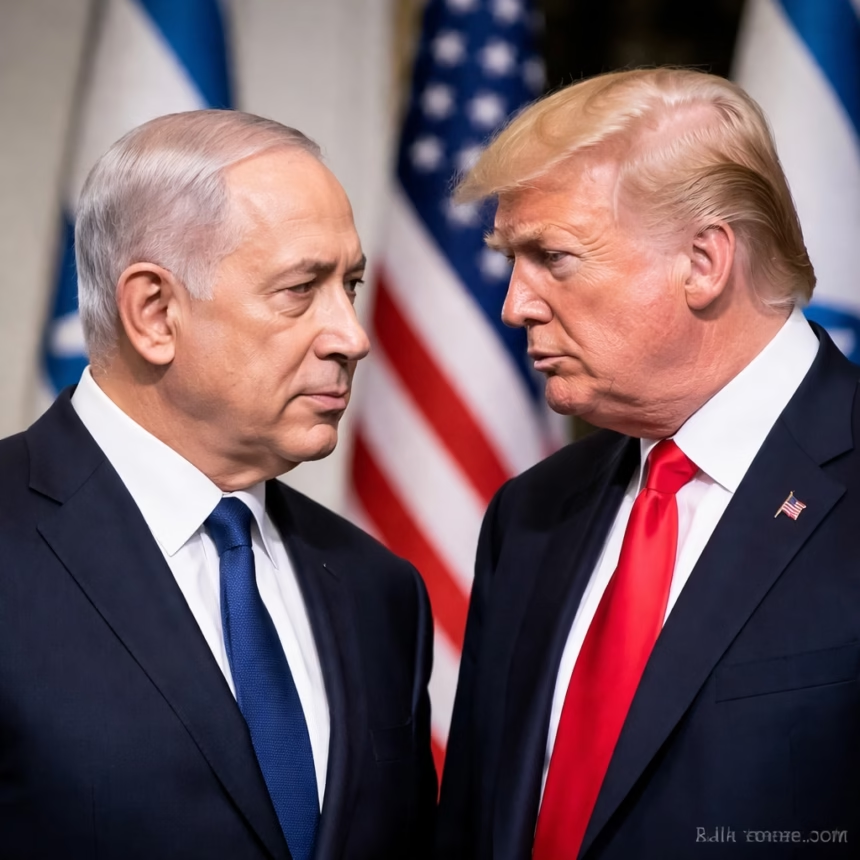
Prime Minister Benjamin Netanyahu of Israel is set to meet with former President Donald Trump this week at Mar-a-Lago, Florida, with a primary agenda focused on escalating demands from Iran regarding its nuclear program and regional activities. The highly anticipated summit aims to forge a united, more aggressive strategy against Tehran, potentially reshaping the geopolitical landscape of the Middle East.
Background: A Decades-Long Standoff
The relationship between the United States, Israel, and Iran has been defined by decades of mistrust and strategic rivalry, particularly concerning Iran's nuclear ambitions and its regional influence. At the heart of this complex dynamic lies the 2015 Joint Comprehensive Plan of Action (JCPOA), commonly known as the Iran nuclear deal. This agreement, signed by Iran, the P5+1 nations (China, France, Germany, Russia, the United Kingdom, and the United States), and the European Union, aimed to prevent Iran from developing nuclear weapons in exchange for sanctions relief.
The JCPOA and Trump’s Withdrawal
Under the JCPOA, Iran agreed to significant restrictions on its nuclear program, including limits on uranium enrichment levels, centrifuge numbers, and a robust inspection regime by the International Atomic Energy Agency (IAEA). However, former President Donald Trump consistently criticized the deal, arguing it was fundamentally flawed. He contended that the agreement failed to address Iran's ballistic missile program, its support for regional proxy groups, and the sunset clauses that would eventually allow Iran to resume higher-level enrichment. In May 2018, Trump unilaterally withdrew the United States from the JCPOA, reimposing a "maximum pressure" campaign of economic sanctions designed to cripple Iran's economy and force it back to the negotiating table for a more comprehensive agreement.
Netanyahu’s Consistent Opposition
Prime Minister Benjamin Netanyahu has been a vocal opponent of the JCPOA since its inception, viewing a nuclear-capable Iran as an existential threat to Israel. He consistently advocated for a tougher stance against Tehran, pushing for stricter sanctions and a more assertive international approach. His warnings about Iran's intentions and capabilities have been a cornerstone of his foreign policy throughout his multiple terms as prime minister.
Iran’s Responses and Regional Proxies
Following the US withdrawal and the re-imposition of sanctions, Iran gradually began to roll back its commitments under the JCPOA. It increased uranium enrichment levels beyond the 3.67% limit, expanded its centrifuge research and development, and reduced cooperation with IAEA inspectors. Concurrently, Iran has continued to support and arm a network of regional proxy groups, including Hezbollah in Lebanon, various militias in Iraq and Syria, and the Houthi rebels in Yemen. These groups have been instrumental in projecting Iranian influence and challenging US and Israeli interests across the Middle East, leading to numerous regional flare-ups and conflicts.
More Read

Key Developments: Escalating Tensions and Shifting Dynamics
Recent months have witnessed a significant escalation in Iran's nuclear activities and regional provocations, setting a tense backdrop for the upcoming Trump-Netanyahu meeting.
Accelerated Nuclear Program
According to reports from the IAEA, Iran has significantly advanced its nuclear program. It has enriched uranium to levels as high as 60% purity, a technical step away from weapons-grade material (typically around 90%). Furthermore, Iran has accumulated substantial stockpiles of enriched uranium, far exceeding the limits set by the defunct JCPOA. The IAEA has also expressed concerns about Iran's reduced transparency and its refusal to grant inspectors full access to certain sites and monitoring equipment, making it increasingly difficult to verify the peaceful nature of its nuclear activities.
Heightened Regional Aggression
Iranian-backed groups have intensified their activities across the Middle East. In the Red Sea, Houthi rebels have launched numerous attacks on international shipping, disrupting global trade and prompting military responses from the US and its allies. Drone and missile attacks targeting US forces and interests in Iraq and Syria have also increased, contributing to a volatile security environment. Along Israel's northern border, Hezbollah has escalated cross-border skirmishes and rhetoric, raising fears of a broader conflict. These actions underscore Iran's continued willingness to leverage its proxies to exert pressure and challenge regional stability.
More Read

Biden Administration’s Stalled Diplomacy
The Biden administration initially sought to revive the JCPOA through indirect negotiations, aiming to restore mutual compliance with the deal. However, these efforts largely stalled amid persistent disagreements and Iran's continued nuclear advancements. While the US has maintained sanctions and engaged in limited diplomatic outreach, a comprehensive breakthrough has remained elusive, leading to a de facto stalemate. This situation has left a vacuum that a potential future Trump administration might seek to fill with a more assertive approach.
Political Imperatives for Netanyahu and Trump
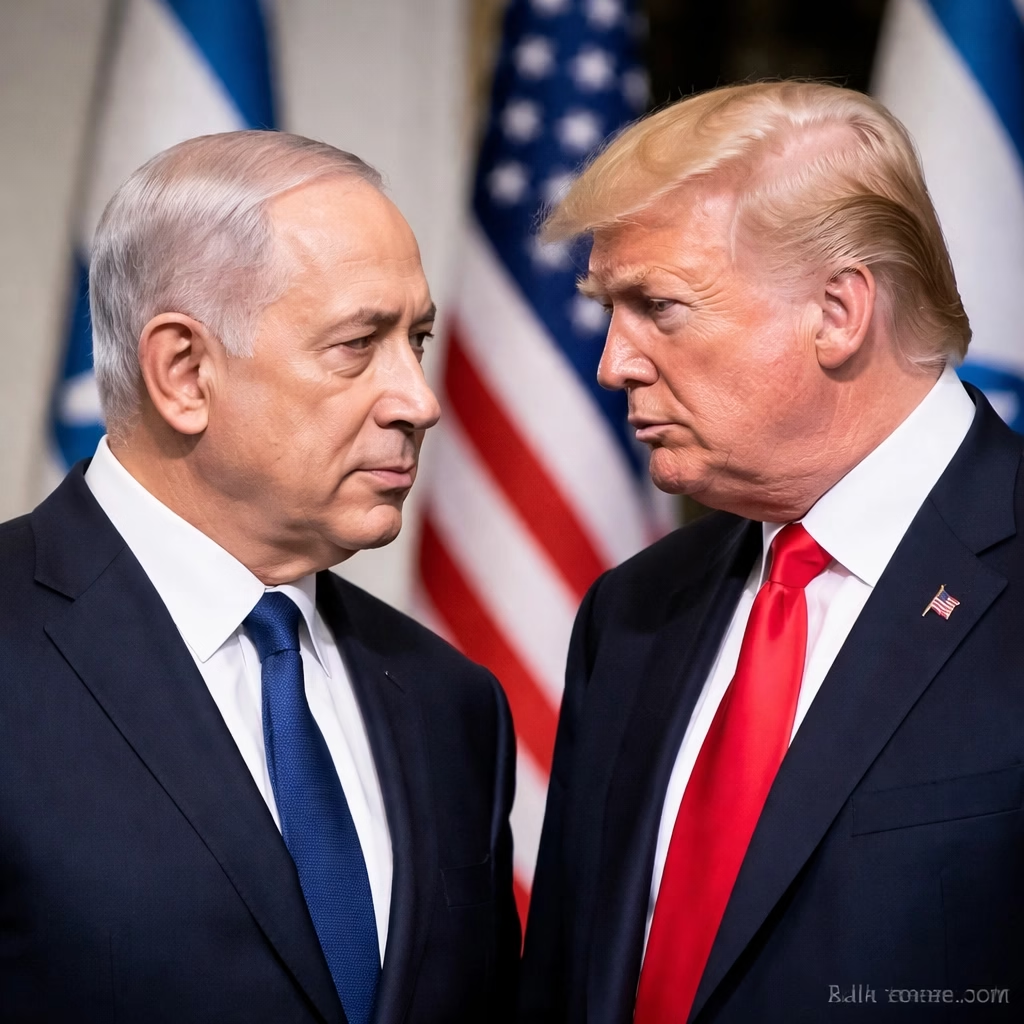
For Prime Minister Netanyahu, confronting Iran remains a top priority and a key aspect of his political platform, especially amid domestic challenges. A strong stance against Iran resonates with his conservative base and aligns with Israel's long-term security doctrine. For former President Trump, who is campaigning for re-election, a definitive and tough foreign policy stance on Iran provides a clear contrast to the current administration's approach. Reaffirming his "maximum pressure" strategy and potentially outlining even more stringent demands could appeal to voters seeking decisive leadership on national security issues.
Impact: Ripple Effects Across the Globe
The outcome of the Trump-Netanyahu meeting and any subsequent shifts in US policy towards Iran could have profound implications for a wide array of actors and global systems.
Israel’s Security Landscape
For Israel, the primary concern is the potential for a nuclear-armed Iran, which it views as an existential threat. A more aggressive US stance, particularly one backed by military options, could be seen as a deterrent or a necessary step to prevent Iran from acquiring nuclear weapons. However, it also carries the risk of escalating regional conflicts, potentially drawing Israel into direct confrontation with Iran or its proxies. The stability of its borders with Lebanon and Syria, already volatile, could further deteriorate.
US Strategic Interests and Global Standing
The United States has significant strategic interests in the Middle East, including ensuring the free flow of oil, protecting its allies, and combating terrorism. A tougher stance on Iran could bolster US credibility among its regional partners but also risk alienating European allies who favor diplomacy. Any escalation could endanger US military personnel stationed in the region and potentially lead to a broader conflict, impacting US resources and global standing.

European Allies’ Dilemma
European signatories to the JCPOA (France, Germany, and the United Kingdom) have consistently advocated for a diplomatic solution, attempting to preserve elements of the deal even after the US withdrawal. A renewed "maximum pressure" campaign or a more confrontational approach from the US could create further divisions within the transatlantic alliance, forcing European nations to choose between supporting US policy and pursuing their independent diplomatic efforts with Tehran.
Gulf Cooperation Council States
Saudi Arabia, the United Arab Emirates, and other Gulf Cooperation Council (GCC) states have long shared Israel's concerns about Iran's regional destabilizing activities. They would likely welcome a stronger US commitment to countering Iran, potentially seeking enhanced security guarantees and cooperation. However, they also face direct threats from Iranian proxies, and an escalation could put their critical infrastructure and economies at greater risk.
Iran’s Domestic Situation and the Global Economy
Increased international pressure and sanctions could further strain Iran's already struggling economy, potentially exacerbating internal dissent and challenging the stability of the current regime. However, it could also lead to a nationalist backlash, hardening the regime's resolve. Globally, any significant escalation in the Persian Gulf, particularly involving the Strait of Hormuz, a critical chokepoint for oil shipments, could trigger a sharp rise in global oil prices and disrupt international trade.
What Next: Anticipated Milestones and Potential Paths
The meeting between Netanyahu and Trump is expected to lay the groundwork for a potential future US policy on Iran, particularly if Trump secures the presidency.
Outcome of the Mar-a-Lago Summit
While the meeting is between a sitting prime minister and a former president, it holds significant symbolic weight. A joint statement or a coordinated message could emerge, signaling a unified front against Iran. This could involve an explicit call for new, more stringent demands on Iran, potentially outlining a timeline for compliance or consequences for non-compliance. The rhetoric itself could be a test balloon for future policy.
Potential Future US Actions
Should Donald Trump return to the White House, his administration could pursue several avenues. This might include an even more aggressive sanctions regime, targeting new sectors of the Iranian economy and individuals. There could also be increased military posturing in the Persian Gulf, potentially involving enhanced naval deployments or joint exercises with regional allies. The "demand more" strategy could translate into a clear ultimatum: either Iran capitulates to new terms, or it faces severe repercussions, including the possibility of military action.
Iran’s Anticipated Responses
Tehran's reaction to heightened pressure would be crucial. Iran could choose to further accelerate its nuclear program, enriching uranium to even higher levels or developing more advanced centrifuges, as a bargaining chip or a show of defiance. Alternatively, it might increase its support for regional proxies to retaliate against US and Israeli interests. There remains a possibility, albeit perhaps a slim one, that overwhelming pressure could eventually force Iran back to the negotiating table, but likely under terms vastly different from the JCPOA.
International Diplomatic Fallout
The international community, including the United Nations, the IAEA, and European powers, would closely watch any shift in US policy. A unilateral, hardline approach from a future Trump administration could lead to further diplomatic isolation for the US on the Iran issue, particularly if it bypasses international consensus or established diplomatic frameworks. Conversely, a coordinated, multilateral strategy, if achievable, could strengthen the international front against Iran's nuclear ambitions. The long-term implications for nuclear non-proliferation, particularly if Iran continues to advance its capabilities unchecked, remain a critical global concern.