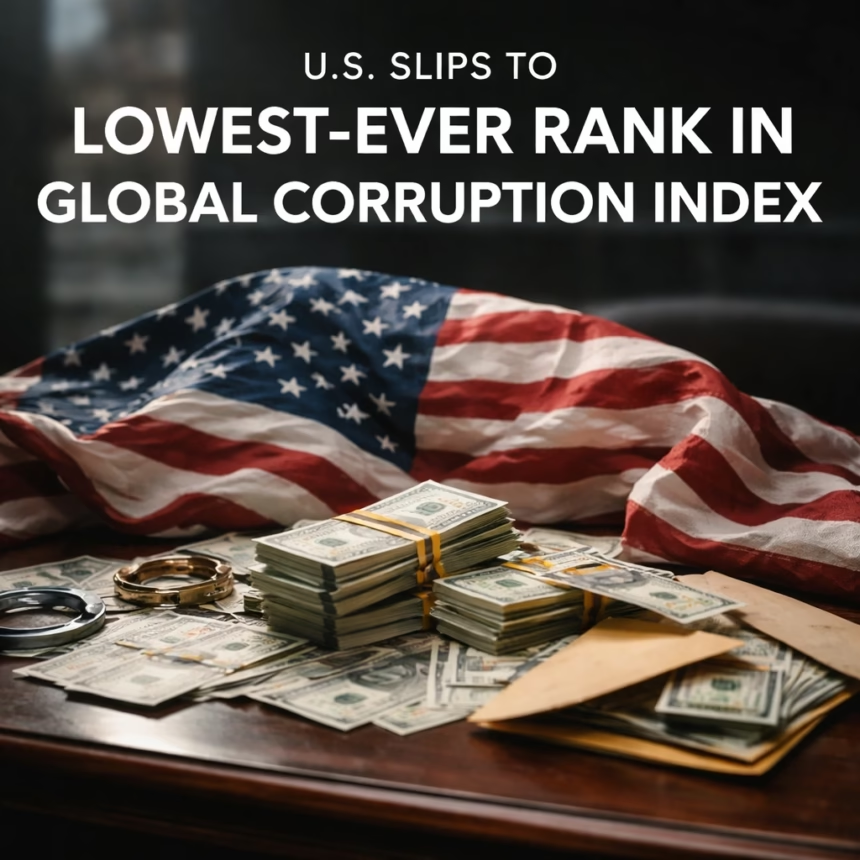
America's Integrity Crisis: US Sinks to Historic Low in Global Corruption Perception
America's Integrity Crisis: US Sinks to Historic Low in Global Corruption Perception
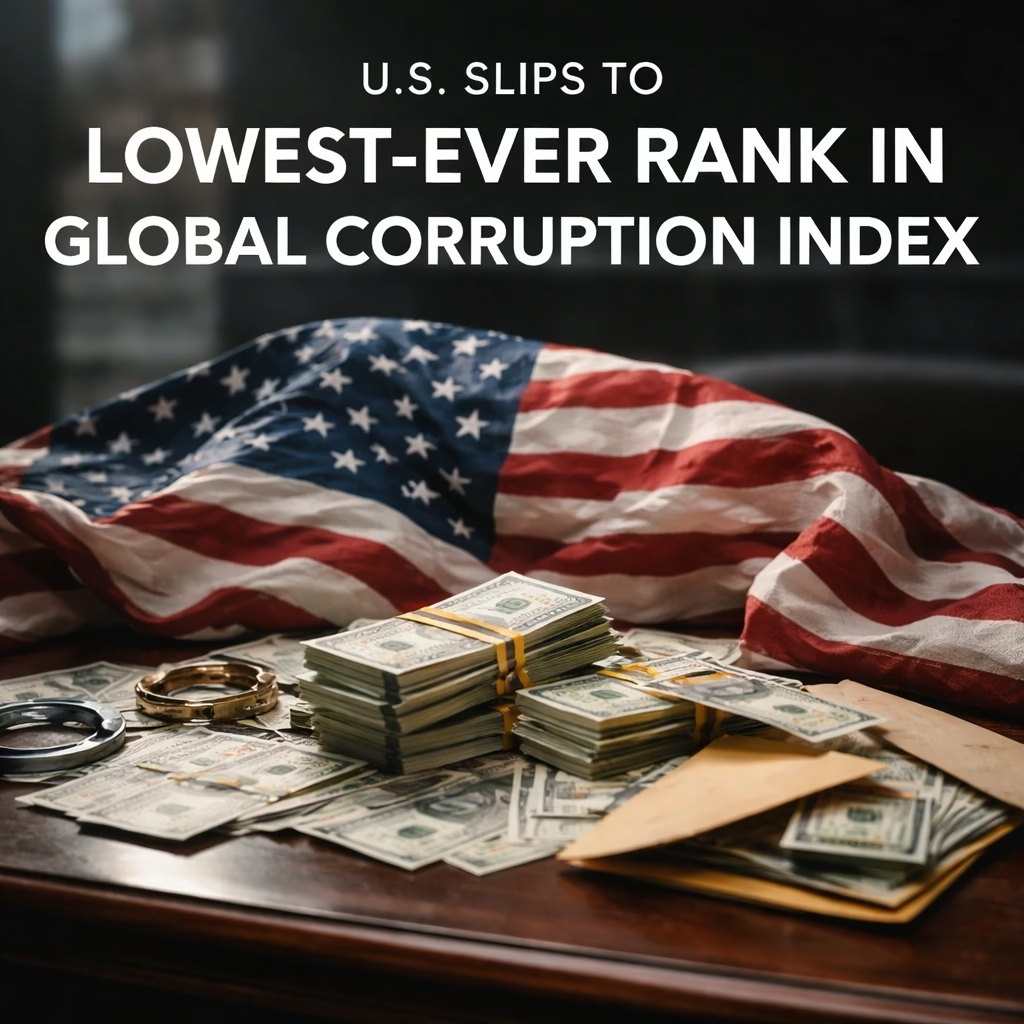
The United States has recorded its lowest-ever performance in a prominent global corruption index, signaling a significant deterioration in the perception of public sector integrity. The latest Corruption Perception Index (CPI) from Transparency International, released in January 2024, reveals an unprecedented decline in the nation's standing. This critical assessment places the US at a crucial juncture regarding the health of its democratic institutions and its global reputation.
Background: A Decades-Long Trajectory
For decades, the United States was often viewed as a strong performer in global anti-corruption efforts, frequently ranking among the top twenty nations. Its robust legal frameworks, independent judiciary, and active civil society were historically seen as bulwarks against systemic corruption. However, this perception has gradually eroded over the past decade, with a noticeable acceleration in recent years.
The Corruption Perception Index Explained
The CPI, published annually by the Berlin-based non-governmental organization Transparency International, assesses 180 countries and territories worldwide. It measures perceived levels of public sector corruption based on expert assessments and surveys of business people. A country’s score ranges from zero (highly corrupt) to 100 (very clean). The index aggregates data from a variety of sources, including the World Bank, the World Economic Forum, and various risk consultancies, providing a snapshot of the perceived integrity of a nation’s public institutions.
More Read

Historically, the US maintained scores well into the high 70s and low 80s, reflecting a strong perceived commitment to transparency and accountability. However, a downward trend became evident after 2016, with scores consistently declining from 76 in 2015 to 69 in the most recent report. This sustained decline indicates a deepening concern among experts and business leaders about the state of governance and ethics within the US.
Key Developments: The Latest Decline
The January 2024 report, covering perceptions for the year 2023, marked a critical low point for the United States. Achieving a score of 69 out of 100, the US slipped further in the rankings, placing it 24th globally. This score represents the lowest since the CPI’s current methodology began in 2012, highlighting intensified concerns over several institutional vulnerabilities.
Specific Factors Driving the Decline
Transparency International and other governance experts have pointed to several key areas contributing to the US’s diminished standing:
More Read

- Erosion of Checks and Balances: Persistent challenges to the independence of government oversight bodies, coupled with a perceived weakening of legislative checks on executive power, have fueled concerns. Instances of executive overreach and political interference in regulatory processes have been frequently cited.
- Political Financing and Lobbying: The pervasive influence of money in politics remains a significant issue. High levels of undisclosed political spending, particularly through “dark money” groups, and the revolving door between government service and lucrative lobbying positions are seen as major corruption risks.
- Threats to Democratic Institutions: Events such as the January 6th Capitol attack and ongoing efforts to undermine electoral integrity have significantly impacted perceptions of democratic resilience. The perceived lack of accountability for certain political actions has further exacerbated these concerns.
- Lack of Transparency and Accountability: Insufficient transparency in government contracting, limited access to public information, and a perceived reluctance to enforce ethics rules uniformly contribute to the lower score. Weak ethics enforcement mechanisms at both federal and state levels are frequently highlighted.
- Political Polarization and Disinformation: Extreme partisan divisions have hindered bipartisan efforts to enact anti-corruption reforms. The spread of misinformation and disinformation, particularly around elections and public policy, is also seen as undermining trust in public institutions and processes.
A Closer Look at the Score
While a score of 69 still places the US above the global average, its downward trajectory is stark when compared to its peers among developed economies. Nations like Canada (76), Germany (79), and the United Kingdom (71) consistently outrank the US, as do several smaller European countries and East Asian democracies. The continuous decline suggests that the issues are not isolated incidents but rather indicative of systemic challenges impacting the perception of institutional integrity over time.
Impact: Domestic and Global Repercussions
The US’s declining corruption perception has far-reaching consequences, affecting both its internal stability and its standing on the international stage.
Erosion of Public Trust
Domestically, a sustained perception of corruption erodes public trust in government, elected officials, and democratic processes. This can lead to increased civic disengagement, voter apathy, and a sense of disillusionment among citizens. When people believe their leaders are not acting in the public interest, it undermines the social contract and can foster political instability. Businesses also face a less predictable environment, potentially deterring investment if regulatory and legal frameworks are perceived as compromised.
Global Repercussions
Internationally, the US’s diminished standing as a beacon of democracy and good governance weakens its soft power and diplomatic influence. Historically, the US has championed anti-corruption efforts globally, often conditioning aid or advocating for reforms in other nations. A lower CPI score undermines its credibility in these endeavors, making it harder to lead by example or press other countries to address their own corruption challenges. Allies may view the US as a less reliable partner, while adversaries could exploit this perceived weakness to challenge American leadership on the world stage.
What Next: Calls for Reform and the Path Forward
The latest CPI results serve as a wake-up call, intensifying calls for comprehensive reforms to address the underlying issues contributing to the US’s declining integrity perception. Experts and civil society organizations are advocating for a multi-pronged approach.

Key Areas for Reform
- Campaign Finance Overhaul: Implementing stricter regulations on political donations, increasing transparency for “dark money” groups, and reducing the influence of special interests are critical steps.
- Strengthening Ethics and Oversight: Empowering independent ethics bodies, ensuring robust enforcement of anti-corruption laws, and protecting whistleblowers are essential for accountability.
- Judicial and Electoral Integrity: Safeguarding the independence of the judiciary and implementing measures to protect and enhance electoral processes are vital to restore public confidence.
- Transparency in Government: Expanding access to public records, making government contracting more transparent, and ensuring accountability in public spending are necessary.
- Combating Disinformation: Developing strategies to counter the spread of misinformation and disinformation that erodes trust in institutions and democratic norms.
The Path Forward
Addressing these challenges will require bipartisan cooperation and sustained political will. Civil society organizations, academic institutions, and an informed public will play crucial roles in advocating for and monitoring these reforms. The upcoming electoral cycles will also provide opportunities for citizens to demand greater accountability and transparency from their representatives.
Ultimately, reversing the trend and restoring the US’s standing in global corruption indices will depend on a renewed commitment to democratic principles, ethical governance, and the strengthening of institutions designed to uphold integrity and public trust. The nation’s ability to tackle these internal issues will profoundly shape its future, both domestically and internationally.