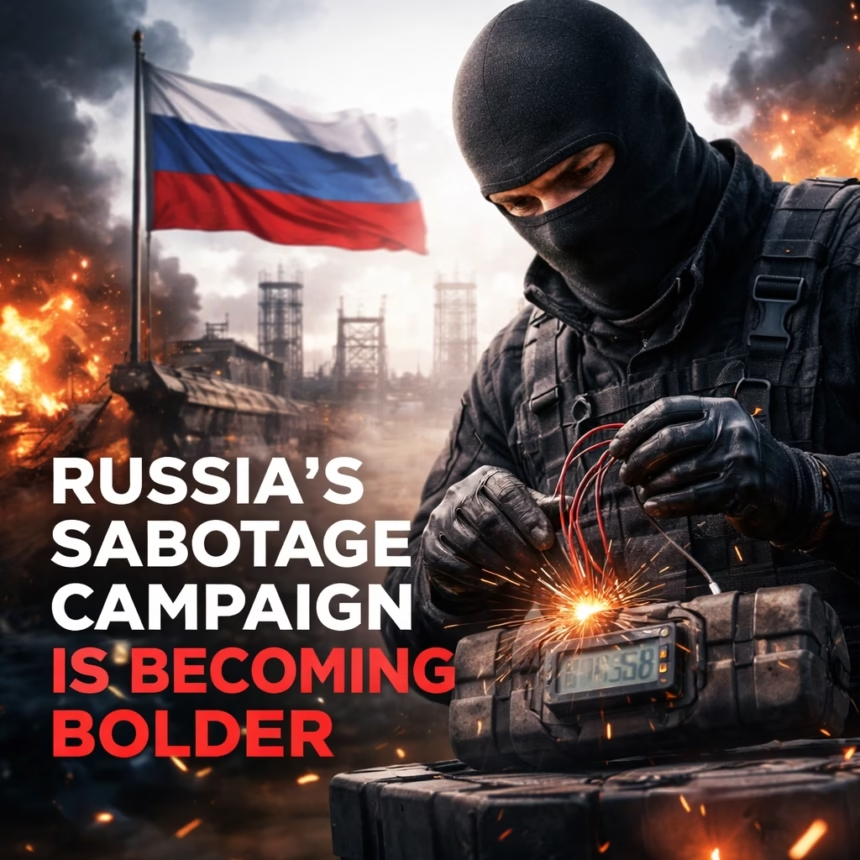
Across Europe, a shadow war is intensifying as intelligence agencies report a significant escalation in Russia's covert sabotage operations. From critical infrastructure to military supply chains, the continent is experiencing a surge in disruptive activities, marking a bolder and more physical phase in Moscow's efforts to destabilize Western nations and undermine support for Ukraine. This shift, particularly noticeable since early 2024, has prompted urgent warnings from NATO and national security officials.
Background: A Decades-Long Pattern of Hybrid Warfare
Russia's engagement in hybrid warfare is not a new phenomenon, but rather a consistent feature of its geopolitical strategy, evolving over decades. Historically, Moscow has employed a diverse toolkit to project influence and disrupt adversaries, ranging from sophisticated cyberattacks to extensive disinformation campaigns. Notable early examples include the 2007 cyberattacks against Estonia, which crippled government and banking websites, and the 2008 cyber and military actions against Georgia.
The 2014 annexation of Crimea and the subsequent conflict in eastern Ukraine marked a significant turning point, showcasing an integrated approach of military aggression, information warfare, and covert operations. That same year, a series of explosions at an arms depot in Vrbětice, Czech Republic, later attributed to Russian GRU agents, underscored the Kremlin's willingness to conduct physical sabotage on foreign soil. The 2018 Salisbury poisonings in the United Kingdom, involving a Novichok nerve agent, further highlighted the audacious nature of these operations, directly targeting individuals within a NATO member state.
Following Russia's full-scale invasion of Ukraine in February 2022, the intensity and scope of these covert actions escalated dramatically. The mysterious explosions damaging the Nord Stream 1 and 2 gas pipelines in the Baltic Sea in September 2022, while still under investigation, are widely suspected by Western intelligence to be acts of state-sponsored sabotage. These incidents demonstrated a clear willingness to target critical energy infrastructure, signaling a new level of risk to European stability. The motivations behind this long-standing campaign are multifaceted: to sow discord, erode public trust, disrupt military aid to Ukraine, test Western resolve, and create economic instability within nations perceived as hostile.
More Read

Key Developments: From Cyber to Physical Disruption
The most recent phase of Russia's sabotage campaign is characterized by a discernible shift from predominantly cyber-based attacks to more direct, physical acts of disruption. Intelligence agencies across Europe have reported an increase in arson, vandalism, and attempts to interfere with vital infrastructure and logistics. This marks a bolder approach, often involving the recruitment of local proxies or agents, sometimes with financial incentives, suggesting a wider network of operational reach.
Targeting Military Aid and Critical Infrastructure
A primary target of this intensified campaign appears to be the logistical routes and storage facilities supporting military aid to Ukraine. In Germany, authorities arrested two alleged Russian-German agents in April 2024, suspected of plotting attacks on military bases and industrial sites, including those involved in supplying Ukraine. These individuals were reportedly tasked with photographing and surveilling facilities, with a focus on disrupting aid shipments.
Poland has also become a focal point, experiencing a series of incidents aimed at disrupting its crucial role as a transit hub for Western military assistance. In April 2024, Polish authorities detained several individuals suspected of planning sabotage acts, including an alleged plot to assassinate Ukrainian President Volodymyr Zelenskyy. Furthermore, instances of GPS jamming affecting commercial aviation and railway networks in the Baltic Sea region and Poland have been attributed to Russian interference, designed to create chaos and hinder transportation.
More Read

Incidents Across the Continent
The geographical spread of these operations is broad, affecting nations from Scandinavia to the Balkans.
United Kingdom
In the UK, an arson attack at an industrial unit in East London in March 2024, linked to a Ukrainian-owned business, led to arrests and charges of espionage and sabotage against five individuals allegedly working for Russia. The incident underscored the direct threat to commercial properties with perceived links to Ukraine.
Sweden and the Baltic States
Sweden has heightened its alert levels regarding critical infrastructure, particularly after increased GPS jamming incidents and concerns over potential sabotage targeting communication networks and energy grids. Estonia, Latvia, and Lithuania have consistently reported GPS interference and border incidents, pointing to a persistent low-level campaign of harassment and disruption.
France and Czech Republic

France has also reported increased vigilance against Russian interference in its defense industry and logistics. The Czech Republic, still reeling from the 2014 Vrbětice incident, has issued renewed warnings and expelled diplomats suspected of espionage, indicating ongoing concerns about Russian intelligence activities within its borders.
NATO Secretary General Jens Stoltenberg and other Western leaders have publicly acknowledged this escalation, emphasizing the need for enhanced intelligence sharing and stronger collective defenses against what is increasingly seen as a coordinated and aggressive campaign by Moscow.
Impact: Erosion of Security and Trust
The escalating Russian sabotage campaign carries profound implications for European nations, impacting national security, economic stability, and public confidence. The shift towards physical disruption directly threatens critical infrastructure, including energy grids, communication networks, and transportation systems, which are vital for daily life and national defense. Any successful attack on these assets could lead to widespread blackouts, communication outages, or significant logistical bottlenecks, paralyzing essential services.
Economically, the campaign introduces considerable uncertainty. Businesses face increased operational risks, potentially leading to higher insurance premiums, disrupted supply chains, and decreased foreign investment in affected sectors. The targeting of industrial sites and commercial properties also imposes direct financial losses through damage and operational halts. Furthermore, the diversion of resources towards enhanced security measures places an additional burden on national budgets.
For the public, the constant threat of sabotage erodes trust in governmental ability to ensure safety and stability. Reports of attempted attacks, GPS jamming, and foreign interference can foster fear and anxiety, potentially exacerbating social divisions and political polarization—a key objective of hybrid warfare. The direct aim to undermine military and financial aid to Ukraine also affects the broader European commitment to supporting Kyiv, potentially prolonging the conflict and its humanitarian costs. Internationally, these actions strain diplomatic relations with Russia, leading to further sanctions and expulsions, while simultaneously strengthening the resolve of NATO and EU members to present a united front against Moscow's aggressive posture.
What Next: Enhanced Vigilance and Collective Defense
In response to Russia's escalating sabotage campaign, European nations and their allies are bracing for a prolonged period of heightened threat and are implementing robust countermeasures. A critical focus for the immediate future is the enhancement of intelligence sharing and collaboration among NATO and EU member states. This includes pooling resources, sharing threat assessments in real-time, and coordinating law enforcement actions to identify, track, and neutralize Russian agents and their proxies.
Strengthening Defenses and Law Enforcement
Significant investment is being directed towards strengthening the physical and cyber defenses of critical infrastructure. This involves hardening energy grids, communication networks, transportation hubs, and military facilities against both physical intrusion and cyber-physical attacks. Expect to see increased deployment of advanced surveillance technologies, anti-drone systems, and GPS spoofing detection capabilities. Law enforcement agencies across Europe are also intensifying their efforts to detect and prosecute individuals involved in sabotage activities, with recent arrests in Germany, Poland, and the UK signaling a more proactive approach.
Anticipating Future Targets and Diplomatic Responses
The coming months may see Russia continue to probe vulnerabilities, particularly around major political events such as the European Parliament elections or other national elections, seeking to sow discord and influence outcomes. Military aid routes to Ukraine will remain a prime target, necessitating continuous adaptation of security measures along these vital supply lines. Diplomatically, further sanctions against Russia and the expulsion of suspected intelligence operatives are likely to continue as Western nations seek to impose costs on Moscow for its aggressive actions.
The long-term outlook suggests that Russia's sabotage campaign is not a temporary phenomenon but a persistent feature of its foreign policy, requiring sustained vigilance and a resilient, collective defense strategy from Europe and its allies. The era of overt military conflict is now undeniably intertwined with a covert shadow war, demanding continuous innovation in security and intelligence operations.