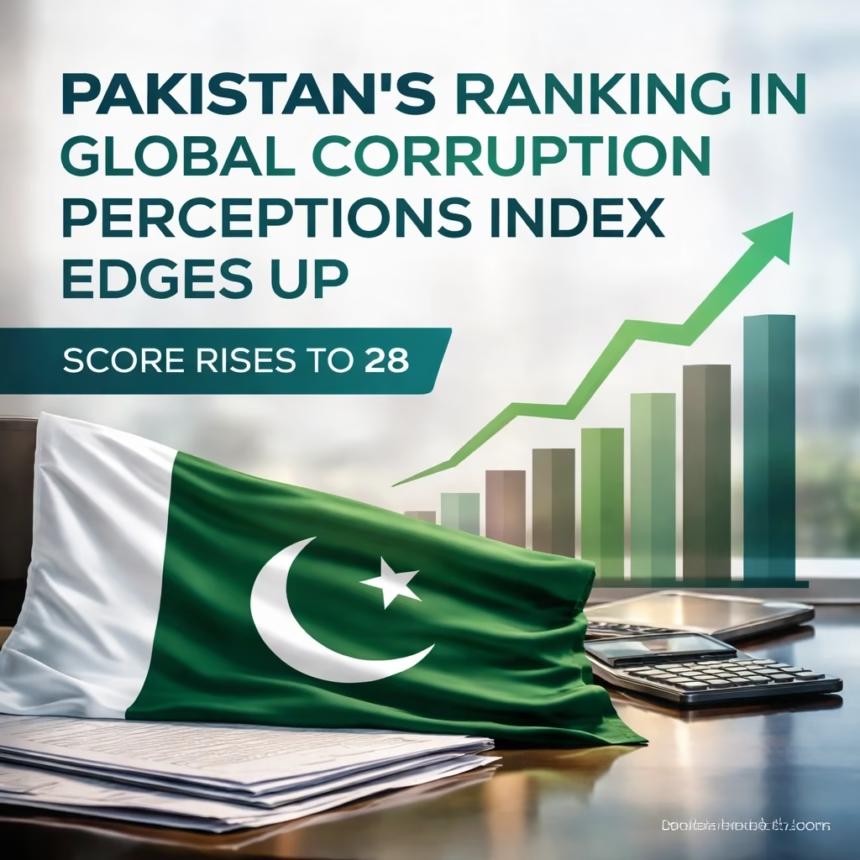
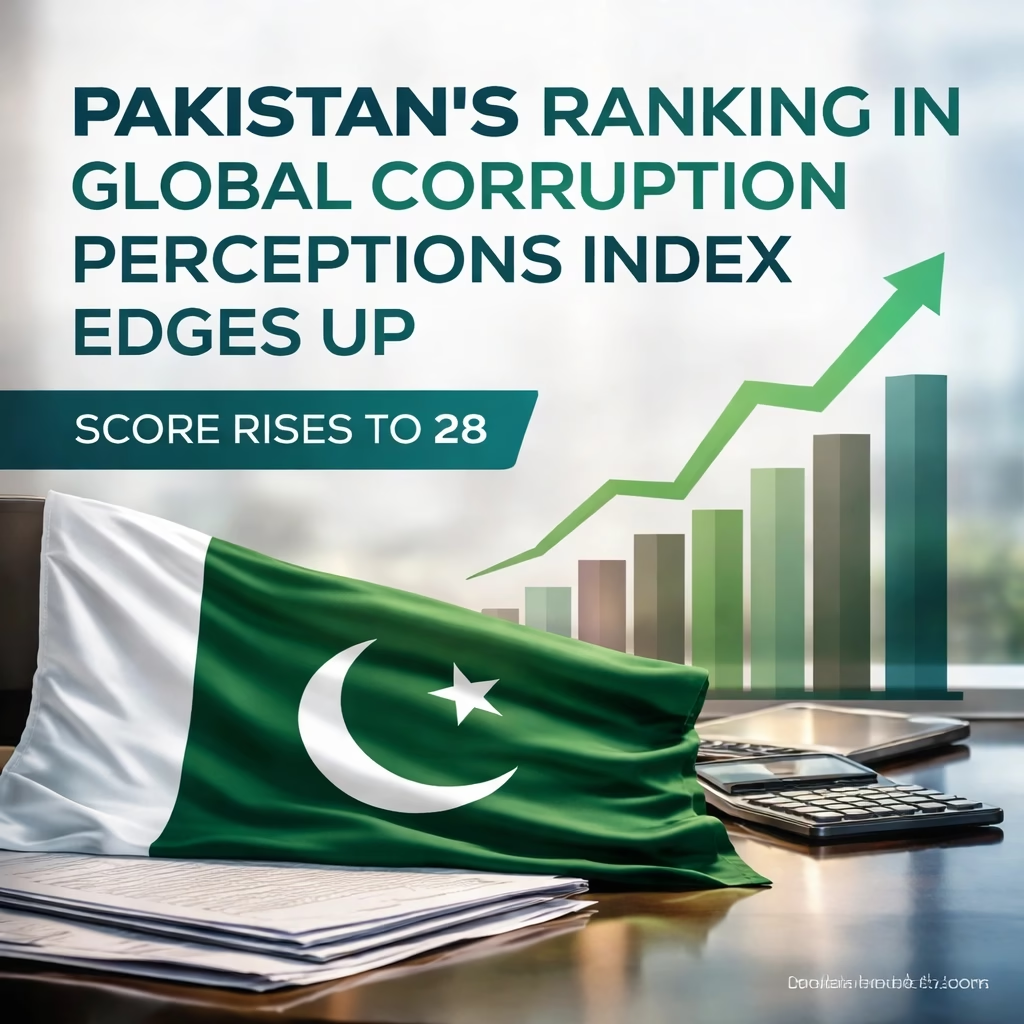
Pakistan has registered a marginal improvement in the latest global Corruption Perceptions Index (CPI), with its score rising to 28 out of 100. The annual report, released by Transparency International, indicates a slight positive shift in the perception of public sector corruption within the country for the year 2023. This development, announced in late January 2024, places Pakistan at a critical juncture in its ongoing efforts to combat graft and enhance governance.
Background: Understanding the Corruption Perceptions Index
The Corruption Perceptions Index (CPI) is a leading global indicator of public sector corruption, published annually by Transparency International. It ranks countries and territories based on perceived levels of public sector corruption, as determined by expert assessments and opinion surveys. The index uses a scale from 0 to 100, where 0 signifies highly corrupt and 100 indicates very clean. It is crucial to note that the CPI measures perceived corruption, not actual corruption, reflecting the views of business people and country experts.
Pakistan's journey on the CPI has been marked by fluctuations over the past decade. Historically, the nation has consistently scored below the global average, often hovering in the lower quartile of the index. In 2020, Pakistan scored 31, a slight improvement from previous years. However, this momentum was not sustained, as the score dipped to 28 in 2021 and further to 27 in 2022, signaling a period of stagnation or even regression in perceived anti-corruption efforts. These scores reflected concerns among experts regarding transparency, accountability, and the rule of law within the country's public institutions.
The methodology for the CPI involves aggregating data from various reputable sources, including the World Bank, World Economic Forum, and private risk and consulting firms. These sources collect information on bribery, diversion of public funds, use of public office for private gain, and the effectiveness of anti-corruption mechanisms. Transparency International then standardizes these scores to produce the final index, providing a comprehensive snapshot of global corruption perceptions. For Pakistan, a score of 28 still places it significantly below the global average and indicates substantial work remains to be done to foster a truly transparent and accountable public sector.
More Read

Key Developments: A Marginal Rise Amidst Challenges
The latest CPI report for 2023 shows Pakistan's score edging up to 28, a single-point increase from its 2022 score of 27. While a one-point improvement might appear modest, it represents a halt in the previous downward trend and offers a glimmer of positive momentum. This score positions Pakistan at 133rd out of 180 countries and territories surveyed globally, indicating that while there is an improvement, the country still faces significant challenges in tackling public sector corruption.
Factors Influencing Perception
Several factors could potentially contribute to this marginal shift in perception. Over the past year, various governmental bodies and anti-corruption agencies, such as the National Accountability Bureau (NAB) and the Federal Investigation Agency (FIA), have been visibly active. Public awareness campaigns, increased media scrutiny, and some high-profile accountability cases, even if protracted, might have subtly influenced expert opinions. Furthermore, legislative efforts aimed at improving governance and digitalizing public services in certain sectors could also play a role in shaping perceptions of reduced opportunities for graft.
Regional and Global Context
Compared to its immediate neighbours and regional counterparts, Pakistan's score of 28 remains relatively low. Countries like India, for instance, scored 39 in the same index, while Bangladesh scored 24. Globally, the average CPI score has largely stagnated around 43 for over a decade, with more than two-thirds of countries scoring below 50. This global trend suggests a widespread failure to make significant progress against corruption, making Pakistan's slight uptick noteworthy, even if it's from a low base. The report highlights that corruption and conflict continue to destabilize global peace and security, underscoring the urgency for all nations to strengthen anti-corruption measures.
More Read

The slight improvement for Pakistan could be interpreted as a cautious acknowledgment of efforts, however nascent or inconsistent, to address the systemic issues that fuel corruption. It suggests that while the perception of corruption remains pervasive, there might be early signs of a shift in the right direction, or at least a stabilization after a period of decline. However, experts emphasize that sustained, institutionalized reforms, rather than sporadic actions, are essential for any meaningful and lasting change in public perception.
Impact: Repercussions on Economy, Governance, and Society
The perception of corruption, as reflected in the CPI, has far-reaching implications for Pakistan's economy, governance structures, and societal well-being. A high perception of corruption can deter foreign direct investment (FDI), hinder economic growth, and erode public trust in institutions.
Economic Ramifications
For the economy, a low CPI score typically signals to international investors that the business environment is risky, unpredictable, and potentially unfair. This perception can lead to reduced FDI, as investors fear bureaucratic hurdles, demands for bribes, and a lack of legal recourse. Consequently, this limits job creation, technology transfer, and overall economic development. Businesses operating in such an environment often face increased costs due due to unofficial payments, making them less competitive internationally. Furthermore, corruption can lead to the misallocation of public funds, diverting resources from critical sectors like education, healthcare, and infrastructure development, which are essential for long-term economic prosperity. The slight increase in Pakistan's score, while not a game-changer, could potentially send a cautiously optimistic signal to some investors, suggesting a marginal improvement in the ease of doing business or a commitment to reform.
Governance and Public Trust
From a governance perspective, widespread corruption erodes the rule of law and weakens democratic institutions. It undermines the ability of government agencies to deliver public services effectively and impartially. Public trust in the judiciary, police, and civil administration often diminishes, leading to cynicism and disengagement among citizens. This lack of trust can fuel social unrest and political instability. For Pakistan, even a marginal improvement might serve as a morale booster for civil society organizations and reform advocates who have consistently pushed for greater transparency and accountability. However, the overall low score still indicates a significant deficit in public trust that requires sustained efforts to rebuild.
Societal Well-being
The societal impact of corruption is profound. It exacerbates inequality, as those with connections or financial means can bypass rules and access services denied to the general populace. This creates a sense of injustice and unfairness, particularly among vulnerable populations. Corruption can also compromise the quality of public services, from healthcare and education to infrastructure, directly affecting the daily lives of millions. The long-term consequences include brain drain, as talented individuals seek opportunities in countries with more transparent systems, and a general decline in social cohesion. While the recent score change is minor, any positive movement, if sustained, could contribute to a gradual improvement in citizens' perceptions of fairness and access to public services, fostering a more equitable society over time.
What Next: Sustaining Momentum and Future Challenges
Pakistan's marginal improvement in the CPI underscores the need for sustained and comprehensive efforts to combat corruption effectively. The one-point increase is a step, but it is far from a definitive victory, demanding continuous reform and vigilance.

Strengthening Institutions and Legal Frameworks
A primary focus must be on strengthening the independence and capacity of anti-corruption institutions. This includes enhancing the autonomy of bodies like the National Accountability Bureau (NAB) and the Federal Investigation Agency (FIA), ensuring their operations are free from political interference. Reforming existing anti-corruption laws to plug loopholes and expedite prosecution of corruption cases is also critical. Transparency in government procurement, public contracting, and financial disclosures for public officials must become standard practice. Implementing robust whistleblower protection laws can encourage citizens and public servants to report corruption without fear of retribution.
Judicial Reforms and Accountability
The judicial system plays a pivotal role in the fight against corruption. Reforms aimed at accelerating the resolution of corruption cases, ensuring fair trials, and enforcing judgments are essential. This includes digitizing court records, increasing the number of judges, and providing specialized training in financial crime investigation. Furthermore, holding all individuals, regardless of their position or influence, accountable for corrupt practices is paramount to building public trust and deterring future misconduct. Establishing a clear track record of successful prosecutions and asset recoveries sends a strong message that corruption will not be tolerated.
Promoting Transparency and Digital Governance
Embracing digital governance solutions can significantly reduce opportunities for corruption. Implementing e-governance initiatives in public service delivery, such as online tax filing, digital land records, and electronic procurement systems, can minimize human interaction and enhance transparency. Public access to information, through robust freedom of information laws, allows citizens and civil society to monitor government activities and hold officials accountable. Initiatives like making budget documents publicly accessible and easy to understand can empower citizens to track public spending.
Cultivating a Culture of Integrity
Beyond institutional and legal reforms, fostering a societal culture of integrity is crucial. This involves incorporating anti-corruption education into school curricula, launching public awareness campaigns, and promoting ethical leadership across all sectors. Engaging civil society organizations, media, and the private sector as partners in the anti-corruption drive can amplify efforts and ensure broader participation. The challenge for Pakistan will be to translate this perception shift into tangible improvements in daily governance and public life, ensuring that the current momentum, however slight, leads to a sustained upward trajectory in future CPI rankings.