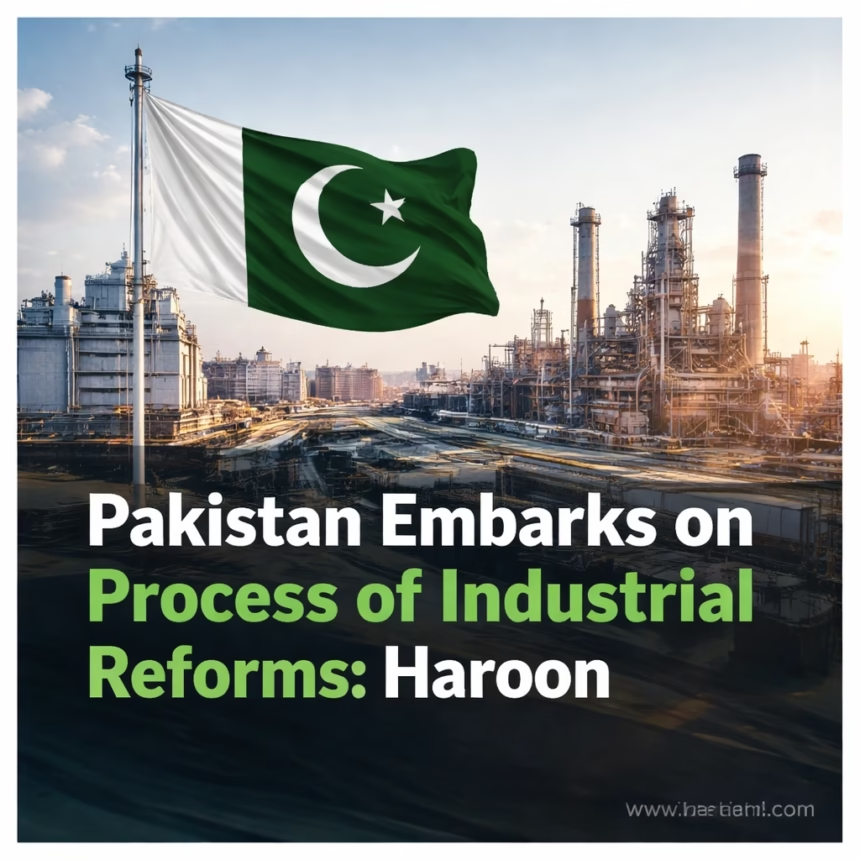
Pakistan has officially commenced a sweeping process of industrial reforms, signaling a strategic pivot towards revitalizing its manufacturing sector and boosting economic growth. This significant undertaking, confirmed by senior government official Haroon, aims to streamline regulations, attract investment, and enhance productivity across key industries nationwide. The initiative marks a critical juncture for the South Asian nation's economic trajectory in early 2024.
Background: A Decades-Long Quest for Industrial Revival
Pakistan's economy has long grappled with structural challenges that have hindered sustained industrial growth. For decades, the manufacturing sector's contribution to the Gross Domestic Product (GDP) has stagnated, typically hovering between 13% and 15%. This limited share stands in contrast to regional peers and global manufacturing hubs, highlighting an untapped potential. The nation has historically relied heavily on agricultural exports, remittances from overseas workers, and a narrow base of low value-added manufactured goods, primarily textiles.
Chronic current account deficits, often exacerbated by a high import bill and insufficient export diversification, have been a persistent issue. The country has also faced severe energy shortages, characterized by frequent power outages and high utility costs, which have significantly increased the cost of doing business for industries. Bureaucratic hurdles, an often-complex tax regime, and inconsistent policy implementation have further deterred both local and foreign investment.
Recent economic instability has amplified the urgency for deep-seated reforms. Record inflation, significant currency depreciation, and a burgeoning national debt necessitated a fresh approach. The ongoing International Monetary Fund (IMF) program, an Extended Fund Facility, has consistently underscored the importance of structural adjustments to improve the business environment and enhance the efficiency of state-owned enterprises. These external pressures, combined with internal demands for job creation and economic stability, catalyzed a renewed focus on industrial transformation. Discussions on a comprehensive industrial policy gained considerable momentum in late 2023, following a series of high-level consultations involving economic ministries, prominent business chambers, and international development partners.
Key Developments: Unveiling the Reform Agenda
The government's industrial reform agenda is multifaceted, targeting various bottlenecks and leveraging new opportunities. A high-powered task force, comprising representatives from relevant ministries, industry experts, and economic advisors, has been established to oversee the meticulous implementation of these reforms. This task force is mandated to ensure coherence and swift execution across all policy initiatives.

Regulatory Streamlining and Incentives
A primary focus is the drastic reduction of red tape and the simplification of licensing procedures. The aim is to create a 'one-window' operation for new businesses and existing enterprises seeking to expand, cutting down approval times from months to weeks. Furthermore, the government has introduced a suite of targeted tax incentives, including reduced corporate tax rates for reinvested profits, and rationalized import duties on critical industrial machinery and raw materials not produced domestically. These incentives are particularly aimed at export-oriented industries and those investing in advanced, green technologies.
Energy Sector Reforms
Recognizing the critical role of energy, the reform package includes significant initiatives for the power sector. Efforts are underway to ensure a reliable and affordable power supply to industrial zones, including preferential tariffs for large-scale manufacturers. A strong emphasis is also being placed on integrating renewable energy sources, such as solar and wind power, into the industrial grid, reducing reliance on expensive fossil fuels and enhancing energy security.
More Read

Special Economic Zones (SEZs) and Investment Promotion
The development and expansion of Special Economic Zones (SEZs) form a cornerstone of the strategy. Existing SEZs are being upgraded with state-of-the-art infrastructure, including dedicated power grids, improved logistics, and streamlined administrative services. New SEZs are planned in strategic locations to attract both domestic and foreign direct investment (FDI). Investment promotion efforts include international roadshows, bilateral agreements with key trading partners, and dedicated investment facilitation desks to guide foreign investors through the setup process.
Skill Development and Digitalization
Addressing the skills gap is another critical component. The government plans to launch extensive vocational training programs and technical education initiatives, closely collaborating with industries to tailor curricula to specific market demands. This aims to create a skilled workforce capable of operating modern industrial machinery and adopting new technologies. Concurrently, significant strides are being made in the digitalization of government services related to trade, customs, and business registration, enhancing transparency and efficiency.
Sector-Specific Focus
Beyond horizontal reforms, the agenda includes a vertical focus on high-potential sectors. These include information technology (IT), pharmaceuticals, engineering goods, and value-added textiles. The goal is to move beyond traditional low-value exports and foster industries that can compete globally on innovation and quality. For instance, incentives for IT exports and pharmaceutical research and development are being prioritized to build competitive advantages.
Impact: Reshaping Pakistan’s Economic Landscape
The comprehensive industrial reforms are poised to have a far-reaching impact across various segments of Pakistan's economy and society. The anticipated changes are expected to usher in a new era of growth and stability.
For Businesses
Enterprises, regardless of size, are expected to experience a significant improvement in the ease of doing business. Reduced operational costs, faster regulatory approvals, and access to new financial and tax incentives will boost profitability and encourage expansion. Small and Medium Enterprises (SMEs), often stifled by bureaucratic complexities, stand to benefit immensely from simplified procedures, potentially unlocking their growth potential. Larger industries may find new avenues for modernization, technological upgrades, and market diversification, enhancing their global competitiveness.
For Workers and Job Creation
The reforms are projected to lead to substantial job creation, particularly in skilled and semi-skilled categories within the manufacturing and services sectors. The emphasis on skill development and vocational training programs will equip the workforce with relevant expertise, improving employability and potentially leading to higher wages. This focus on human capital development is critical for absorbing the country's large youth population into productive employment.
More Read

For Consumers
An invigorated domestic industrial base is expected to result in a wider variety of locally produced goods, potentially at more competitive prices. This could reduce reliance on imports, stabilize consumer prices, and enhance product quality, ultimately benefiting the Pakistani consumer with more choices and better value.
Government Revenue and Fiscal Stability
Increased industrial activity, coupled with a more formalized economy due to streamlined regulations, is anticipated to broaden the tax base. This expansion will contribute to higher government revenues in the medium to long term, providing crucial resources for public services and infrastructure development, and ultimately improving fiscal stability.
International Trade and Investment
A more competitive industrial sector and a predictable policy environment are key to attracting greater Foreign Direct Investment (FDI). Enhanced export capabilities, particularly in value-added goods, will improve Pakistan's balance of payments position, strengthen the national currency, and foster stronger trade ties with international partners. The reforms aim to integrate Pakistan more deeply into global supply chains.
Regional Economic Dynamics
A stronger, more diversified industrial base could reposition Pakistan as a more significant economic player in South Asia and beyond. This enhanced economic standing could foster greater regional trade, collaboration, and stability, contributing to the overall prosperity of the wider region.
What Next: Milestones on the Path to Industrial Transformation
The initiation of these reforms marks the beginning of a sustained effort, with several key milestones anticipated in the coming months and years. The government is committed to a transparent and accountable implementation process.
Legislative and Policy Milestones
Upcoming parliamentary sessions are expected to witness the passage of new industrial policy frameworks and amendments to existing business laws. These legislative changes will provide the necessary legal backing for the reforms, ensuring their long-term sustainability and predictability. Specific deadlines are being set for the finalization of sector-specific policies, such as those for automotive or electronics manufacturing.
Project Rollouts and Infrastructure Development
The government plans the accelerated rollout of several new Special Economic Zones (SEZs) and industrial clusters across the country. Timelines for critical infrastructure development within these zones, including road networks, utilities, and logistics hubs, are being established. The goal is to make these zones fully operational and attractive to investors by late 2024 and early 2025.
Digitalization and Skill Enhancement Targets
Key phases in the digitalization of trade and business services are slated for completion by the end of 2024. This includes fully operational online platforms for business registration, customs clearance, and tax filing. Concurrently, the expansion of technical and vocational training institutes (TVETs) and the launch of industry-academia partnership programs are expected to gather pace, aiming to produce a significant number of skilled workers annually.
Monitoring, Evaluation, and Adaptation
Robust mechanisms for monitoring and evaluation will be established, potentially involving independent bodies, to track progress against key performance indicators (KPIs). Regular reviews and public reporting are anticipated to ensure accountability and allow for timely adjustments to policies based on real-world outcomes. The government acknowledges potential hurdles such as global economic slowdowns, energy price volatility, or political instability, and plans to maintain continuous dialogue with stakeholders to adapt policies as needed.
Long-Term Vision
The ultimate goal of these industrial reforms is to transform Pakistan into a dynamic regional manufacturing hub, diversifying its economy beyond traditional sectors, and significantly increasing its share of value-added exports. By 2030, the vision is to achieve a sustainable, inclusive growth model that fosters innovation, creates widespread employment opportunities, and deeply integrates Pakistan into global supply chains, thereby securing a prosperous future for its citizens.