
Brazil's Economic Policies: A Turning Point in the Election?
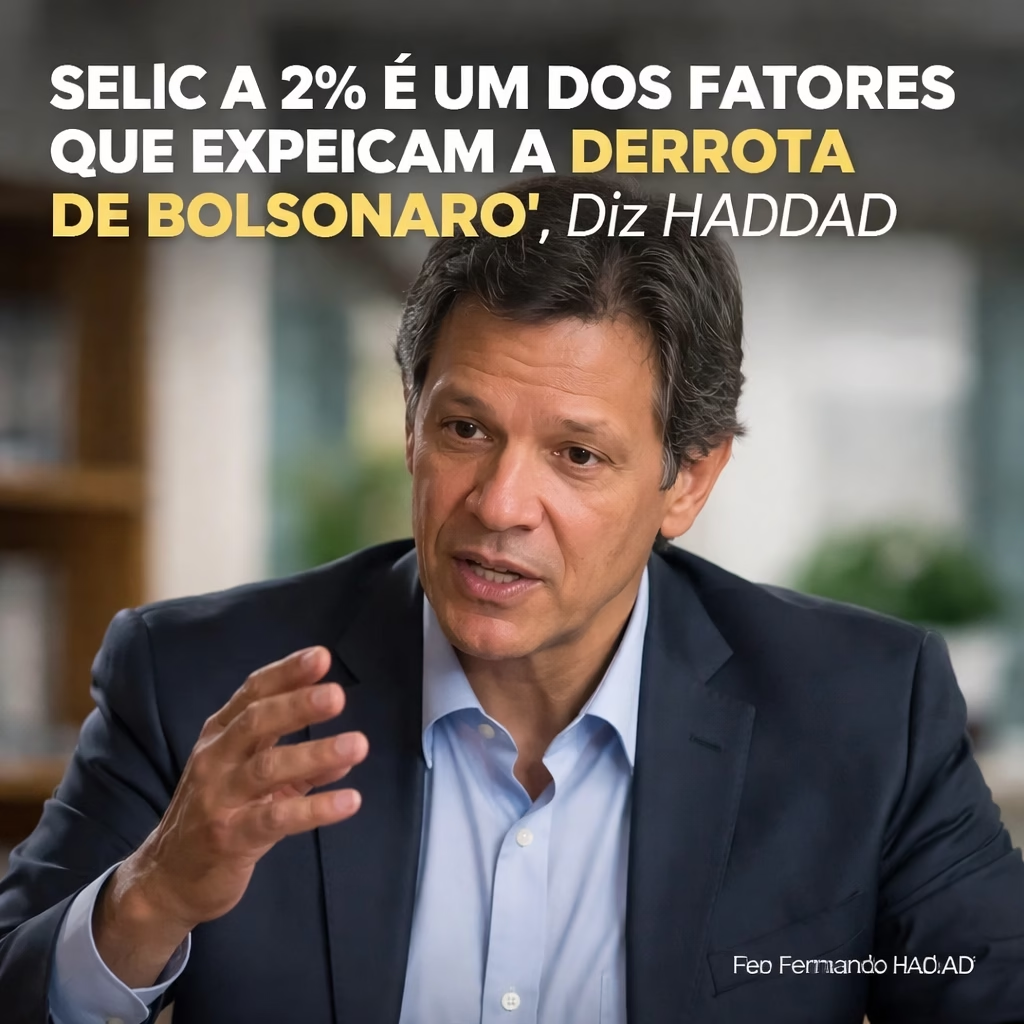
São Paulo, Brazil – Fernando Haddad, a prominent figure in the Workers' Party (PT) and now Minister of Finance, has suggested that the Central Bank's decision to set the Selic rate at 2% significantly contributed to President Jair Bolsonaro's defeat in the October 2022 elections.
Background: A History of Economic Volatility
Brazil has a long history of economic instability, marked by high inflation and fluctuating interest rates. The Selic rate, the benchmark interest rate in Brazil, plays a crucial role in controlling inflation and influencing economic activity. During Bolsonaro's term (2019-2022), the Selic rate experienced significant volatility, rising sharply in response to inflationary pressures, particularly after the COVID-19 pandemic began in early 2020. The rate peaked at 13.75% in August 2022 before beginning a gradual decline.
Bolsonaro's economic policies, characterized by fiscal loosening and a more laissez-faire approach, were met with skepticism by investors and economists concerned about rising debt and inflation. His administration often clashed with the Central Bank, which maintained a relatively independent stance on monetary policy.
Key Developments: The 2% Selic and its Implications
The Central Bank's decision to hold the Selic rate at 2% in December 2022 was a surprise to many. This marked the lowest level in over four years. While intended to stimulate economic growth, Haddad argues that the high interest rates throughout much of Bolsonaro's presidency eroded public confidence and negatively impacted the economy.
More Read

Haddad stated that the persistently high Selic rate made it difficult for businesses to invest and consumers to spend, contributing to a general sense of economic unease. He believes this sentiment played a key role in Bolsonaro's loss to Luiz Inácio Lula da Silva (Lula) in the presidential election held on October 30, 2022.
Furthermore, the perception that Bolsonaro's administration failed to adequately address inflation fueled dissatisfaction among voters. Inflation reached double-digit figures in 2021, impacting the purchasing power of Brazilian families and contributing to economic hardship.
Impact: Households and Businesses Feel the Pinch
The high Selic rate had a wide-ranging impact on Brazilian households and businesses. Mortgage rates soared, making it more difficult for people to purchase homes. Consumer loans became more expensive, reducing discretionary spending. Businesses faced higher borrowing costs, hindering investment and expansion.
More Read

Small and medium-sized enterprises (SMEs), which are vital to the Brazilian economy, were particularly affected. The increased cost of capital made it harder for them to operate and compete, contributing to job losses in some sectors. The real estate market also suffered as property prices became less affordable.
The impact wasn't evenly distributed. Lower-income households were disproportionately affected by inflation, as a larger percentage of their income is spent on essential goods and services. The high interest rates exacerbated existing inequalities.
What Next: Lula’s Economic Agenda
With Lula now in office, the focus has shifted to addressing the economic challenges facing Brazil. Lula's administration has pledged to prioritize fiscal responsibility, social programs, and targeted investments to promote economic growth and reduce inequality.
Fiscal Policy
One of Lula's key priorities is to stabilize the national debt. He aims to achieve primary balance (government revenues exceeding expenses, excluding interest payments) within a few years. This involves a combination of spending cuts and revenue increases.
Social Programs
Lula has committed to expanding social safety nets, including programs like Bolsa Família (a conditional cash transfer program), to support vulnerable populations. These programs are designed to alleviate poverty and reduce inequality.

Monetary Policy
While Lula has expressed a desire for a more supportive monetary policy, he has emphasized the importance of maintaining Central Bank independence. The direction of the Selic rate in the coming months will depend on inflation trends and the overall economic outlook. The Central Bank has indicated a willingness to consider rate cuts if inflation continues to fall.
The effectiveness of Lula's economic policies remains to be seen. Brazil faces significant challenges, including high levels of public debt, persistent inequality, and global economic uncertainty. However, Lula's administration has the opportunity to chart a new course for the Brazilian economy and improve the lives of millions of Brazilians.