Supercharged Future: SpaceX Booster Endures Extreme Cold Test
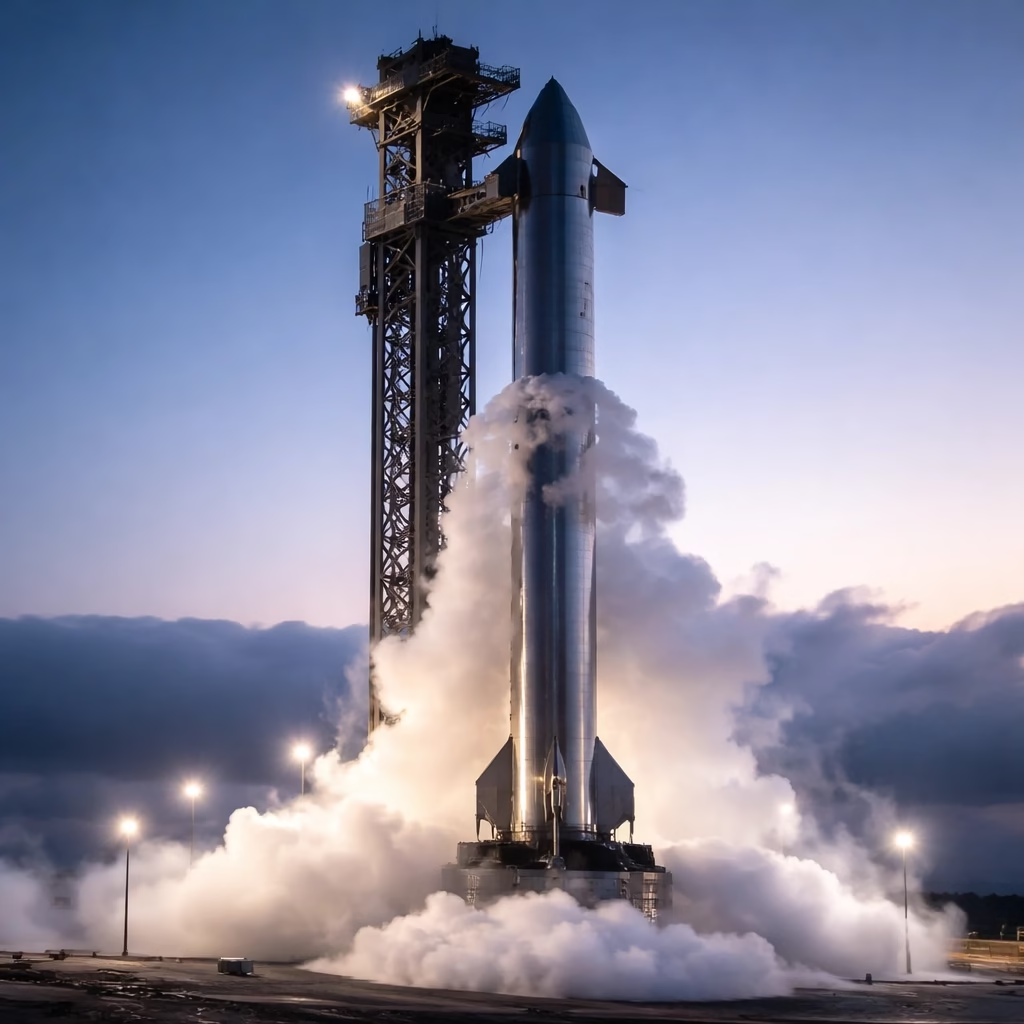
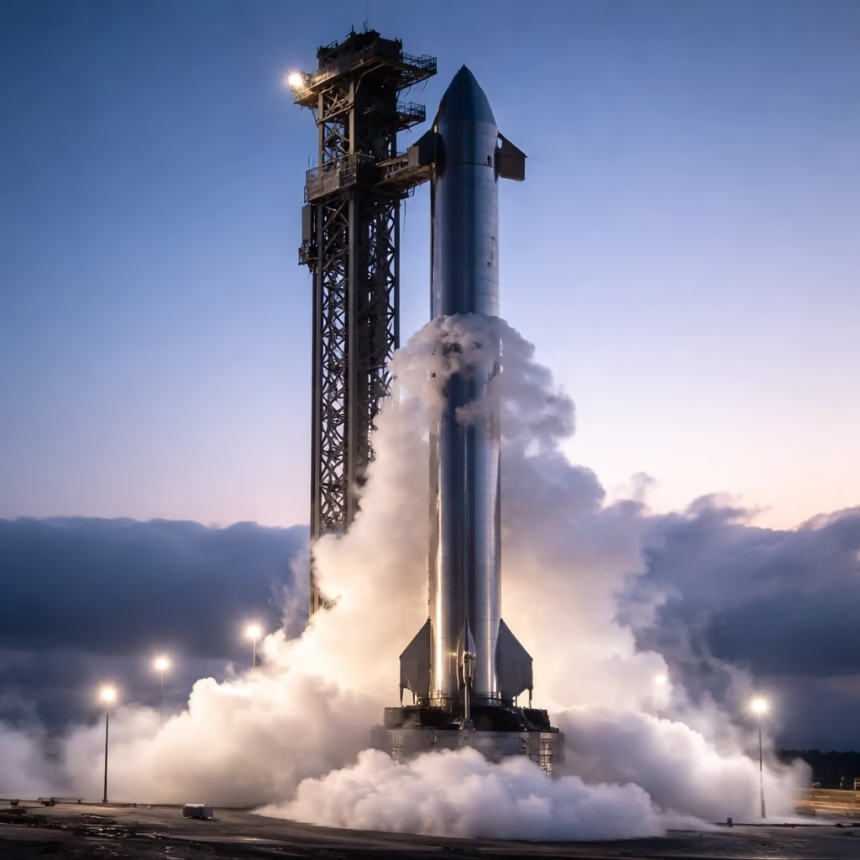
SpaceX's Super Heavy booster successfully completed a rigorous four-day “cryoproof” test at its Starbase facility in Boca Chica, Texas, demonstrating its resilience to extreme cold conditions. The tests, concluding on February 28, 2024, are a crucial step toward enabling the booster to support the planned Starship spacecraft for deep-space missions.
Background: Building a Heavy Lifter
The Super Heavy booster is a critical component of SpaceX’s Starship system, designed to deliver the Starship spacecraft into Earth orbit. Development of the Super Heavy began in 2019, with the first prototype flight occurring in April 2023. The booster is intended to be fully reusable, a key element of SpaceX’s goal to drastically reduce the cost of space travel. The project aims to create a fully integrated launch system capable of carrying hundreds of metric tons to the Moon, Mars, and beyond.
The booster utilizes Raptor engines, designed by SpaceX, which run on liquid methane and liquid oxygen. This propellant combination is chosen for its efficiency and potential for in-situ resource utilization on other planets.
Key Developments: Facing the Freeze
The latest cryoproof testing focused on exposing the Super Heavy booster to extremely low temperatures, simulating the conditions it will encounter during launch and in the harsh environments of deep space. These tests are vital for ensuring the structural integrity of the booster’s tanks, engines, and other critical components.
More Read

The four-day test involved gradually cooling the booster down to temperatures as low as -145 degrees Celsius (-230 degrees Fahrenheit). SpaceX engineers monitored the booster's performance closely, analyzing data to identify any potential weaknesses or areas for improvement. The successful completion of this test represents a significant milestone in the development process, confirming the booster’s ability to withstand the extreme cold associated with spaceflight.
This testing follows a series of ground tests, including static fire tests of the Raptor engines, which have been conducted throughout 2023 and 2024. These engine tests are essential for validating the engine’s performance and reliability.
Impact: Reaching for the Stars
The successful cryoproof testing has significant implications for the future of SpaceX’s Starship program and the broader space industry. A reliable Super Heavy booster is essential for achieving SpaceX’s ambitious goals of lunar and Martian exploration.
More Read

The Starship system has the potential to revolutionize access to space, enabling lower-cost and more frequent launches. This could spur innovation in areas such as space tourism, satellite deployment, and scientific research. Furthermore, the ability to transport large payloads to the Moon and Mars could accelerate the development of off-world settlements.
Several government agencies, including NASA, are closely watching the progress of the Starship program. NASA has a contract with SpaceX to use Starship for lunar landings as part of the Artemis program, with plans to land astronauts on the Moon by 2026.
What’s Next: Towards Orbital Flight
Integrated Booster and Starship Testing
Following the cryoproof tests, SpaceX plans to conduct further integrated testing of the Super Heavy booster and the Starship spacecraft. This will involve stacking the Starship on top of the Super Heavy and conducting tests to ensure that the two vehicles can operate together seamlessly. The next integrated test is anticipated to take place sometime in 2024, pending regulatory approvals.
Flight Readiness Reviews
SpaceX will conduct a series of flight readiness reviews to assess the readiness of the Starship system for orbital flight. These reviews will involve a thorough examination of all systems and components, as well as simulations and testing.
Orbital Launch Goal
SpaceX aims to conduct an orbital launch of Starship in the coming months. The exact date is subject to change based on the results of ongoing testing and regulatory approvals. A successful orbital launch would mark a major step forward in the development of the Starship system and pave the way for future missions to the Moon and Mars.