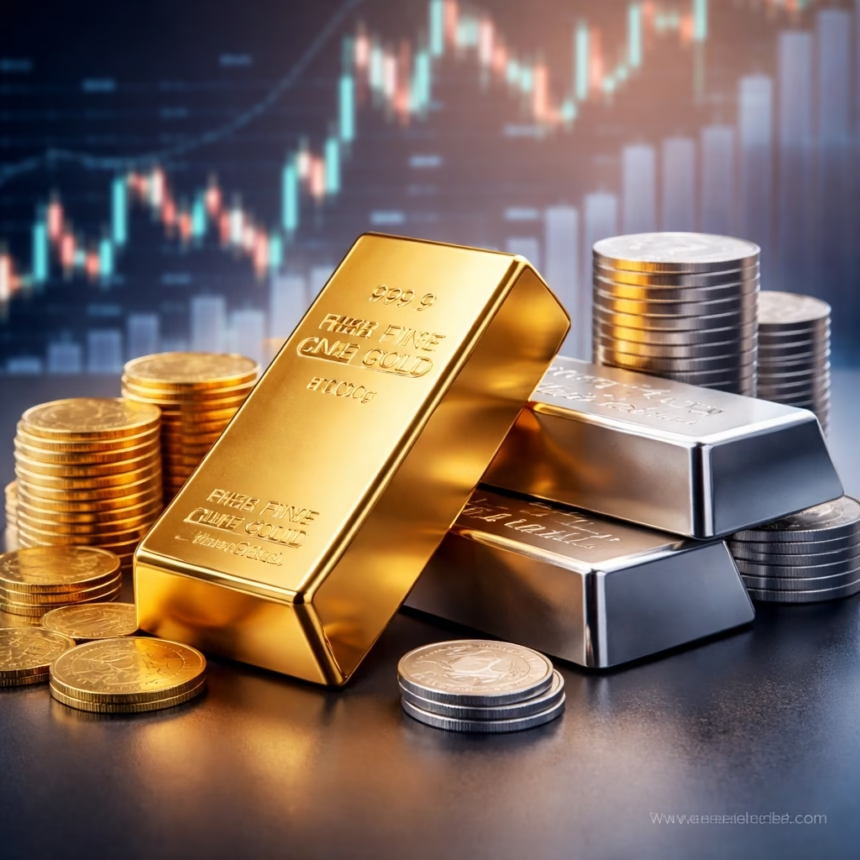
Shiny Metals Surge: What's Driving the Price Jump?
Gold and silver prices experienced a notable upward trend in recent trading sessions, primarily fueled by anticipation surrounding the upcoming U.S. payrolls data release scheduled for Friday, June 7th, 2024. Investors are seeking clarity on the strength of the U.S. labor market, a key indicator influencing inflation and Federal Reserve policy.
Background: A History of Safe-Haven Demand
Gold has historically served as a safe-haven asset, particularly during periods of economic uncertainty and inflation. Its price is often correlated with geopolitical risks and fluctuations in the U.S. dollar. Silver, while also a precious metal, tends to be more sensitive to industrial demand, particularly from the electronics sector. The current market environment, characterized by ongoing inflation concerns and potential interest rate adjustments, has heightened demand for both metals.
The price of gold has been fluctuating since ancient times, but its role as a financial asset gained prominence in the 20th century. Silver's historical significance is rooted in its use as a currency and in various industrial applications. Both metals experienced significant price increases during the 1970s inflationary period, and have since seen periods of volatility influenced by economic cycles and global events.
Key Developments: Recent Price Action
As of June 6th, 2024, gold futures were trading around $2,330 per ounce, marking a roughly 1.2% increase over the past week. Silver futures are hovering near $27.50 per ounce, reflecting a similar upward trajectory. The recent rally began early last week and has intensified as investors prepare for the release of crucial economic data.

The U.S. dollar, which typically has an inverse relationship with gold and silver prices, has seen slight weakness in recent days. This decline in the dollar has contributed to the metals' appeal to international buyers. Furthermore, concerns about potential economic slowdowns have encouraged investment in these assets as a hedge against risk.
Analysts at the London Bullion Market Association (LBMA) have noted increased trading volume in gold and silver over the past few days, indicating heightened investor interest.
Impact: Who Feels the Ripple Effect?
The rising prices of gold and silver have a broad impact across various sectors.
More Read

Investors: Individuals and institutions holding gold and silver bullion, ETFs (Exchange Traded Funds), or mining stocks are experiencing gains in their portfolios. Those considering investing in these assets are observing increased prices and potential future appreciation.
Mining Companies: Major gold and silver mining companies like Newmont Corporation (NYSE:NEM) and Barrick Gold Corporation (TSX:ABX) are likely to see increased stock prices as metal prices rise. This can lead to higher profits and increased investment in exploration and production.
Jewelry Industry: While gold and silver are used in jewelry, price increases can impact consumer demand. However, the long-term outlook for jewelry demand remains positive, particularly in emerging markets like India and China.
Industrial Sector: Silver, in particular, is a key component in various industrial applications, including electronics, solar panels, and medical devices. Higher silver prices can increase manufacturing costs for these industries.
What Next: Eyes on the Payroll Report
The focus remains squarely on the U.S. payrolls report scheduled for Friday, June 7th, 2024. The report will detail the number of jobs added or lost in the U.S. economy for the month of May, along with data on average hourly earnings and the unemployment rate.
Key Data Points to Watch
Nonfarm Payrolls: The primary indicator of the labor market's health. A strong number could reinforce expectations of continued interest rate hikes by the Federal Reserve.
Average Hourly Earnings: A key measure of inflation. Higher earnings could fuel inflationary pressures.
Unemployment Rate: Reflects the percentage of the labor force that is unemployed. A declining unemployment rate typically signals a strengthening economy.
Following the payrolls report, investors will be closely monitoring comments from Federal Reserve officials for further clues about the future path of monetary policy. A hawkish tone from the Fed could further support gold and silver prices, while a dovish stance could lead to a price correction.
Analysts predict that the market reaction to the payrolls report will be significant, with potential volatility in both gold and silver prices. Traders are advised to exercise caution and carefully assess the implications of the data before making investment decisions.