Nuclear Standoff: Iran Reshapes Deal Demands
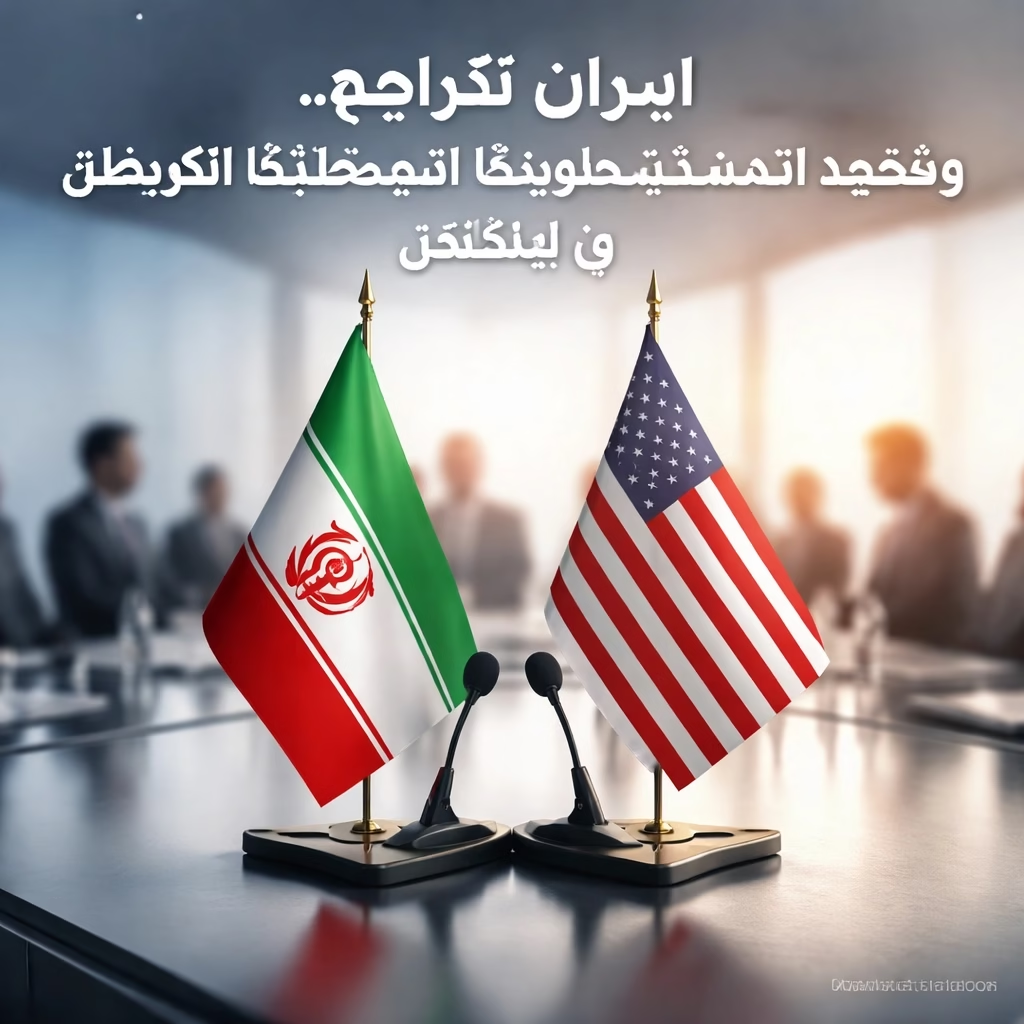
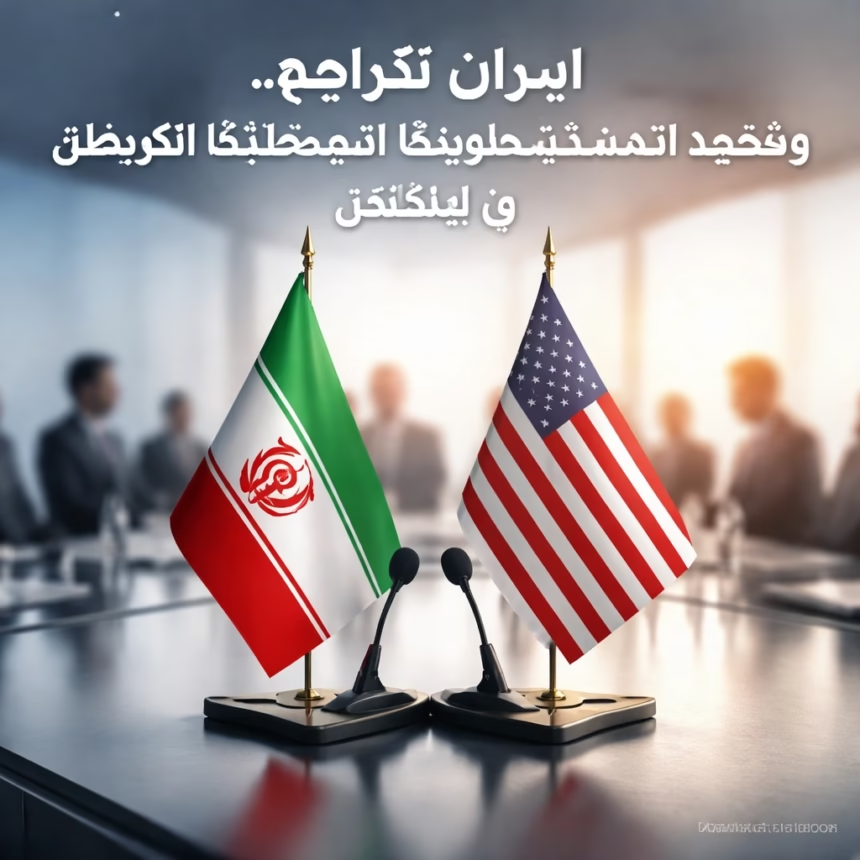
Tehran, Iran – In a significant shift, Iran has announced a recalibration of its approach to nuclear negotiations with the United States, signaling a potential change in the trajectory of diplomatic efforts aimed at reviving the 2015 nuclear deal. The move, announced on October 16, 2023, comes amidst ongoing tensions in the region and a complex political landscape both domestically and internationally.
Background
The Iran nuclear deal, formally known as the Joint Comprehensive Plan of Action (JCPOA), was reached in 2015 between Iran and the P5+1 nations (China, France, Germany, Russia, UK, and US). The agreement limited Iran’s uranium enrichment and plutonium production in exchange for sanctions relief. However, the United States withdrew from the JCPOA in 2018 under the Trump administration and reimposed sanctions on Iran, citing concerns about its nuclear program and regional activities. Following the US withdrawal, Iran gradually rolled back its commitments under the deal, enriching uranium to higher levels and increasing its stockpile.
Negotiations to revive the JCPOA stalled in Vienna in 2022 and have remained largely at a standstill since then, with disagreements centering on sanctions relief, verification mechanisms, and the scope of Iran’s nuclear activities. Several rounds of indirect talks have taken place, but without a breakthrough.
More Read

Key Developments
Iranian Foreign Minister Hossein Amir-Abdollahian stated that Iran is prepared to continue talks with the US, but insists on a fundamentally different framework than what was previously discussed in Vienna. He emphasized that any future agreement must address Iran’s concerns regarding guarantees against future sanctions and a verifiable verification system that ensures the US will adhere to the terms of the deal.
Specifically, Iran is demanding that the US lift all sanctions related to its oil exports, banking sector, and other economic activities before fully implementing the JCPOA. This is a significant departure from previous positions, which focused on a phased approach to sanctions relief linked to Iran’s compliance with the nuclear agreement. Furthermore, Iran has expressed skepticism about the effectiveness of existing verification mechanisms and is seeking more robust and intrusive inspections to ensure full compliance.
Recent reports indicate that Iran is also considering expanding its nuclear activities, including enrichment of uranium to 20% purity, which is closer to weapons-grade levels. This move is seen as a strategic maneuver to increase its bargaining power in negotiations with the US.
More Read

Impact
Iran’s shift in stance has broad implications for regional and international security. It raises concerns about the potential for a further escalation of tensions in the Middle East. The US has responded cautiously, stating that it is reviewing Iran’s new demands and engaging in discussions to explore potential pathways forward. However, Washington has made it clear that it will not accept a deal that does not address Iran’s nuclear ambitions and regional destabilizing activities.
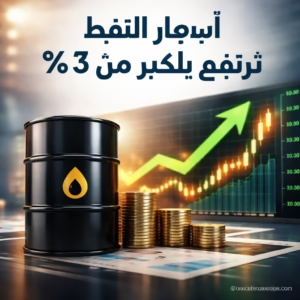
The European Union, which has played a key role in mediating the JCPOA negotiations, has expressed its willingness to facilitate further talks, but has also emphasized the need for both sides to demonstrate flexibility and a commitment to a negotiated solution. The uncertainty surrounding the nuclear deal is impacting energy markets, particularly oil prices, and is creating economic instability in the region.
What Next
The immediate future of the Iran nuclear deal remains uncertain. It is unclear whether the US will be willing to accept Iran’s new demands, or whether both sides can find common ground to revive the agreement. Several potential scenarios are being discussed, including further rounds of indirect talks, a direct meeting between US and Iranian officials, and the possibility of a new framework agreement that addresses the concerns of both parties.
Possible Scenarios
Continued Indirect Talks: Negotiations continue through intermediaries, with both sides seeking to find areas of compromise. This is considered the most likely short-term scenario.
Direct Negotiations: High-level officials from the US and Iran meet directly to discuss the terms of a potential agreement. This would signal a significant step forward in the negotiations.
Framework Agreement: A new agreement is reached that addresses the key concerns of both sides, potentially including longer-term restrictions on Iran’s nuclear program and enhanced verification mechanisms.
Stalemate: Negotiations remain stalled, with no progress being made towards a resolution. This would likely lead to a further escalation of tensions.
The next few weeks and months will be critical in determining the future of the Iran nuclear deal and the broader geopolitical landscape in the Middle East.