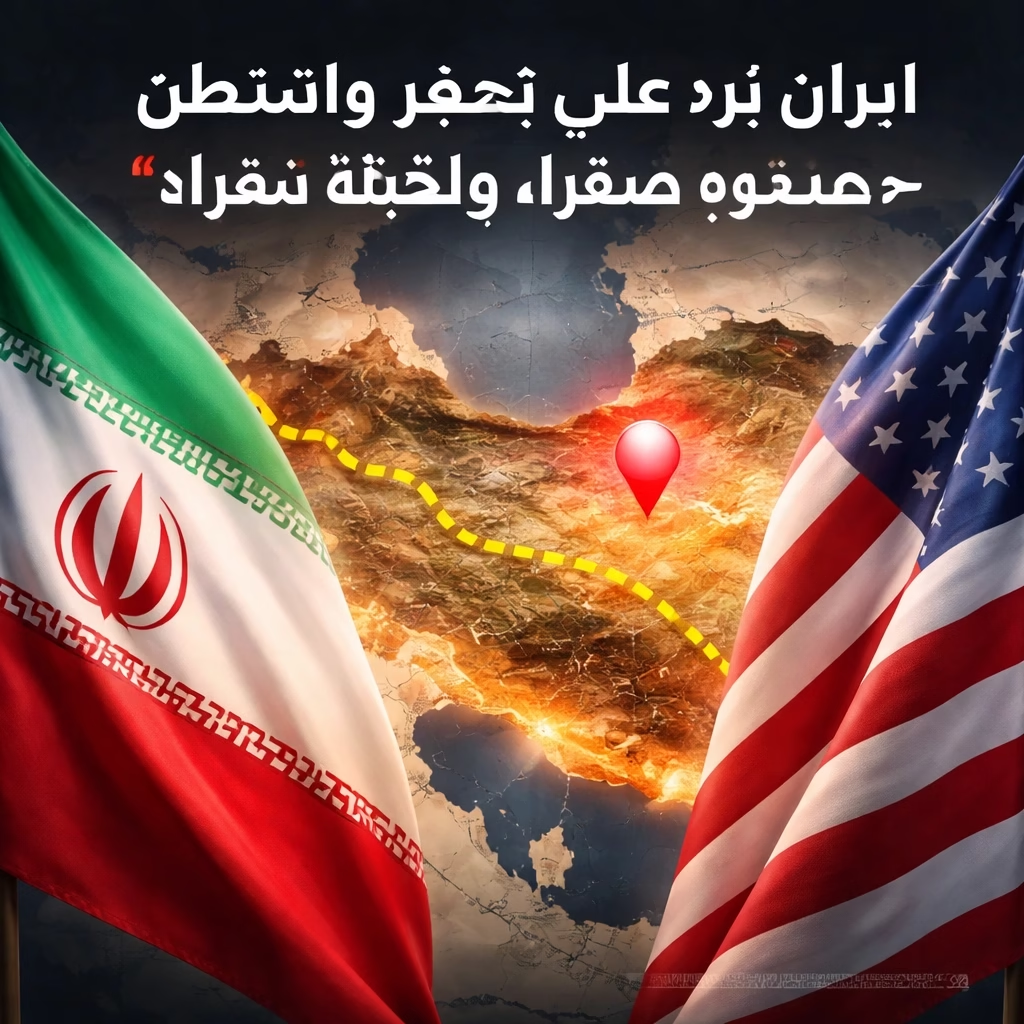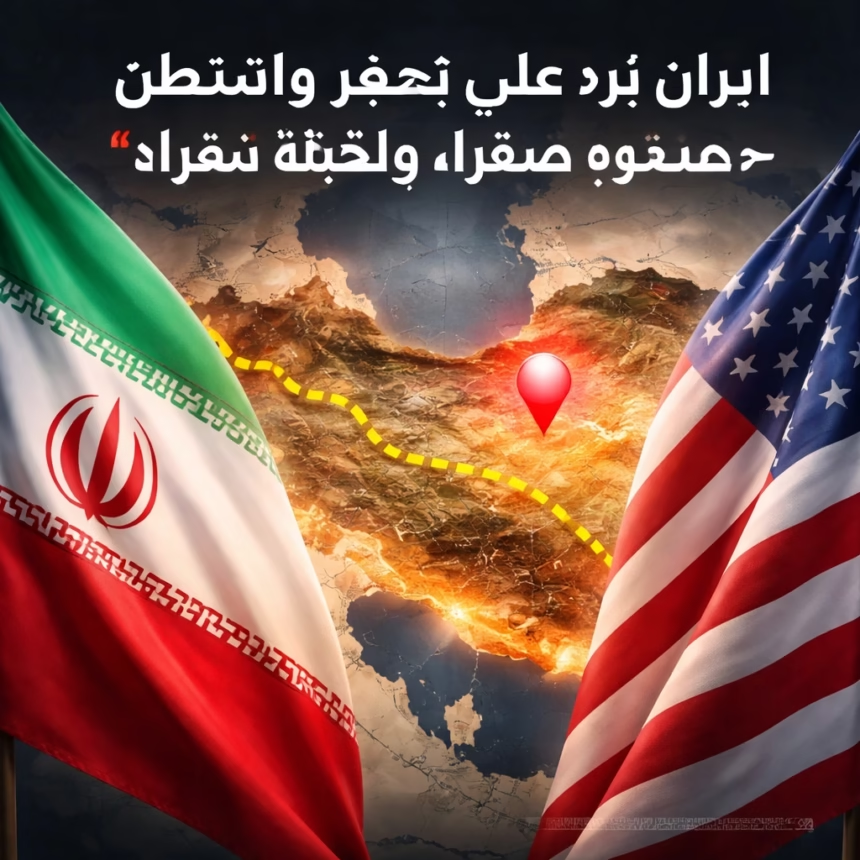
In a stark declaration, Iran's Foreign Minister Hossein Amir-Abdollahian recently warned the United States against crossing "yellow lines" and "red points" in the Middle East. This assertive statement, delivered amidst heightened regional tensions following the Gaza conflict and increased attacks on US forces, signals Tehran's firm stance against perceived American aggression and its determination to defend its interests and allies. The warning comes as Washington reinforces its military presence and issues its own admonitions against a wider regional conflagration.
Background: A Volatile History Meets New Crises
The relationship between the United States and Iran has been characterized by decades of deep mistrust and intermittent confrontation since the 1979 Islamic Revolution. Diplomatic ties were severed, giving way to animosity fueled by Iran’s nuclear ambitions and its support for regional proxy groups. The 2015 nuclear deal (JCPOA) offered a brief respite, but its unraveling under the Trump administration reignited tensions and led to a “maximum pressure” campaign of sanctions against Tehran.
The current escalation is directly linked to the Israel-Hamas conflict that erupted on October 7th. This event triggered widespread regional destabilization. The United States responded by deploying significant military assets, including aircraft carriers and fighter jets, to the Eastern Mediterranean and the Persian Gulf, aiming to deter any state or non-state actor from widening the conflict. Concurrently, US officials, including Secretary of State Antony Blinken and President Joe Biden, issued stern warnings against expanding the war, implicitly directed at Iran and its network of allied militias.
Iran's strategic doctrine relies heavily on its "Axis of Resistance"—a network of proxy groups spanning Lebanon (Hezbollah), Yemen (Houthis), Iraq, and Syria. These groups project influence and often target US interests or allies. In the weeks following October 7th, US military bases and personnel in Iraq and Syria faced a surge in drone and rocket attacks, largely attributed to Iran-backed militias. Simultaneously, the Houthi movement in Yemen launched missiles and drones towards Israel and, more significantly, targeted international shipping in the Red Sea, disrupting global trade routes and prompting a multinational naval response led by the US. This intricate web of actors forms the volatile backdrop for Iran's latest warning.
Key Developments: Tehran Draws Its Lines
Foreign Minister Amir-Abdollahian’s declaration of “yellow lines” and “red points” represents a significant articulation of Iran’s perceived boundaries. While not explicitly defined, “yellow lines” are understood to signify a zone of warning and deterrence, indicating actions that, while provocative, might not immediately lead to direct Iranian military response but would escalate political tensions. This could encompass continued US military build-up, enhanced sanctions, or specific intelligence operations deemed hostile. The “red points,” conversely, imply a threshold beyond which Iran would consider direct and forceful retaliation, potentially involving actions against US assets or personnel, or an expansion of proxy activities. This could be triggered by direct attacks on Iranian territory, significant strikes against key Iranian assets or high-ranking officials, or a sustained, large-scale military campaign against its most vital regional allies.
More Read

The timing of this statement is crucial, coinciding with intense military and diplomatic maneuvering. The US has not only increased its naval and air assets but has also reinforced ground troops and deployed advanced missile defense systems. In response to escalating attacks on its forces in Iraq and Syria, the US has conducted limited retaliatory strikes against facilities used by Iran-backed militias, aiming to degrade capabilities and deter further aggression without triggering a wider war. These tit-for-tat exchanges underscore the precarious balance and risk of miscalculation.
Diplomatically, channels of communication, both direct and indirect, are reportedly active, with third-party intermediaries conveying messages. However, public rhetoric remains defiant. Iranian officials consistently reiterate support for the "resistance axis" and condemn what they describe as US complicity in the Gaza conflict, framing their actions as defensive. The ongoing activities of Iranian proxies—including Hezbollah's calibrated exchanges with Israel and the Houthis' persistent targeting of Red Sea shipping—demonstrate Iran's capacity to exert pressure across multiple fronts, further complicating US efforts to contain the regional crisis. Tehran's "red lines" thus serve as a public warning and an internal rallying cry.
Impact: Ripples Across the Globe
The heightened rhetoric and military posturing between Iran and the United States carry profound implications, extending far beyond the immediate region. At the forefront is the tangible risk to regional stability. A miscalculation by either side could quickly escalate a localized skirmish into a broader, devastating conflict, drawing in other regional powers such as Saudi Arabia, the United Arab Emirates, and Israel. Such a scenario would shatter fragile peace efforts, exacerbate existing humanitarian crises, and further destabilize the Middle East, leading to widespread displacement and immense human suffering.
More Read

Economic implications are already being felt. Houthi attacks on Red Sea shipping, a critical artery for global trade, have forced major companies to reroute vessels around Africa, significantly increasing transit times and costs. This disruption impacts supply chains worldwide, contributing to inflationary pressures and potentially slowing global economic growth. Oil markets remain highly sensitive to Middle Eastern tensions, with any perceived threat to production or transit routes leading to price spikes, directly affecting consumers and industries globally. Investment in the region is also curtailed by pervasive uncertainty.
On the humanitarian front, any widening of the conflict would be catastrophic. The ongoing crisis in Gaza, coupled with chronic instability in Syria, Iraq, and Yemen, has already created immense needs. An expanded conflict would overwhelm aid organizations, displace millions more, and compound food insecurity and health crises.
International relations are also under strain. Global powers, including European nations, China, and Russia, are grappling with the implications of US-Iran tensions. European allies, in particular, balance alignment with the US with their own economic interests and desire for regional stability. The crisis complicates efforts to address other pressing global issues, diverting diplomatic resources and attention. Internally, the situation impacts both Iran and the United States. In Iran, the confrontational stance against the US tends to bolster hardline factions. For the US, the Biden administration faces domestic pressure to protect American personnel and interests while avoiding entanglement in another major Middle East war, especially in an election year.
What Next: Navigating the Perilous Path
The immediate future of US-Iran relations and the broader regional landscape remains fraught with uncertainty, hinging on a delicate interplay of military actions, diplomatic overtures, and unpredictable proxy warfare.
A primary focus will be on the US response to Iran's "red lines." Washington's strategy is likely to continue balancing deterrence with de-escalation. This could involve further targeted retaliatory strikes against Iran-backed groups in Iraq and Syria if attacks on US forces persist, but carefully calibrated to avoid direct confrontation with Iran itself. The US may also intensify economic sanctions, seeking to pressure Tehran without resorting to military action. Diplomatic efforts, possibly through intermediaries like Qatar or Oman, will remain crucial to convey warnings and explore potential off-ramps, aiming to prevent miscalculations.
Concurrently, the actions of Iran and its proxies will be closely watched. Will the "Axis of Resistance" continue its current level of engagement, or will Iran instruct its allies to scale back attacks to avoid crossing a US red line? The situation in the Red Sea, particularly the Houthi attacks on shipping, remains a critical flashpoint. The US-led multinational naval operation "Prosperity Guardian" aims to secure maritime routes, and any escalation of Houthi actions could provoke a more forceful response, potentially drawing Iran further into the conflict. Similarly, the intensity of exchanges between Hezbollah and Israel on the Lebanese border, while currently contained, holds the potential for rapid expansion.
More Read

Diplomatic efforts will be key to managing the crisis. While direct talks between the US and Iran are unlikely, third-party mediation could become more prominent. International bodies and regional powers may intensify calls for restraint and de-escalation, particularly concerning the Gaza conflict, which remains the primary catalyst. A lasting ceasefire in Gaza could significantly reduce the impetus for proxy actions and create space for broader de-escalation. Beyond the immediate crisis, Iran's nuclear program remains a long-term concern. Any major escalation could complicate future diplomatic efforts regarding non-proliferation. Additionally, the upcoming US presidential election in 2024 will influence Washington's foreign policy decisions. The coming weeks and months will test the resolve and diplomatic acumen of all parties, as they navigate a perilous path.