Shifting Sands: Kurdish Forces Face Unexpected Setbacks in Syria
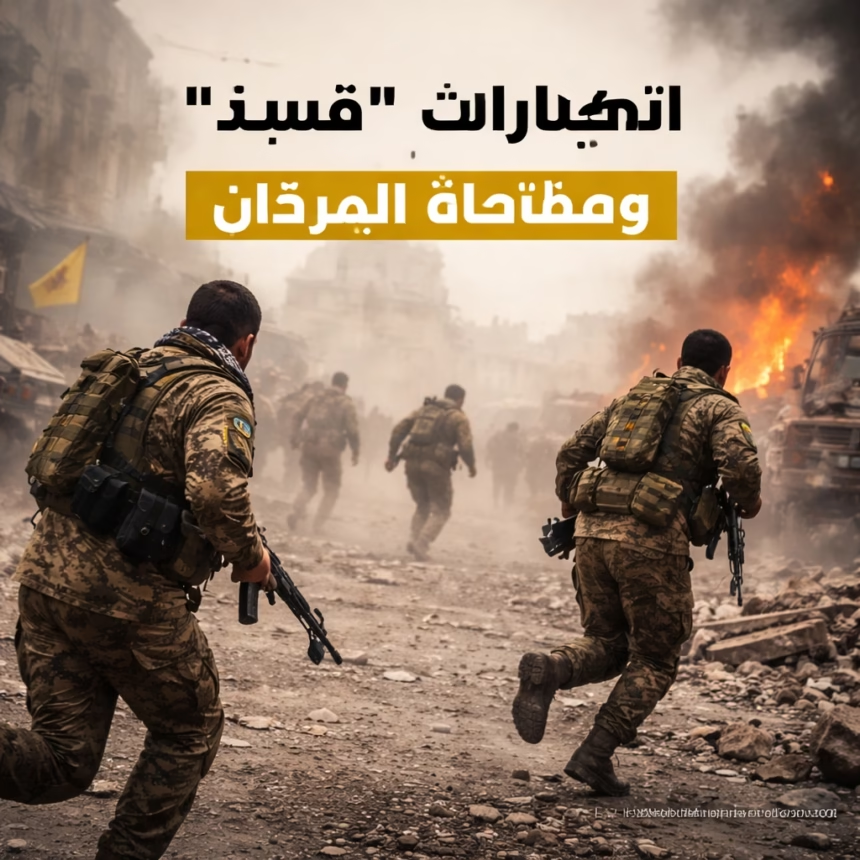
Recent weeks have witnessed a series of unexpected developments impacting the Syrian Democratic Forces (SDF), the dominant Kurdish militia in northeastern Syria. These shifts, particularly around Ras al-Ain and Tal Abyad, are raising questions about the SDF's future and the broader geopolitical landscape of the region.
Background: A Decade of Control
The SDF emerged as a key player in the fight against ISIS, gaining control of a significant swathe of Syria after 2016. This territory, largely encompassing the areas of Raqqa, Deir ez-Zor, and Hasakah provinces, was established with the support of the United States-led coalition. The SDF’s governance has been largely autonomous, with a focus on democratic principles and a multi-ethnic coalition. However, this autonomy has been consistently challenged by neighboring Turkey, which views the SDF as an extension of the Kurdistan Workers' Party (PKK), a designated terrorist organization.
The US has maintained a military presence in the region, primarily to counter ISIS and support the SDF. This support has included training, equipment, and air assistance. The relationship, however, has become increasingly strained in recent years, particularly under the administration of President Donald Trump, who announced a withdrawal of troops in 2019.
Key Developments: A Series of Setbacks
The most significant recent development has been the renewed Turkish military operations in northern Syria, particularly targeting areas near the Turkish border. Starting in October 2023, Turkey launched several incursions, escalating tensions and prompting displacement of civilians. These operations, justified by Ankara as necessary to “clear” the region of PKK militants, have resulted in clashes between Turkish forces and the SDF.
More Read

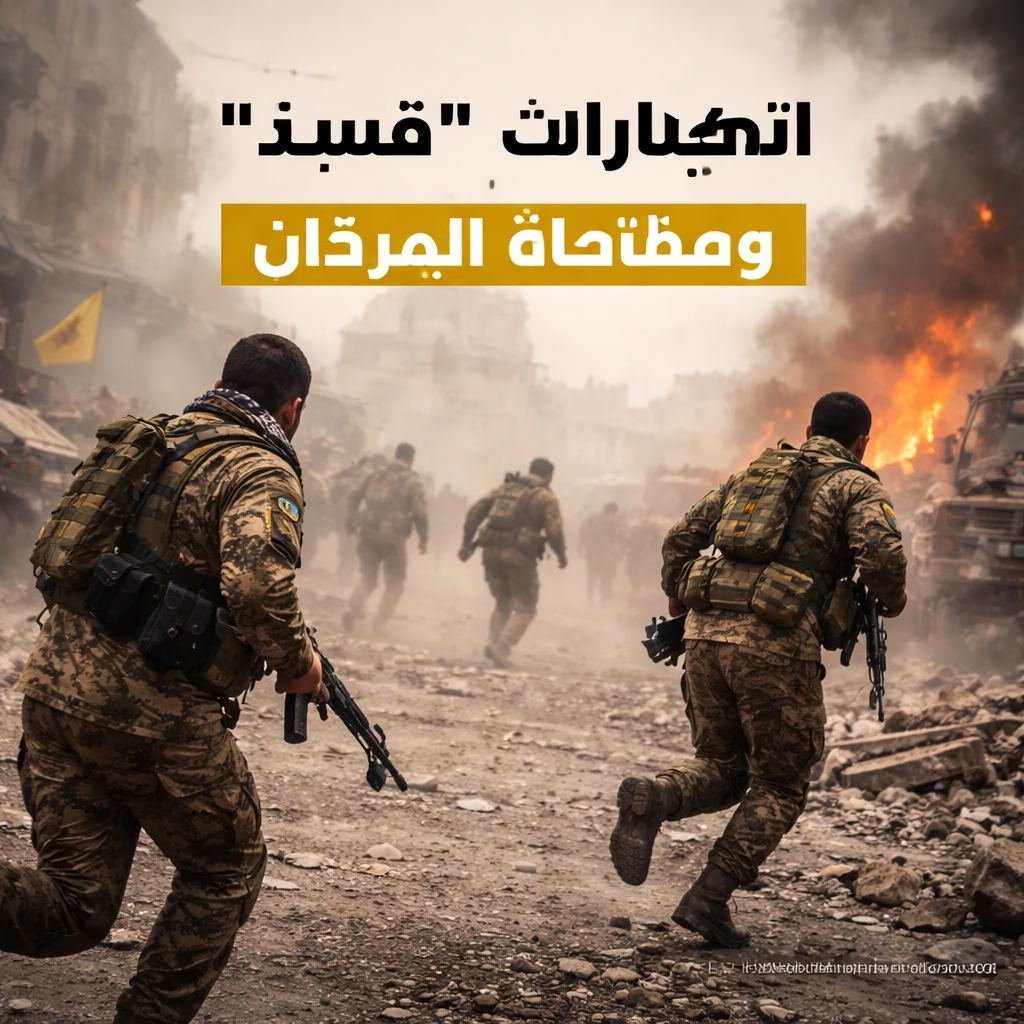
Specifically, the SDF has faced challenges in maintaining control of Ras al-Ain and Tal Abyad, key border towns that were captured from ISIS during the 2019 offensive. Fighting has intensified in these areas, with reports of heavy casualties on both sides. The SDF has accused Turkey of deliberately targeting civilian infrastructure and hindering humanitarian aid delivery.
Furthermore, internal divisions within the SDF coalition, particularly between Kurdish and Arab factions, have been exacerbated by the ongoing conflict. Disagreements over strategy and resource allocation have hampered the SDF's ability to mount a unified defense.
Impact: A Humanitarian Crisis and Political Uncertainty
The renewed Turkish operations have had a devastating impact on the civilian population. Tens of thousands of people have been displaced from their homes, seeking refuge in areas controlled by the SDF or in neighboring regions. The displacement has strained resources and created a significant humanitarian crisis, particularly in areas with limited access to food, water, and medical care.
More Read

The ongoing conflict also threatens to destabilize the region further. The weakening of the SDF could create a power vacuum, potentially leading to renewed ISIS activity or increased influence of other actors, such as Iran. The situation is also deeply impacting the broader geopolitical dynamics, with implications for US foreign policy in the Middle East and the future of Kurdish aspirations for self-determination.
What Next? Navigating an Uncertain Future
Negotiations and Ceasefire Efforts
Efforts to establish a ceasefire and negotiate a political solution are underway, involving representatives from the SDF, Turkey, and the United States. However, progress has been slow and fragile, hampered by deep-seated mistrust and conflicting interests. International mediation is also being explored to facilitate dialogue and de-escalation.
US Role and Future Engagement
The future role of the US in the region remains uncertain. While the US has condemned the Turkish operations, it has not taken any significant military action to intervene. The Biden administration is reportedly exploring options for providing increased support to the SDF, but faces political constraints and competing priorities.
Long-Term Implications for Kurdish Self-Governance
The recent setbacks for the SDF raise serious questions about the long-term viability of Kurdish self-governance in Syria. The weakening of the SDF could lead to a rollback of Kurdish autonomy and a return to centralized control by the Syrian government. The outcome of the ongoing conflict will have profound implications for the future of the region and the aspirations of the Kurdish people.