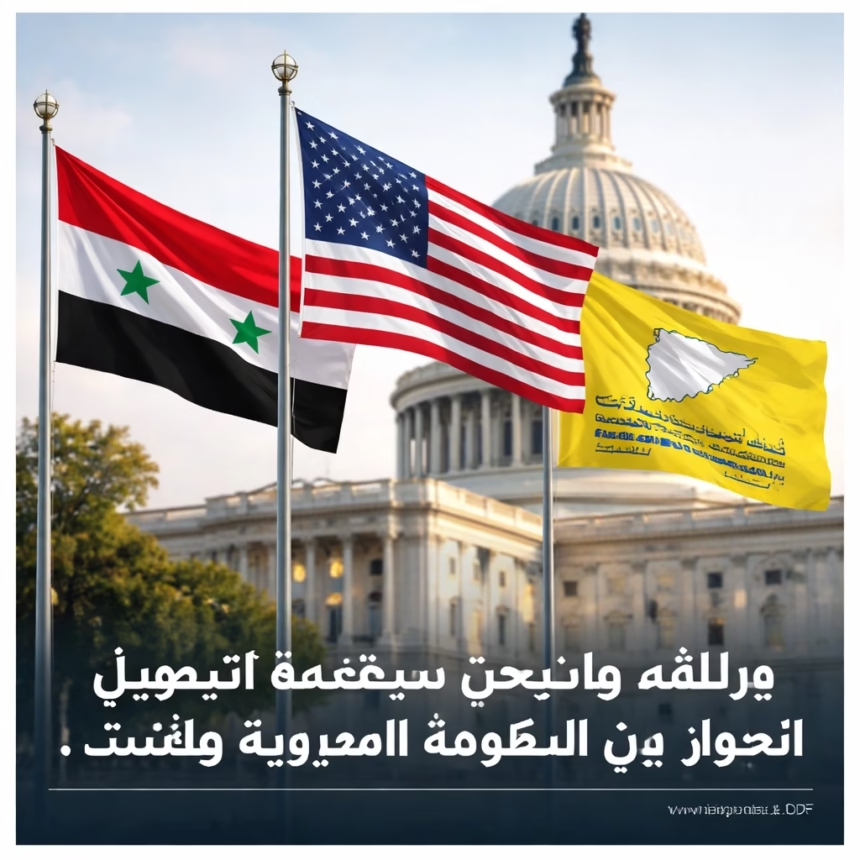
Washington Ready to Facilitate Talks Between Syrian Government and SDF
U.S. Offers to Mediate Syria's Government and SDF: A Major Shift in Policy
In a surprising diplomatic move, the United States has signaled its willingness to facilitate negotiations between the Syrian government and the Kurdish-led Syrian Democratic Forces (SDF). This development comes amid growing tensions in northeastern Syria and could reshape the region's political landscape.

Background: A Decade of Conflict and Division
Since the outbreak of the Syrian civil war in 2011, the SDF has emerged as a key U.S. ally in the fight against the Islamic State (ISIS). However, the Syrian government, led by President Bashar al-Assad, has consistently viewed the SDF as a foreign-backed militia. The U.S. presence in northeastern Syria has long been a point of contention between Washington and Damascus.
Key Developments: A Shift in U.S. Stance
Recent reports indicate that Washington is now open to brokering talks between the two sides. This shift comes as the U.S. seeks to stabilize the region and reduce tensions between its allies and the Assad government. The move has been met with mixed reactions from regional and international actors.
More Read

Officials from both the Syrian government and the SDF have yet to formally respond to the U.S. offer, but analysts suggest that any such negotiations would be complex and fraught with challenges. The SDF has previously expressed a willingness to engage in dialogue, but only under certain conditions.
Impact: Who Stands to Gain or Lose?
The potential for direct talks between the Syrian government and the SDF could have significant implications for the region. For the SDF, such negotiations might provide an opportunity to secure greater autonomy within Syria. For the Assad government, it could mean a step toward reasserting control over areas outside its current jurisdiction.
Regionally, countries like Turkey and Iran are watching closely. Turkey, which views the SDF as an extension of the Kurdish PKK (a designated terrorist organization), has expressed concerns over any U.S.-backed initiative that might strengthen the SDF. Iran, a key ally of the Assad government, has historically opposed any U.S. involvement in Syrian affairs.
More Read

What Next: The Path Forward
The ball is now in the court of both the Syrian government and the SDF. If either side rejects the U.S. offer, the status quo will likely continue, with tensions remaining high. However, if preliminary discussions take place, the focus will likely shift to key issues such as governance, security, and the withdrawal of foreign forces.
Experts warn that any meaningful progress will require significant compromises from all parties involved. The U.S. role in facilitating such talks will also be closely scrutinized, as it navigates its relationships with both the SDF and the Assad government.
Potential Hurdles Ahead
One major obstacle is the SDF’s demand for greater autonomy, which clashes with the Syrian government’s insistence on maintaining sovereignty over all its territory. Additionally, the presence of U.S. forces in Syria remains a contentious issue, with Damascus repeatedly calling for their withdrawal.
Another challenge is the internal dynamics within the SDF itself, which is a coalition of various Kurdish and Arab factions. Securing a unified position may prove difficult, especially given the group's diverse interests and allegiances.
Despite these challenges, some analysts see this as a rare opportunity for de-escalation. If successful, it could pave the way for broader political discussions aimed at resolving the Syrian conflict.