Missed Opportunity? Trump Claims Iran Agreement Was Sabotaged
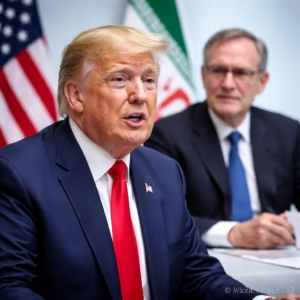
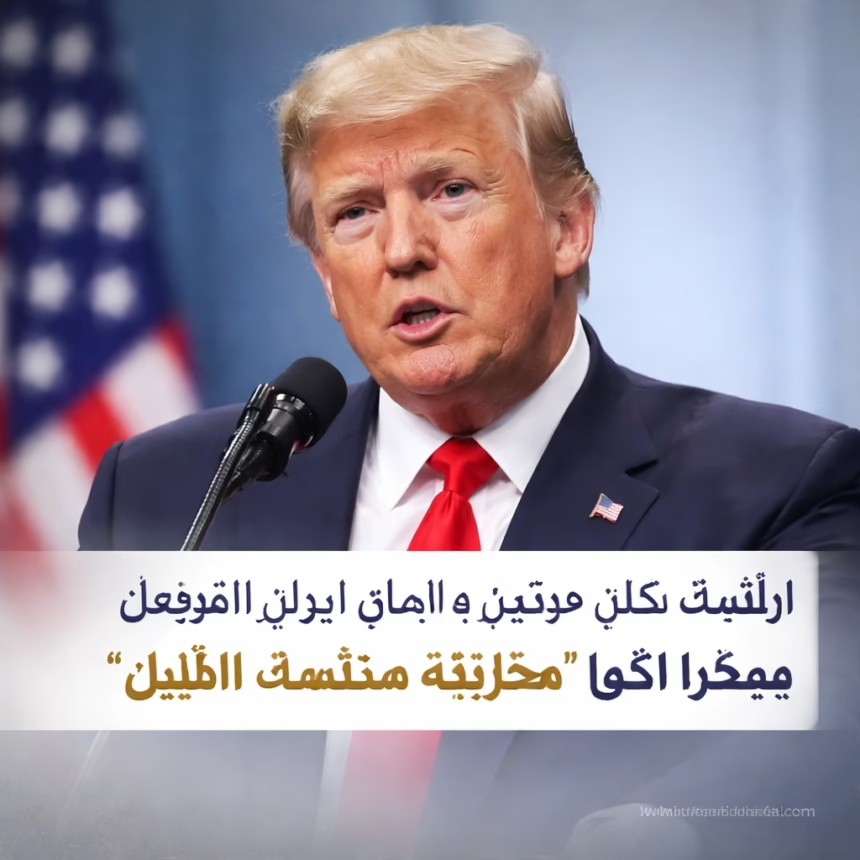
Former U.S. President Donald Trump recently reiterated his long-held stance on the Iran nuclear deal, claiming Iran should have reached a comprehensive agreement sooner. Speaking at a recent event in Bedminster, New Jersey, Trump asserted that the deal ultimately fell apart due to a "midnight oil" effort to sabotage it.
Background: The JCPOA and Trump’s Withdrawal
The Joint Comprehensive Plan of Action (JCPOA), commonly known as the Iran nuclear deal, was finalized in July 2015 between Iran and the P5+1 nations (China, France, Germany, Russia, the United Kingdom, and the United States). The agreement aimed to limit Iran's nuclear program in exchange for sanctions relief. Trump withdrew the U.S. from the JCPOA on May 8, 2018, citing concerns about the deal's shortcomings and Iran's continued regional destabilizing activities.
Trump repeatedly criticized the JCPOA, arguing it was flawed and didn't adequately address Iran's ballistic missile program or its support for militant groups. He demanded a new, more comprehensive deal, a demand that Iran and the remaining signatories were unwilling to fully meet.
Key Developments: A Persistent Narrative
Trump’s recent comments echo his long-standing criticisms of the JCPOA. He specifically pointed to the final days of the Obama administration, when the deal was negotiated, alleging a concerted effort by certain individuals to undermine its implementation. He didn’t name specific individuals but hinted at "deep state" elements within the U.S. government pushing against the agreement.
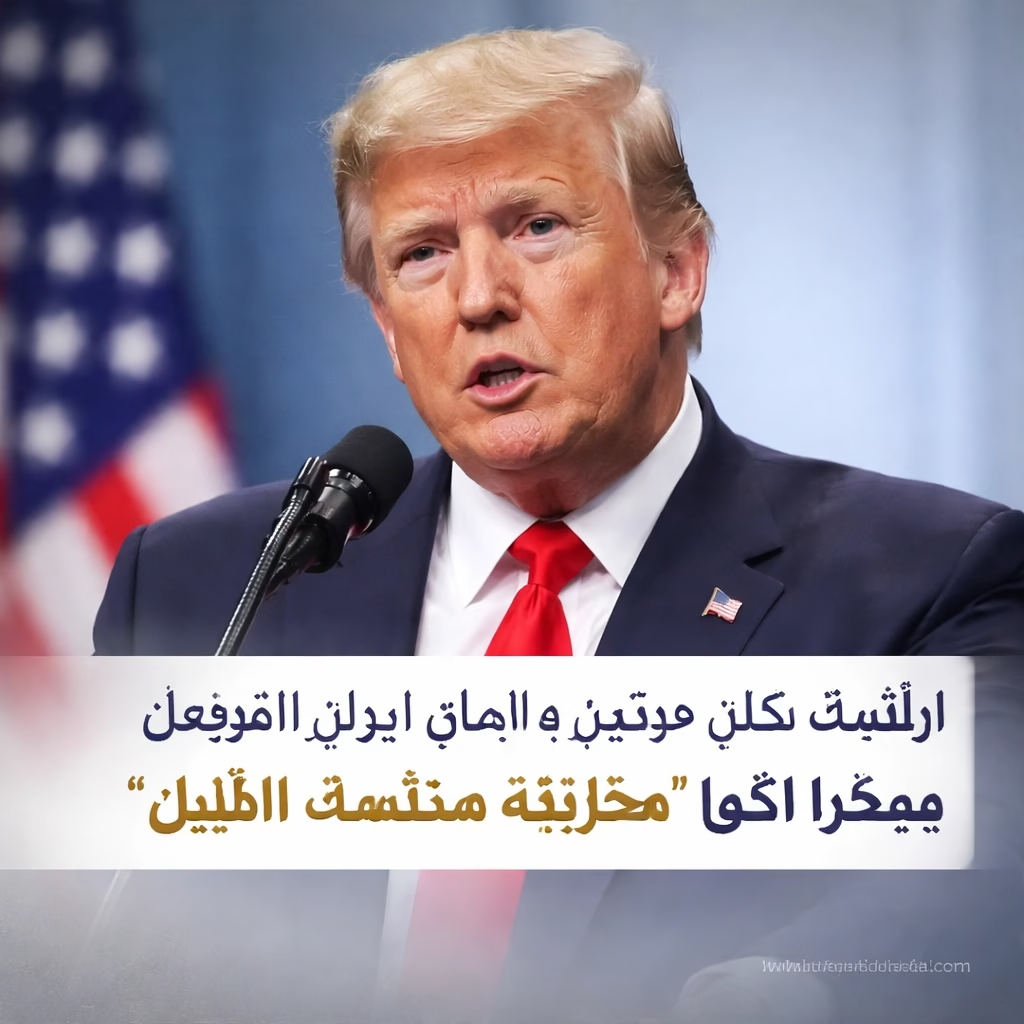
His claims align with past statements where he suggested the deal was not as strong as it appeared on the surface and that Iran was always seeking to circumvent its restrictions. He has consistently maintained that the deal's sunset clauses, which allowed some restrictions to expire over time, created vulnerabilities.
Impact: Geopolitical Uncertainty and Regional Tensions
Trump's continued commentary on the Iran nuclear deal, even years after his presidency, contributes to ongoing geopolitical uncertainty. His rhetoric reinforces divisions within the U.S. regarding foreign policy and complicates any potential future negotiations with Iran.

The impact extends to the Middle East. Iran's nuclear program remains a major source of regional tension. The withdrawal from the JCPOA led to a gradual escalation of tensions, with increased Iranian missile tests and heightened military activity in the Persian Gulf. The current state of affairs, without a renewed agreement, creates a volatile environment.
What Next: A Complex Path Forward
The future of the Iran nuclear deal remains highly uncertain. The Biden administration has expressed interest in reviving the JCPOA, but significant obstacles remain.
Negotiation Stalls
Direct negotiations between the U.S. and Iran have stalled since March 2022 in Vienna, Austria. Disagreements over sanctions relief and guarantees regarding future actions have proven difficult to overcome. The pace of talks has slowed considerably following the Iranian response to Israel's attack on its consulate in Syria on April 1, 2024.
Regional Dynamics
The broader regional context also complicates the path forward. The ongoing conflicts in Syria and Yemen, as well as tensions between Iran and Israel, add layers of complexity to any potential agreement. Israel has repeatedly stated its opposition to Iran acquiring nuclear weapons and has conducted airstrikes targeting Iranian facilities in Syria.
Potential Scenarios
Several scenarios are possible. A renewed agreement, potentially with strengthened safeguards, remains a possibility, though its likelihood is considered low in the short term. Alternatively, tensions could continue to escalate, potentially leading to further military confrontation. A gradual, incremental approach, focused on addressing specific concerns, is also a possibility, but it would require sustained diplomatic engagement and a willingness from all parties to compromise.