Beyond the Headlines: Is a Deal on Iran Still Within Reach?
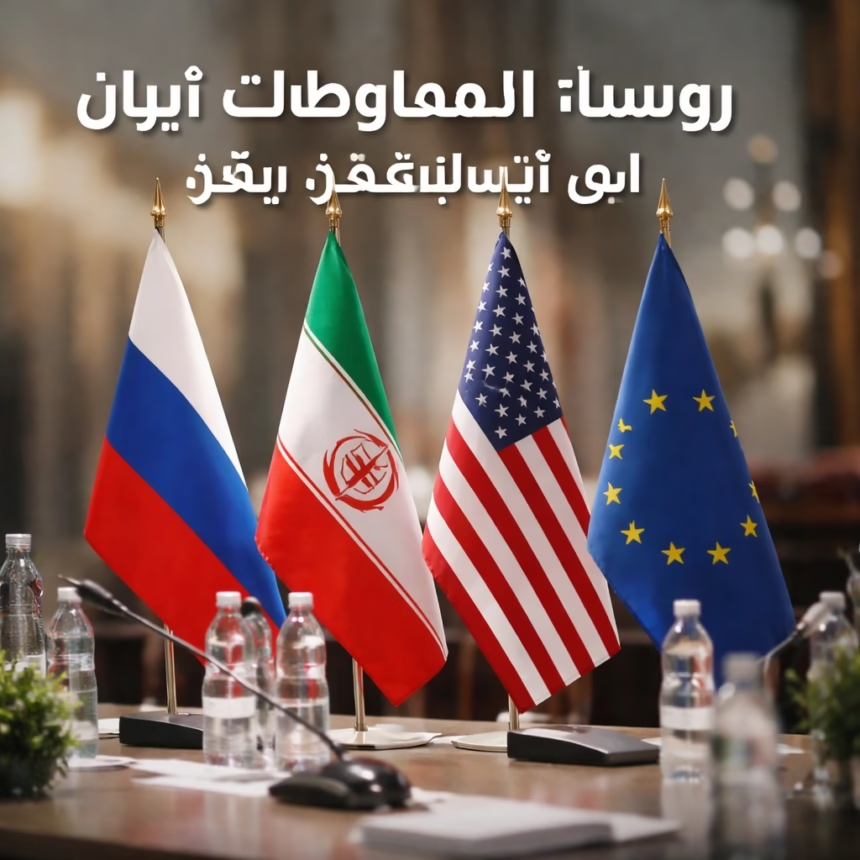
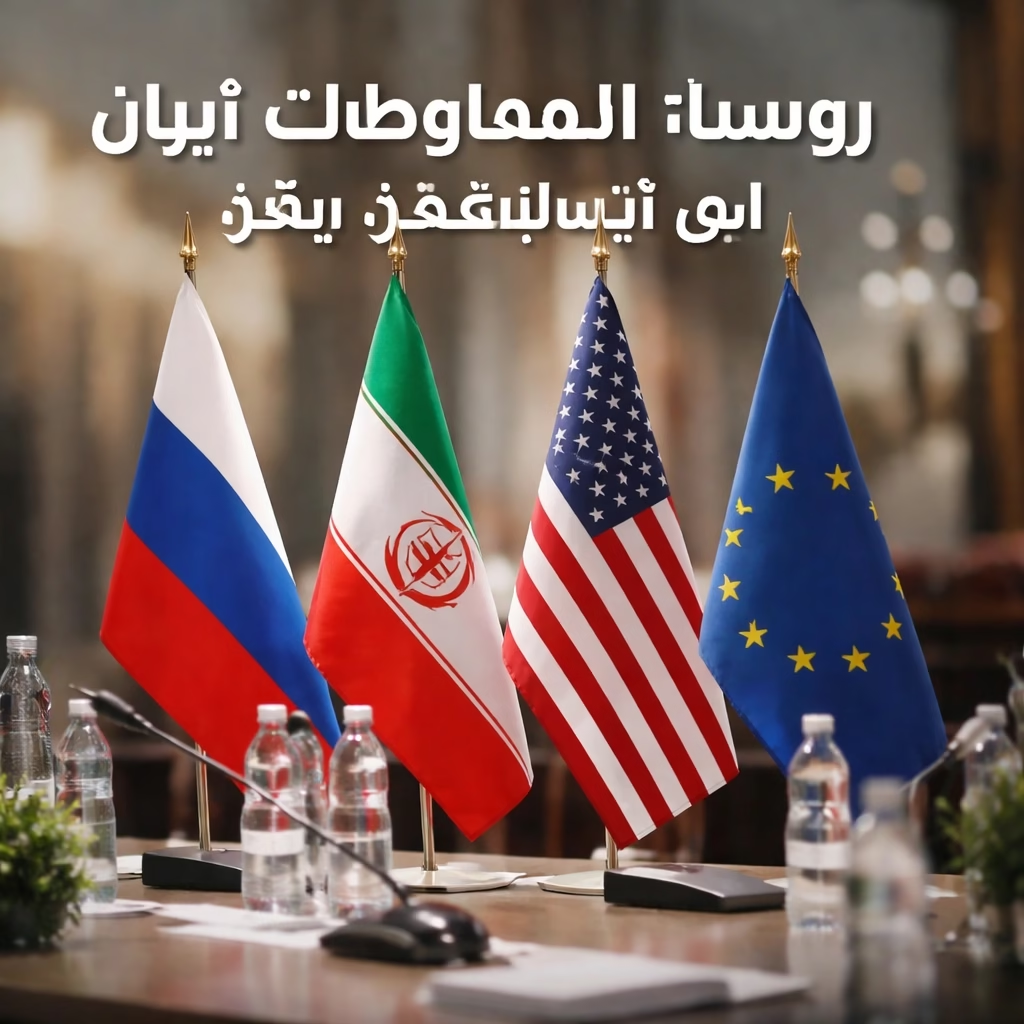
Negotiations surrounding Iran’s nuclear program are ongoing, albeit at a slow pace, in Vienna, Austria. The talks, involving key international players, aim to revive the 2015 nuclear deal, officially known as the Joint Comprehensive Plan of Action (JCPOA), which was abandoned by the United States in 2018. The future of these negotiations carries significant implications for regional security and global energy markets.
Background: A History of Negotiations
The JCPOA, signed in July 2015 by Iran and the P5+1 nations (China, France, Germany, Russia, the United Kingdom, and the United States), placed restrictions on Iran’s nuclear activities in exchange for sanctions relief. Following the US withdrawal under President Donald Trump in May 2018, the US reimposed sanctions, crippling Iran’s economy and significantly hindering the deal's implementation. Iran subsequently began to roll back its commitments under the JCPOA, increasing uranium enrichment levels.
Since 2018, several rounds of indirect negotiations have taken place, primarily in Vienna and Berlin, to salvage the agreement. These talks have been punctuated by periods of optimism and frustration, with key disagreements remaining on issues such as sanctions relief and long-term verification mechanisms.
Key Developments: A Slow March Forward
Recent weeks have seen renewed diplomatic activity. In April 2024, the Vienna talks resumed after a hiatus of several months. The current focus is on establishing a framework for a potential agreement, with discussions centered on Iran's nuclear program and the scope of sanctions relief. While progress has been made in identifying areas of potential consensus, significant hurdles remain.
More Read

Specifically, disagreements persist over the sunset clauses of sanctions, which would gradually lift restrictions on Iran’s oil exports and other sectors. The US insists on maintaining some sanctions even if a deal is reached, a position that Iran views as unacceptable. Furthermore, concerns remain about Iran’s nuclear activities, particularly its enrichment levels and research and development programs.
In late April, the International Atomic Energy Agency (IAEA) reported that Iran had not fully cooperated with the agency's inspections, raising concerns about the transparency of its nuclear program. This has added another layer of complexity to the negotiations.
Impact: Ripple Effects Across the Region and Beyond
The outcome of these negotiations has far-reaching consequences. A successful revival of the JCPOA would alleviate tensions in the Middle East, potentially leading to de-escalation of conflicts and improved regional stability. It would also ease concerns about Iran’s nuclear ambitions, reducing the risk of proliferation.
More Read

Conversely, the failure to reach an agreement could lead to a further escalation of tensions, with potential for military confrontation. The economic impact on Iran would be severe, further straining its already fragile economy. Global energy markets would also be affected, with potential disruptions to oil supplies.
The negotiations also impact countries bordering Iran. Iraq, for example, is keenly watching the talks, anticipating potential shifts in regional power dynamics. Israel remains a strong opponent of Iran's nuclear program, and a failure to reach a deal could embolden its actions.
What Next: The Road Ahead
The immediate priority is to reach a political agreement outlining the key terms of a potential deal. This framework would then need to be translated into detailed implementation plans. The timeline for a final agreement is uncertain, with many analysts predicting a protracted process.
Key Obstacles Remain
The biggest hurdles remain the disagreements over sanctions and verification. The US and Iran need to find a way to bridge this gap to ensure the agreement is robust and verifiable. Furthermore, the IAEA’s concerns about Iran’s cooperation need to be addressed.
Potential Breakthroughs
Some observers believe that a compromise could be reached on the sunset clauses, with a phased approach to sanctions relief. Others suggest that enhanced verification mechanisms could be implemented to address concerns about Iran’s nuclear activities. The involvement of international mediators, such as the European Union, could also play a crucial role in facilitating a breakthrough.
More Read

The coming weeks and months will be critical in determining whether the negotiations can overcome these obstacles and achieve a resolution. The world is watching closely, recognizing the potential for both progress and setbacks.