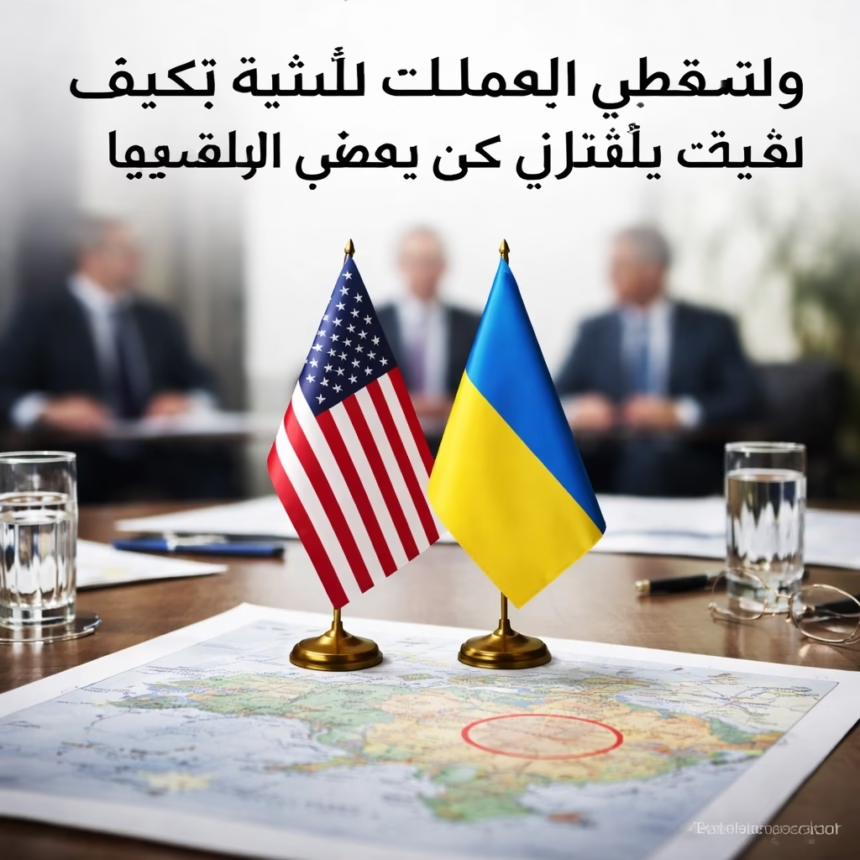
Dealbreaker? US Conditions Aid to Ukraine on Land Concessions
Washington is reportedly linking security assurances for Kyiv with potential territorial concessions to Russia, according to a report by Al Arabiya. This development, emerging in late October 2023, raises concerns about the future of the conflict and Ukraine's sovereignty. The reports suggest a significant shift in the US approach to supporting Ukraine's defense.
Background
Since the full-scale Russian invasion of Ukraine began in February 2022, the United States has been a major provider of military, financial, and humanitarian aid to Kyiv. This support has been crucial in enabling Ukraine to resist the Russian offensive. The US has consistently framed its assistance as a commitment to Ukraine's territorial integrity and sovereignty. However, recent statements and reports hint at a more pragmatic, and potentially contentious, approach.
Earlier in the conflict, the US and its allies largely rejected any discussion of territorial concessions as a basis for peace. The official stance has been that such concessions would embolden Russia and undermine the principles of international law. However, as the war has dragged on, and the scale of destruction has become clearer, whispers of compromise have begun to circulate within the US administration.
Key Developments
The Al Arabiya report, citing multiple sources within the US administration, claims that Washington is now signaling to Kyiv that continued security assistance – including advanced weaponry and long-term defense plans – may be contingent on Ukraine agreeing to certain territorial arrangements with Russia. Specifically, the report indicates discussions around potentially ceding control of parts of the Donbas region, including the Luhansk and Donetsk oblasts, to Russia.

These discussions are reportedly taking place behind closed doors between US and Ukrainian officials. While neither side has officially confirmed the details, the reports have sparked considerable debate within Ukraine and among its allies. The timing of these reports is significant, coming shortly after a prolonged period of stalled Western aid packages to Ukraine, partly due to political divisions within the US Congress.
Furthermore, US officials have reportedly been emphasizing the need for a negotiated settlement to the conflict, suggesting that a purely military solution is unlikely. This shift in emphasis reflects a growing concern about the potential for a protracted and costly war.
Impact
The potential linking of security guarantees to territorial concessions has far-reaching implications for Ukraine. Such a move would represent a significant compromise on core Ukrainian national interests and could be deeply unpopular with the Ukrainian public and political elite. The concept of territorial concessions is viewed by many in Kyiv as a betrayal of the country's sovereignty and territorial integrity.
More Read

The development also risks damaging Ukraine's relationship with its allies. Several European nations, particularly Poland and the Baltic states, have strongly opposed any concessions to Russia and have expressed concerns about the precedent such a move would set. These countries fear that ceding territory would only encourage further Russian aggression.
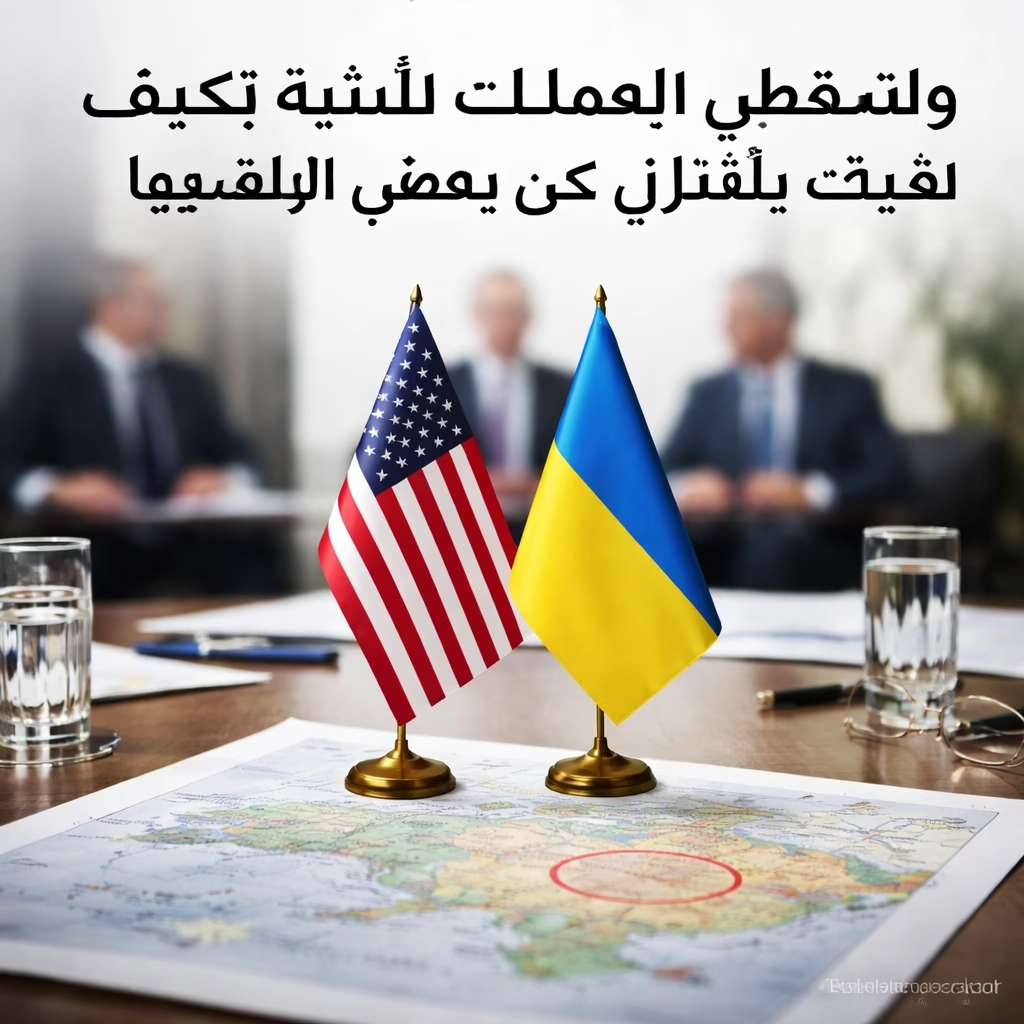
Russia, on the other hand, would likely view any territorial gains as a victory, reinforcing its narrative that the war is about reclaiming historically Russian lands. This could embolden Moscow to pursue further military objectives.
What Next
The situation remains fluid, and the future of US aid to Ukraine is uncertain. The coming weeks are expected to be crucial as US lawmakers debate new aid packages and the Biden administration seeks to navigate the complex political landscape. The focus will be on whether the US will ultimately prioritize a negotiated settlement, even if it requires compromises on territorial issues.
Congressional Debate
The US Congress is currently divided over further aid to Ukraine. Republicans, particularly within the House of Representatives, are increasingly demanding stricter oversight and accountability for the use of funds. Some Republicans have explicitly called for conditions on aid, including discussions about a negotiated settlement.
Democrats, while generally supportive of Ukraine, are facing pressure from within their own party to address domestic concerns, such as inflation and border security. This has complicated the process of securing bipartisan support for further aid.

International Coordination
The US is also likely to engage in intensive diplomatic efforts with its allies to coordinate a unified approach to Ukraine. This will involve seeking consensus on the potential for territorial concessions and ensuring that any agreement does not undermine the principles of international law and the security of Europe.
The upcoming meetings of NATO leaders are expected to provide an opportunity for these discussions to take place. The alliance will need to decide whether to support a US-led effort to explore potential compromises or to maintain its unwavering support for Ukraine's territorial integrity.
Ukrainian Response
Ukrainian President Volodymyr Zelenskyy has repeatedly stated that Ukraine will not concede any territory to Russia. However, the pressure from the US and other allies may force Kyiv to reconsider its position in order to secure continued support. The Ukrainian government is likely to engage in intense negotiations with its allies to explore possible compromises and to mitigate the impact of any potential concessions.
The coming months will be critical in determining the future of the war in Ukraine and the role of the United States in supporting Kyiv's defense.