Iran's Iron Resolve: Defending Sovereignty at All Costs
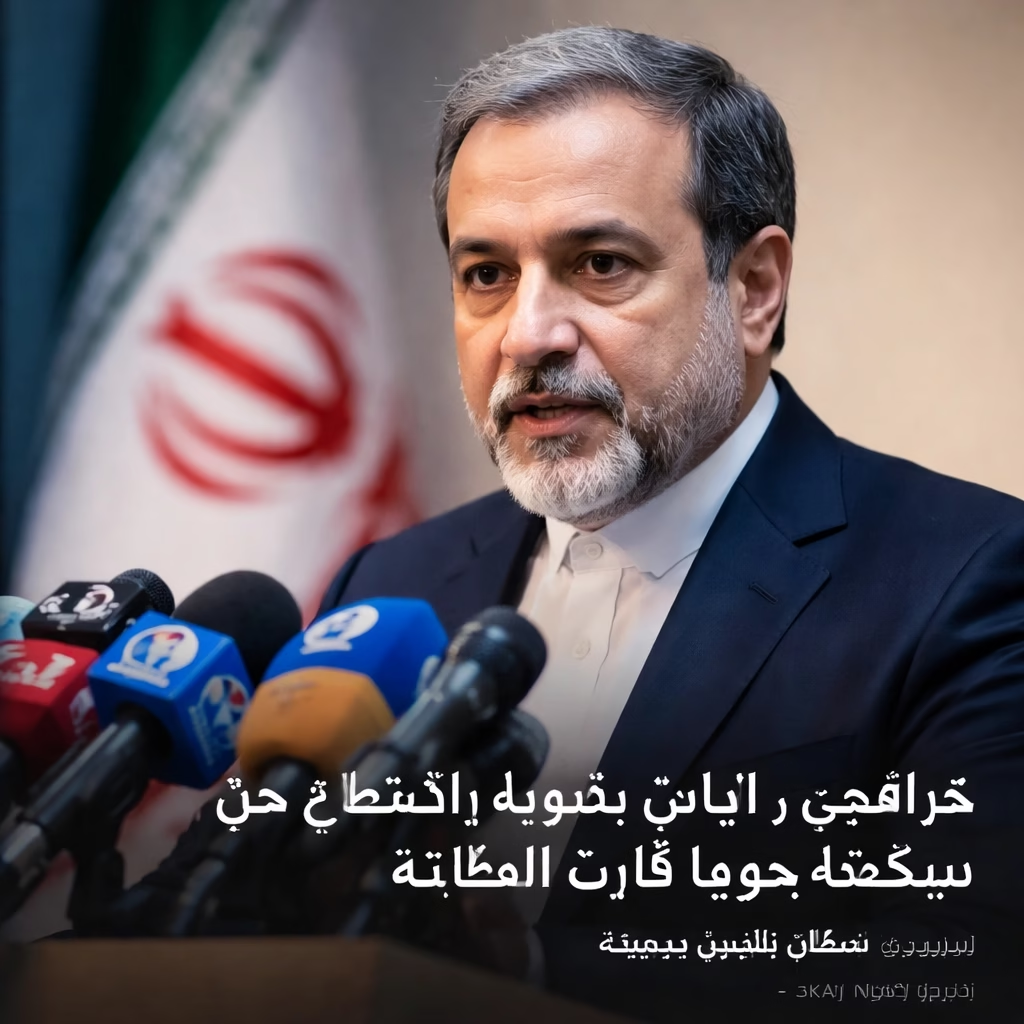
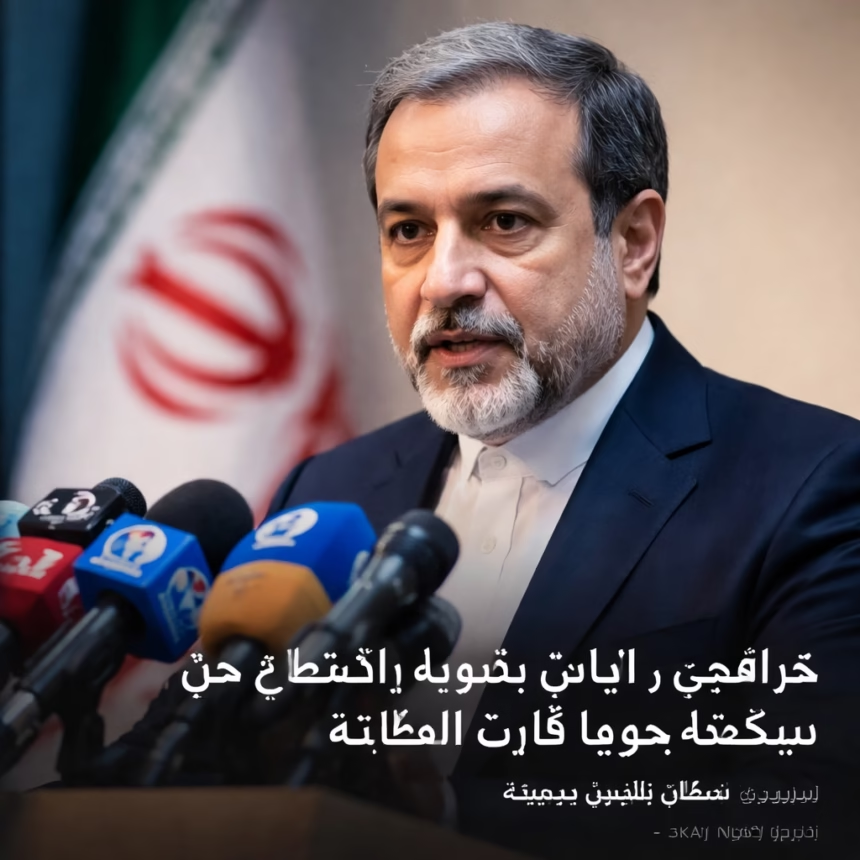
Tehran, Iran – In a recent statement, Iranian Foreign Minister Hossein Amir-Abdollahian affirmed Iran's unwavering commitment to defending its sovereignty, signaling a hardening of its stance amidst rising regional tensions. The remarks come as the Middle East faces a complex web of conflicts and geopolitical maneuvering, particularly following the ongoing conflict in Gaza and increased military activity in the Persian Gulf.
Background: A History of Asserting Sovereignty
Iran's history is marked by a strong emphasis on national sovereignty, rooted in its post-revolutionary identity. Following the 1979 Islamic Revolution, the new government prioritized independence from foreign influence, a principle enshrined in its constitution. This commitment has been consistently expressed in its foreign policy, particularly concerning nuclear ambitions, regional influence, and relations with major powers like the United States and Israel.
Over the past few decades, Iran has faced numerous sanctions and international pressures, including those imposed by the United States related to its nuclear program. These pressures have arguably solidified the perception within Iran of needing to be resolute in defending its interests and resisting external interference. The 2015 Iran nuclear deal (JCPOA), despite US withdrawal in 2018, was a key attempt to limit Iran's nuclear capabilities, a move Iran viewed as a violation of its sovereignty.
Key Developments: A Shift in Rhetoric and Actions
Amir-Abdollahian's recent pronouncements represent a noticeable intensification of Iranian rhetoric. He stated that Iran "will not hesitate" to defend its interests, even if it requires significant costs. This statement followed heightened tensions in the Persian Gulf, including incidents involving Iranian naval vessels and perceived provocative actions by allied nations.
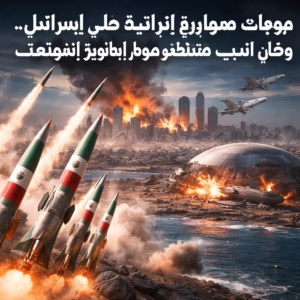
Recent weeks have seen increased military exercises conducted by the Iranian armed forces, particularly in the Persian Gulf and the Strait of Hormuz. These exercises are often framed as defensive measures, but they also serve as a clear signal of Iran's military capabilities and resolve. Furthermore, Iran has intensified its support for proxy groups in the region, including Hezbollah in Lebanon and Hamas in Gaza, further complicating the regional security landscape.
Impact: Regional Instability and Economic Concerns
Iran's unwavering stance has significant implications for regional stability. Heightened tensions increase the risk of miscalculation and escalation, potentially leading to unintended conflicts. Neighboring countries, particularly Saudi Arabia and Israel, are closely monitoring Iran's actions, and regional dynamics are shifting rapidly.

Economically, the escalating tensions could further strain Iran's already fragile economy. New sanctions or disruptions to oil exports would have a detrimental effect on the country's financial stability. The impact extends beyond Iran, affecting global energy markets and trade routes through the Persian Gulf.
What Next: A Path of Uncertainty
The immediate future remains uncertain. Several potential scenarios could unfold, including continued military posturing, further escalation of proxy conflicts, or renewed diplomatic efforts to de-escalate tensions. The role of external actors, particularly the United States, Israel, and European powers, will be crucial in shaping the trajectory of events.
Potential Escalation Points
Areas of concern include the Strait of Hormuz, a vital chokepoint for global oil supplies; the conflict in Gaza, where Iran’s support for Hamas could further inflame tensions; and the potential for cyberattacks targeting critical infrastructure in the region. Any misstep could lead to a wider conflict with devastating consequences.
Diplomatic Efforts
Despite the heightened tensions, diplomatic channels remain open. Efforts are ongoing, primarily mediated by the European Union, to address concerns related to Iran’s nuclear program and to prevent further escalation. However, achieving a lasting resolution will require significant concessions from all parties involved.
Long-Term Implications
Regardless of the immediate outcome, Iran’s unwavering stance suggests a long-term commitment to defending its perceived interests. This will likely continue to shape its foreign policy and regional involvement for years to come, contributing to a complex and volatile geopolitical landscape.